
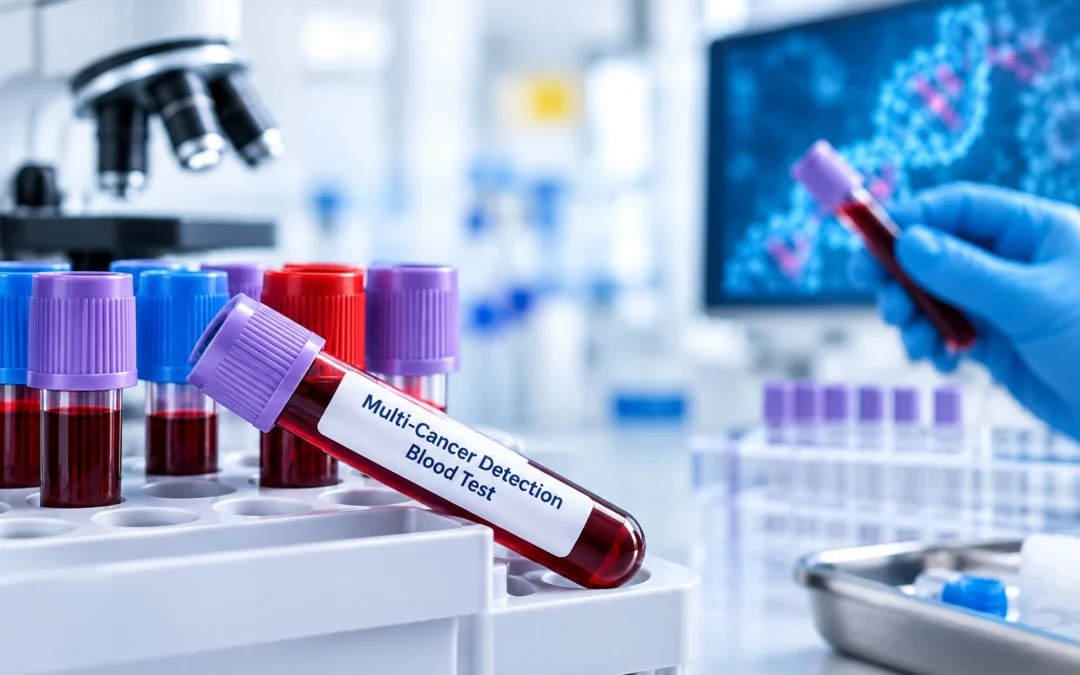
Major health organizations currently don’t recommend these tests, known as MCED tests, for routine screening, and that’s not a small technicality. They’re still considered experimental, without full regulatory approval, and the actual clinical trial results have come back genuinely mixed, more promising in some ways than others, which is exactly why no major professional medical body has endorsed them for population-wide use yet.
Dr. Sandeep Nayak, known for the Best Cancer Treatment in Bangalore, sees a lot of curiosity about these tests from patients who’ve read about them online. “The idea is genuinely appealing, one blood draw catching dozens of cancers before symptoms show up. What I have to explain is that appealing and proven aren’t the same thing yet. The largest trial we have didn’t hit its main goal, reducing late-stage cancer diagnoses, even though it found more cancers overall. That distinction matters more than the marketing usually lets on.”
Curious whether a test like this makes sense for your own situation?
What the Actual Trial Data Shows?
- The main trial fell short: The NHS-Galleri trial followed more than 142,000 people but did not significantly reduce late-stage cancer diagnoses.
- More cancers were found: PATHFINDER 2 showed that adding Galleri to regular screening increased cancer detection, including cancers that currently have no routine screening test.
- Some were caught early: More than half of the cancers found through the additional testing were detected at an earlier stage, when treatment may be more effective.
- The big question remains: Finding more cancers is promising, but it has not yet been proven to reduce cancer deaths or late-stage disease, which is why wider approval is still being evaluated.
What This Actually Means If You're Considering One?
Why Choose MACS Clinic for Cancer Screening Guidance Grounded in Evidence?
Dr. Sandeep Nayak’s team at MACS Clinic discusses emerging tests like this honestly, including where the evidence is genuinely promising and where it still falls short of a recommendation, rather than either dismissing new technology outright or overselling something not yet proven. That means walking through what an MCED test can and can’t tell a specific patient, given their own risk factors and existing screening history, before anyone spends money on a test that might create more uncertainty than clarity. For patients who do pursue one, results get interpreted alongside standard screening rather than in place of it, since neither test on its own tells the complete story.
Want to talk through your own cancer screening approach based on what’s actually proven? Reach the team at +91 9482202240.
FAQs
Should I get an MCED test instead of my regular cancer screenings?
No. These tests are meant to supplement standard screening, not replace mammograms, colonoscopies, or other guideline-recommended tests.
Why hasn't a test like Galleri been approved yet if it's finding more cancers?
Finding more cancers is only part of what regulators need to see. The trial data hasn’t yet shown a clear reduction in late-stage diagnoses, which is the outcome that actually matters for reducing cancer deaths.
Is a positive result on an MCED test the same as a cancer diagnosis?
No. A positive result triggers further testing, imaging, and often a biopsy, to confirm whether cancer is actually present and where.
Is this kind of test covered by insurance?
Generally not yet, since it hasn’t received full regulatory approval or guideline endorsement, most insurance plans don’t currently cover
References
National Cancer Institute (NCI) — Multi-Cancer Detection Tests
Explains what MCD/MCED tests are, their current limitations, and why their effectiveness for screening is still uncertain.
NCI: What Cancer Screening Tests Check for Cancer?
NCI — Cancer Screening Overview
Particularly useful for the key point that no MCD test has yet demonstrated a reduction in mortality in randomized clinical trials.
NCI: Cancer Screening Overview
Disclaimer:This content is published for educational and informational purposes only.