
Locally advanced cancer is cancer that has grown larger or spread into nearby tissues or lymph nodes, but hasn’t spread to distant parts of the body. It’s a different thing from metastatic, or stage 4, cancer, and it’s often treated with the aim of cure. Doctors usually deal with it using a combination of treatments, such as chemotherapy and radiation to shrink it first, then surgery.
Dr. Sandeep Nayak, Surgical Oncologist at MACS Clinic, which provides the Best Cancer Treatment in Bangalore, says the word “advanced” frightens people, and it shouldn’t automatically. “Locally advanced means the cancer hasn’t gone to distant organs. It’s big, or it’s into the neighbouring tissue or nodes, but it’s still in one region, and that’s a very different situation from metastatic disease. Many of these cancers are treated with the aim of cure, and often we shrink them first with chemo or radiation so the operation can be done safely. What I’d say to any patient is, ask your doctor exactly what ‘advanced’ means in your case, because the word is used loosely.”
Just been told your cancer is locally advanced?
Locally Advanced Cancer Meaning: What the Term Covers
It sounds simple, but the details matter:
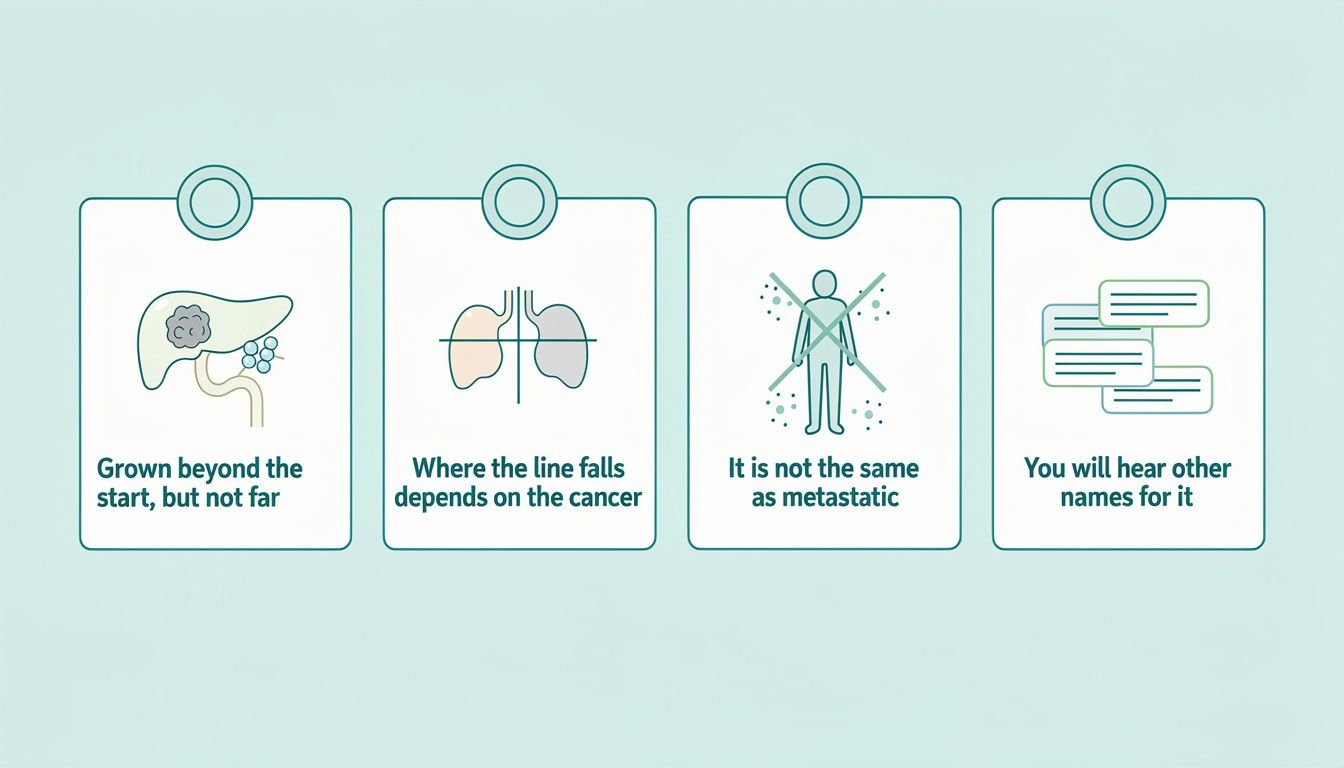
- The tumour has grown beyond where it started, but not far. It may have grown into surrounding tissue, nearby structures or nearby lymph nodes. Scans show no spread to distant organs, which in staging language is called M0.
- Where the line falls depends on the cancer. In rectal cancer, it generally means the tumour has grown through the bowel wall or reached nearby lymph nodes. In breast cancer it can mean a large tumour or involved nodes, and in head and neck cancer, a bigger tumour or nodes in the neck. Our rectal cancer treatment in Bangalore page shows how this plays out in one cancer.
- It isn’t the same as metastatic, and it isn’t automatically incurable. Metastatic cancer has spread to distant organs. Many locally advanced cancers, including some breast and prostate cancers, are potentially curable. A few, such as some brain tumours or ones wrapped around major blood vessels, can’t be removed or cured because of their size and position.
- You’ll hear other names for it. Locally advanced tumour, advanced local cancer and locoregionally advanced cancer all mean roughly the same thing. Some doctors also use “advanced” loosely to mean metastatic, so always ask which they mean.
How Is a Locally Advanced Tumour Treated?

It’s usually a plan with several steps, not one treatment:
- A combination of treatments is the norm. That means chemotherapy, radiation and surgery, and the order matters. Often chemotherapy or radiation comes first, to shrink the tumour, and surgery follows.
- Shrinking it first is often the point. In rectal cancer, for instance, chemoradiation followed by surgery is the standard approach, and giving more chemotherapy before surgery is now an accepted option. At Tata Memorial, about half of rectal cancer patients arrive with tumours too advanced for immediate surgery, so shrinking first is how many become treatable. Our radiation therapy page explains how it’s planned.
- Surgery removes what’s left. The operation takes out the tumour and nearby lymph nodes, and keyhole or robotic surgery can be used where it suits. For some rectal cancers that disappear completely after treatment, watching closely instead of operating is an option.
- More treatment may follow. What the surgeon finds, and tests on the tumour, decide whether you need more chemotherapy or a targeted drug afterwards. Our precision oncology service covers that testing, and regular scans follow.
What Determines the Right Treatment Approach?
Two people with locally advanced cancer can be offered very different plans. A few things decide it:
- The type of cancer and where it started. Each has its own standard approach, and the stage cutoffs differ.
- Exactly how far it has grown. Size, depth, nearby structures and nodes are mapped with scans (CT, MRI or PET) and a biopsy, which also confirm there’s no distant spread.
- Whether it can be removed. Doctors describe tumours as resectable, borderline or unresectable, depending on the risk to nearby organs and blood vessels. Treatment before surgery aims to move a tumour toward the removable side.
- What the tumour is like. Its grade and tests such as MSI status, HER2 or other gene changes help choose the drugs.
- Your health and what matters to you. Fitness for surgery, and priorities such as organ preservation, shape the plan. A joint review by the whole team, as in our post on what a tumour board is, brings it together.
Key Takeaways
- Locally advanced cancer has grown into nearby tissue or lymph nodes but hasn’t spread to distant parts of the body.
- It isn’t the same as metastatic, or stage 4, cancer, and many locally advanced cancers are treated with the aim of cure.
- Treatment usually combines chemotherapy, radiation and surgery, often shrinking the tumour first.
- The plan depends on the cancer type, how far it has grown, whether it can be removed, and your health.
- For questions about your own situation, you can contact the clinic at +91 9482202240.
Frequently Asked Questions
1.Is locally advanced cancer the same as stage 4?
No. Stage 4 usually means the cancer has spread to distant organs, which is metastatic. Locally advanced cancer is still in one region, and in many cancers it falls in the middle stages. The exact stage number depends on the cancer type.
2.Is locally advanced cancer curable?
Often it’s treated with the aim of cure, especially when a combined treatment can shrink it and then remove it fully. It depends on the cancer and on whether it can be taken out safely. Some, like a few brain tumours, can’t be cured because of where they sit.
3.Why do I need chemotherapy or radiation before surgery?
To shrink the tumour so it’s easier and safer to remove, and sometimes so a smaller operation will do. It also starts treating any tiny spread early. Your team will explain why it’s the right order for your cancer.
4.My doctor said “advanced”. How do I know what that means for me?
Ask directly. Has it spread beyond the organ or nearby nodes? Is the goal cure or control? “Advanced” is used loosely, sometimes for locally advanced and sometimes for metastasis. Getting the exact meaning in your case is the first step.
Disclaimer
This content is published for educational and informational purposes only and is not a substitute for medical advice. Please ask your oncologist what the terms used for your own cancer mean.
References:
- What Are Advanced and Metastatic Cancers?, American Cancer Society
- Total Neoadjuvant Therapy for Rectal Cancer: A Guide for Surgeons, Canadian Journal of Surgery, PubMed Central
- Contemporary Management of Locally Advanced Rectal Cancer: Resolving Issues, Controversies and Shifting Paradigms, PubMed Central
- Organ Preservation in Locally Advanced Rectal Cancer, PubMed Central
- Concurrent Chemo-Radiotherapy Versus Radiotherapy With Boost in Locally Advanced Unresectable Rectal Cancers, Tata Memorial Hospital (ClinicalTrials.gov)
- Rectal Cancer Treatment in Bangalore, MACS Clinic