

Usually, it means metastatic cancer. That’s cancer that started in one organ, broke away, and formed new tumours in others. Doctors still call it by the name of where it began. Breast cancer that has reached the liver and lungs is metastatic breast cancer, not liver or lung cancer, and it’s treated as stage 4 breast cancer. Less often, the tumours in different organs are separate cancers that each began on their own. That’s a different situation with a different plan, so the first job is working out which one it is. It’s a lot to take in. What it doesn’t mean is that nothing can be done. There are treatments for most metastatic cancers, and the aim is usually to control the disease and keep you well for as long as possible.
Dr. Sandeep Nayak, who provides cancer treatment in Bangalore, says the first step is a clear diagnosis. “Before we talk about treatment, we need to know exactly what we’re dealing with. That means looking at the scans together, and usually taking a biopsy from the most accessible spot. Under the microscope and with special tests, we can tell whether the new tumours match the original cancer or are something different. Treatment follows from that: the type of cancer, its markers, where it is and how much, and how you’re doing in yourself. Sometimes only a few spots are involved, and then we can treat those directly as well.”
If scans have shown cancer in more than one organ and you’re waiting for answers, it helps to have every report looked at by a specialist team. Share your scans and biopsy results with our team, and they’ll explain what they show and what the next steps could be.
Cancer Spread to Multiple Organs: How Doctors Find Out What It Is

- Scans come first. CT, MRI and PET scans look across the whole body, so the team can see where the cancer is and how many places are involved.
- A biopsy from the easiest, safest spot tells them what the cells are. If the tumour in the new organ matches the original cancer, it’s metastatic. Extra tests on the tissue can also find markers that guide targeted drugs or immunotherapy, which is the idea behind precision oncology.
- Sometimes it’s two separate cancers. Spread tumours look like the cancer they came from, while separate cancers look different from each other. For some cancers in the abdomen, a keyhole look such as diagnostic staging laparoscopy helps check how far things have gone.
- Occasionally the original site can’t be found. That’s called cancer of unknown primary, and it accounts for roughly 3 to 5 in 100 cancer diagnoses. It can still be treated, and the team keeps working to narrow down where it began.
Multiple Organ Metastases: Treatment Options
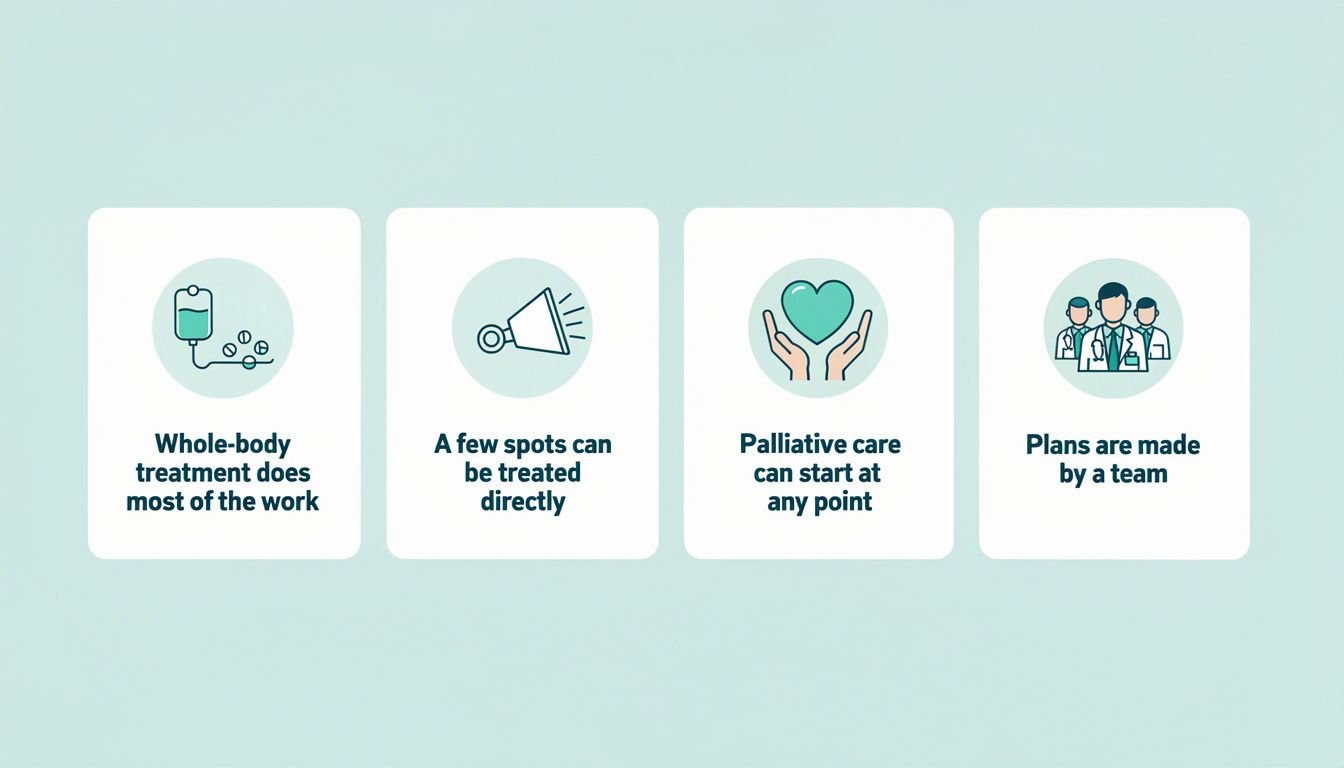
- Treatment that reaches the whole body does most of the work. That can be chemotherapy, hormone therapy, targeted drugs or immunotherapy, chosen by the type and markers of the original cancer. If chemo is planned, our blog on the common chemotherapy side effects tells you what to expect.
- When only a few spots are involved, called oligometastatic disease, they can often be treated directly with surgery, radiation or ablation as well. Some people with oligometastatic cancer live for many years, and in some cases the cancer can be eliminated.
- Palliative care can start at any point. It’s there to ease symptoms and side effects alongside treatment, not only at the end.
- Plans are usually made by a team. Our post on the tumour board shows how surgeons, oncologists and radiologists agree on the next step.
What Decides the Outlook for Cancer in Multiple Organs?
There’s no single answer, and several things count together.
- The type and subtype of the original cancer. This matters more than almost anything else.
- Which organs are involved, and how many. A few spots are very different from widespread disease.
- The cancer’s markers and genes, which decide whether targeted drugs or immunotherapy are an option.
- How the cancer responds to treatment.
- Your age, general health and other illnesses.
- Whether it’s metastatic or two separate cancers, since the plan is different.
- Getting the right tests and treatment at the right time, which is where a second opinion can help.
Key Takeaways
- Cancer in multiple organs usually means metastatic cancer, which is named and treated according to the original cancer.
- Less often it’s two or more separate cancers, and the plan is different, so the first step is working out which it is.
- Scans and a biopsy tell the team what it is. Sometimes the origin can’t be found, and it can still be treated.
- Most metastatic cancers can be treated, usually with the aim of control, and some people live for years. Palliative care can run alongside.
- Questions about your own reports? You can call the clinic on +91 9482202240.
Frequently Asked Questions
1.What does cancer in multiple organs mean?
Usually it means metastatic cancer: cancer that started in one organ and has spread to others. Less often, the tumours are separate cancers that each started on their own. Scans and a biopsy show which.
2.Is cancer spread to multiple organs the same as stage 4?
Generally, yes. Metastatic cancer is treated as stage 4 of the original cancer. For example, breast cancer that has spread to the lung is stage 4 breast cancer, not lung cancer.
3.Can cancer in multiple organs be treated?
There are treatments for most types of metastatic cancer. The aim is usually to control it by stopping or slowing its growth, and some people live for years with it well controlled. A few cancers, like testicular cancer, can be cured even after spreading.
4.What if doctors can’t find where the cancer started?
That’s called cancer of unknown primary, and it’s about 3 to 5 in 100 diagnoses. Tests on the biopsy help narrow it down, and treatment is chosen on the most likely type. It can still be treated.
Disclaimer
This content is published for educational and informational purposes only and is not a substitute for medical advice. What cancer in multiple organs means depends on your individual case, so please discuss your reports with your oncologist.
References:
- Metastatic Cancer: When Cancer Spreads, National Cancer Institute
- Living With Metastatic Cancer, NCI Cancer Currents Blog, National Cancer Institute
- Cancers of Unknown Primary Origin: Current Perspectives and Future Therapeutic Strategies, PubMed Central
- Metastatic Neuroendocrine Neoplasms of Unknown Primary: Clues From Pathology Workup, PubMed Central
- Metastatic Cancer, Yale Medicine
- Precision Oncology, MACS Clinic
- Diagnostic Staging Laparoscopy, MACS Clinic