

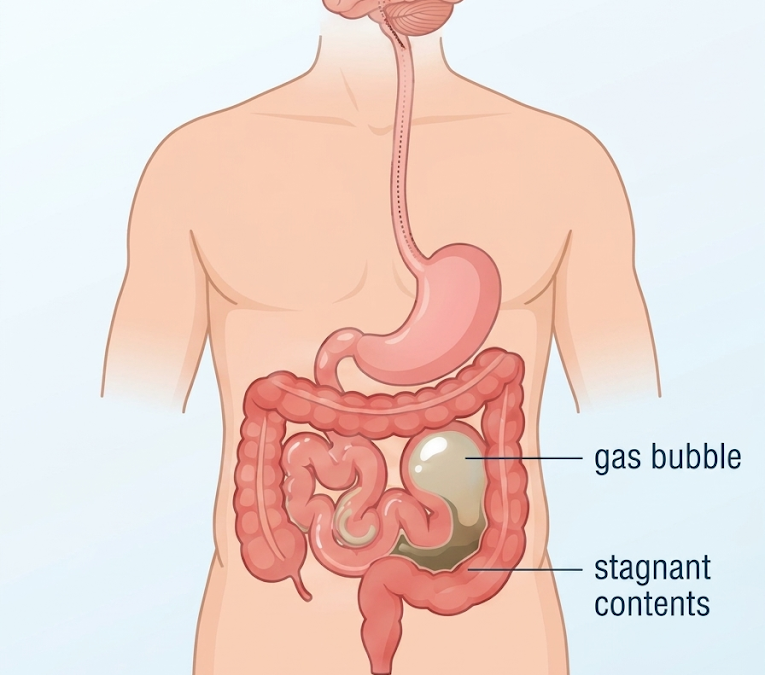
Postoperative ileus is a temporary slowdown, and sometimes a complete pause, in the normal movement of the bowel after surgery, most often after operations on the abdomen. Unlike a mechanical blockage, nothing is physically stuck in the way. The gut is simply slow to wake up. So how do you tell ileus after surgery from something more serious, and when does it stop being a normal part of recovery? Mostly by timing, by the pattern of symptoms and, when there is doubt, by a scan.
Dr. Sandeep Nayak, who provides the Best Cancer Treatment in Bangalore, explains it to patients in plain terms. “After a big abdominal operation I tell people the gut goes to sleep for a while. Some of that is the anaesthetic, some of it is the bowel being handled during surgery, and some of it is the painkillers. In most people the bowel starts moving again within a few days. What we watch for is the patient who is not following that pattern, because then we start asking why.”
Preparing for abdominal surgery and want to know what recovery will look like?
What Is Postoperative Ileus and What Does It Feel Like?

What is postoperative ileus in everyday terms? It is a bowel that is working too slowly after surgery, and a few features make it recognisable.
- The normal timetable. After surgery the small intestine tends to recover within hours, the stomach within a day or two, and the large bowel within about three to five days. Some slowness is expected. Ileus is the term used when recovery drags beyond that.
- The symptoms. Bloating, nausea, vomiting, cramping discomfort, loss of appetite, and not passing gas or stool are the usual signs.
- How it differs from a blockage. Post-surgery bowel obstruction means something is physically narrowing or kinking the bowel, such as adhesions or a hernia, and it tends to cause waves of colicky pain and persistent vomiting. In ileus the bowel is simply inactive. A CT scan or X-ray usually settles the question when the picture is unclear.
- What causes it. Handling of the bowel during the operation, anaesthesia, opioid painkillers, inflammation, low potassium or magnesium levels, fluid imbalance and infection can all contribute. Our post on managing cancer pain without heavy medication explains why reducing opioids matters for the gut as well as for comfort.
How Is Ileus After Surgery Treated?

Treatment is mostly supportive, since the aim is to give the bowel time and remove whatever is slowing it down.
- Rest the gut and keep the body hydrated. Food may be paused briefly or limited to sips, and fluids are given through a drip so the patient does not become dry.
- Fix what can be fixed. Blood tests check salts such as potassium and magnesium, which are replaced if low, and pain relief is arranged to use as little opioid as is practical.
- Keep moving. Walking early, and in some cases chewing gum, which stimulates the gut a little, are part of modern enhanced recovery after cancer surgery programmes that help the bowel restart.
- Relieve the pressure if needed. When there is repeated vomiting or marked swelling, a thin tube through the nose into the stomach drains the contents and eases symptoms.
- Look for a reason if it lasts. An ileus that drags on can be a sign of an infection, a collection of fluid or a leak at the join in the bowel, so doctors check with scans and tests. Our post on recovery time after cancer surgery gives a sense of what a normal recovery looks like.
What Determines the Right Treatment Approach?
Two patients with the same symptoms can be managed quite differently, and these are the usual reasons.
- The operation. Bowel and other abdominal surgeries carry a higher chance of ileus than operations elsewhere, and keyhole surgery tends to cause less of it than open surgery.
- How long it has lasted. A day or two of slowness is expected, while several days with vomiting calls for a more active response.
- The patient’s symptoms and hydration. Vomiting, swelling and dehydration push the team towards a drip and sometimes a tube.
- Test results. Blood tests, an X-ray or a CT scan show whether the problem is ileus, a mechanical obstruction or something else.
- The patient’s general health. Age, nutrition, medicines and other illnesses influence both the risk and the plan, and diet counselling helps before and after surgery.
- The team. At MACS Clinic the surgical team plans pain control, early walking and feeding together, so the bowel gets the best chance to restart on time.
Key Takeaways
- Postoperative ileus is a temporary slowdown of the bowel after surgery, with no physical blockage, and it is common after abdominal operations.
- It usually settles with rest, fluids, correcting salts, less opioid and early walking.
- Persistent vomiting, severe or worsening pain, fever or increasing swelling should always be reported without delay.
- For questions about recovery after your own surgery, you can contact the clinic at +91 9482202240.
Frequently Asked Questions
1.How long does ileus after surgery usually last?
Often for a few days. Bowel function normally returns within about three to five days after abdominal surgery, and ileus is considered prolonged if it goes beyond that, in which case the team looks for a cause.
2.Can postoperative ileus be prevented?
Not always, but the risk can be lowered. Keyhole surgery, gentle handling of the bowel, limiting opioids, early walking and early feeding all help, which is the thinking behind enhanced recovery programmes.
3.When should I call my surgeon after I go home?
If you have repeated vomiting, severe or worsening pain, fever, a swollen tummy, or cannot pass gas or stool, call the same day. Those signs can mean the problem is more than simple slowness.
4.Is ileus the same as a bowel obstruction after surgery?
No. In ileus the bowel is sluggish with nothing blocking it. In a post-surgery bowel obstruction something physically narrows or kinks the bowel, and it may need different treatment, sometimes another procedure.
Disclaimer
This content is published for educational and informational purposes only.