

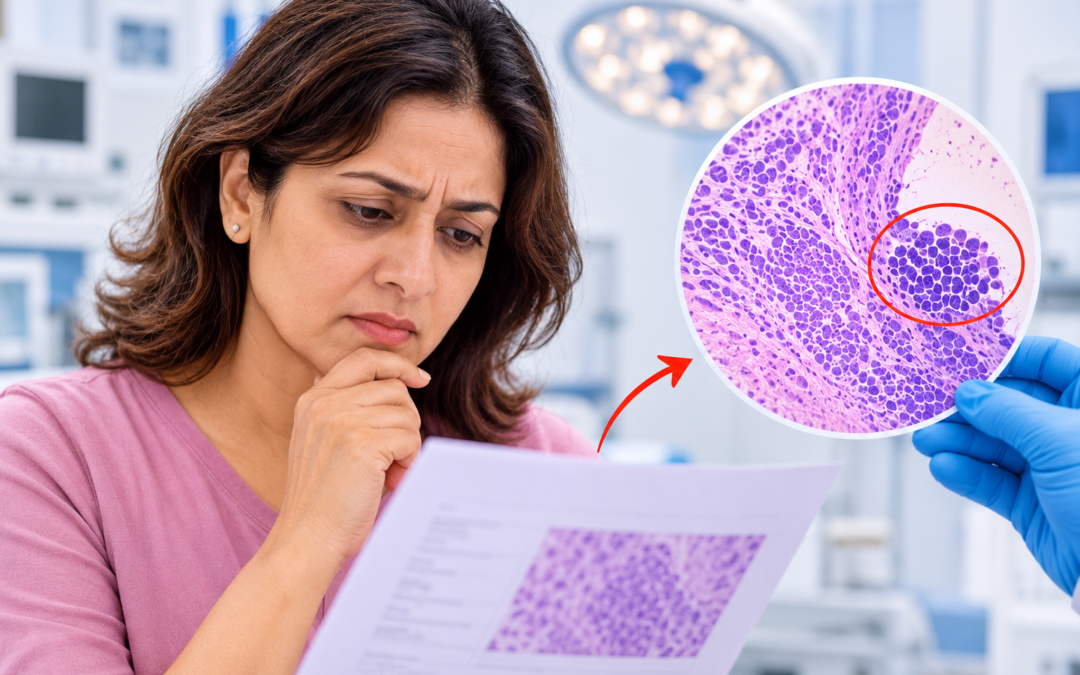
It means the pathologist saw cancer cells right at the cut edge of the tissue the surgeon removed, so some microscopic cancer may have been left behind in the body. This is called a positive or involved surgical margin. It is not the same as the operation having failed, and it does not automatically mean the cancer will come back. So what happens next? That depends on the type of cancer, how much of the edge is involved and whether the area can safely be operated on again, and the answer usually lands on one of three paths: more surgery, radiation or other treatment, or careful watching.
Dr. Sandeep Nayak, who provides the Best Cancer Treatment in Bangalore, says it is one of the hardest things for a patient to hear after an operation. “People feel the surgery was supposed to be the end of it, so a positive margin lands badly. I tell them early that it is a finding that changes the plan, not a verdict. Sometimes a second operation is quite straightforward. Sometimes radiation does the same job without cutting again. And in some cancers we simply monitor, because the risk is lower than people fear.”
Waiting on pathology results, or just told your margin was positive?
What Does a Positive Surgical Margin Actually Mean?
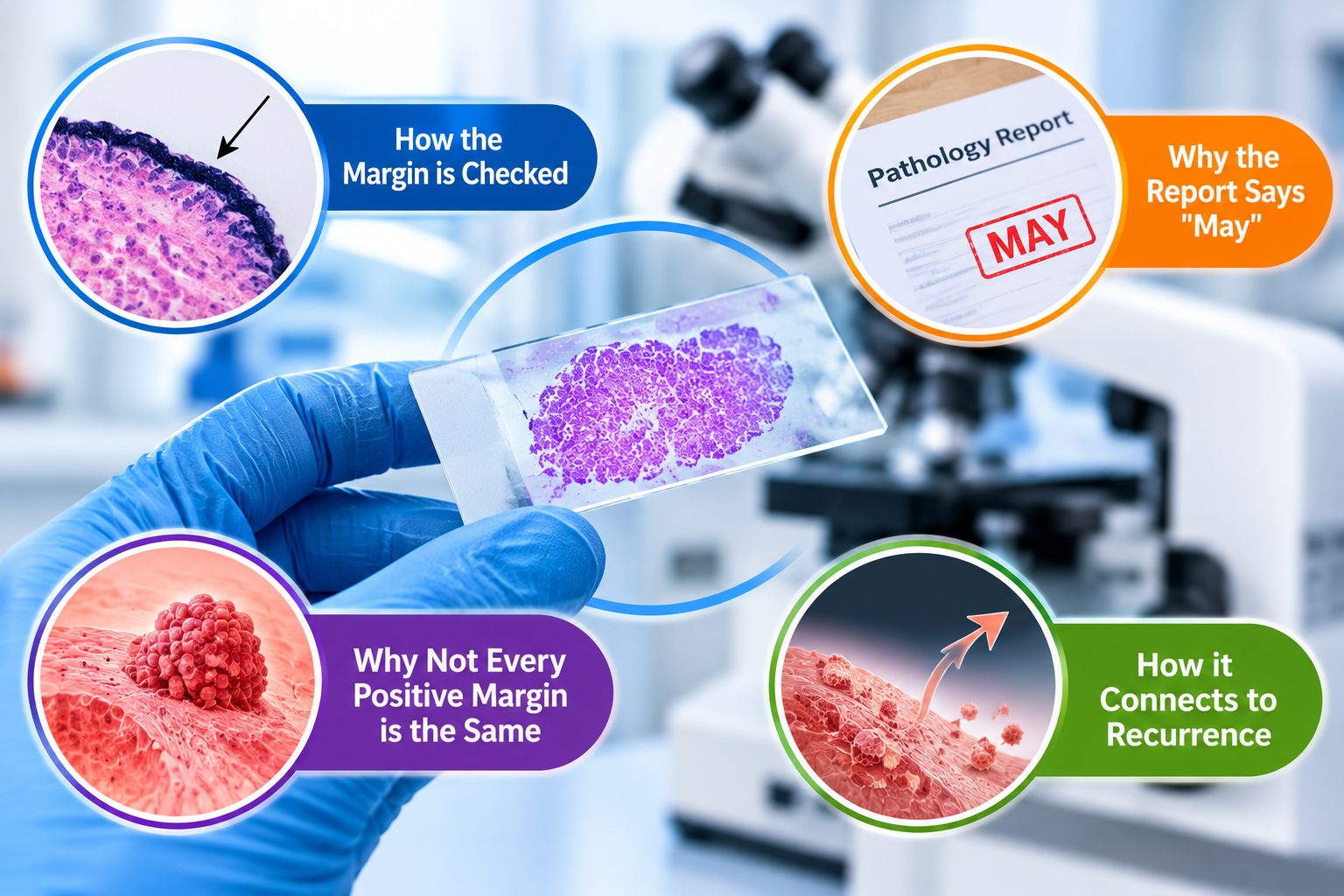
The wording on a pathology report can be confusing, so it helps to know what is actually being described.
- How the margin is checked. After surgery the pathologist inks the outer surface of the specimen and looks under the microscope to see whether cancer cells touch the ink. Cancer touching the ink is a positive margin. A band of healthy tissue between the cancer and the ink is a negative, or clear, margin, and a very thin band is sometimes called a close margin.
- Why the report says “may”. Cancer cells at the edge of removed tissue tell us the tumour reached the boundary of what was taken out. They cannot tell us for certain that cells remain in the patient, because the tissue left behind may be perfectly clear. That is why the result is treated as a reason to act or to watch closely, not as proof of residual disease.
- Why not every positive margin is the same. One tiny spot at the edge is a different situation from a long stretch of involved tissue, and a slow growing tumour carries a different risk from an aggressive one.
- How it connects to recurrence. Positive surgical margins in cancer do raise the chance of the disease returning in the same area, which is part of why it gets attention. Our post on whether cancer can come back after surgery explains why even a clear margin is never an absolute guarantee, and why this is a matter of probability and not of certainty.
What Happens Next After a Positive Margin?

There is no single answer, and the plan is built around the cancer, not the margin alone.
- Further surgery. A re-excision removes the remaining tissue at the site and is common after breast conserving surgery and after many skin and soft tissue cancers. The trade offs in breast surgery are covered in our post on lumpectomy versus mastectomy.
- Radiation. When operating again would risk nerves, large blood vessels or an important organ, radiation to the area can treat the cells that may remain. It is often planned as part of the same overall course, and the team at our radiation therapy service plans it around the exact site of the positive edge.
- Chemotherapy or other drug treatment. Depending on the cancer and its stage, a positive margin may strengthen the case for treatment given after surgery, a choice explained in our post on adjuvant versus neoadjuvant chemotherapy.
- Close follow up. In some situations, after prostate surgery for example, or when a tiny positive edge sits on a low grade tumour, monitoring with blood tests and scans is a reasonable choice, with treatment held back unless something changes.
- A second look at the slides. Sometimes the first step is a careful review of the pathology itself, since the answer decides everything that follows, and our post on when a second biopsy is needed shows how that kind of rechecking works.
What Determines the Right Treatment Approach?
Two patients with a positive margin can end up on very different plans, and these are the reasons.
- The type and grade of the cancer. Some cancers are far more likely to regrow from a few cells at the edge than others.
- Where the positive edge is. A margin next to a nerve, a major vessel or the bowel is handled differently from one at the skin surface.
- Whether another operation is safe and worthwhile. The answer depends on how much healthy tissue is left, what function would be lost and what the cosmetic result would be.
- The rest of the pathology report. Lymph node findings, tumour size and signs of spread into small blood vessels all feed into the decision.
- The patient’s health and wishes. Age, other illnesses and what the patient is willing to go through again are part of the discussion.
- A joint review. At MACS Clinic surgical, medical and radiation oncology look at these cases together, much as described in our post on what makes up a tumour board.
Key Takeaway
- A positive margin means cancer cells were found at the edge of the removed tissue, so some may remain in the body. It does not mean the cancer will definitely return.
- The next step might be more surgery, radiation, drug treatment or close watching, depending on the cancer and where the positive edge sits.
- It is a finding that changes the plan, and a plan can be made quickly once the pathology is clear.
- For questions about your own pathology report, you can contact the clinic at +91 9482202240.
FAQs
Does a positive margin mean the cancer will come back?
Not necessarily. It raises the chance of the cancer returning in the same area, but many people with a positive margin never have a recurrence, especially when the right follow-up treatment is given.
Will I definitely need another operation?
No. Some patients do have a second operation, but others are treated with radiation instead, and in some cancers the area is simply monitored. The choice depends on the type of cancer and the location of the positive edge.
Does a positive margin mean the surgeon did something wrong?
Usually not. Cancer does not always grow in a neat ball, and its edges can reach further than they look or feel during an operation. A positive margin is often a feature of the tumour, not a surgical error.
What is a close margin, and is it the same as a positive one?
No. A close margin means the cancer stopped just short of the edge, with only a thin band of healthy tissue between them. It is not positive, but depending on the cancer it can still prompt extra treatment or closer follow up.
Disclaimer
This content is published for educational and informational purposes only.
Reference Links:
1. Resection Margin, Wikipedia