

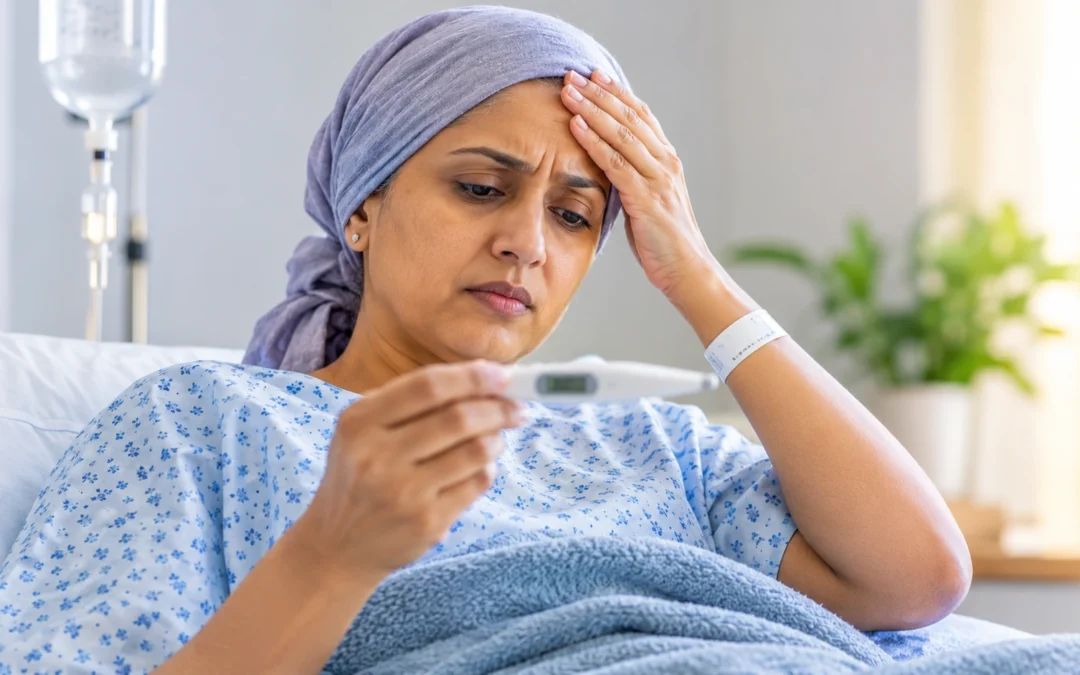
Almost always. A temperature of 38°C (100.4°F) or higher during chemotherapy should be treated as an emergency, and so should chills, shaking or sudden signs of severe illness, even if the thermometer reads lower. Chemotherapy reduces the white blood cells that fight infection, so a fever can be the first, and sometimes the only, sign of a fast spreading infection called febrile neutropenia. So why does a number that would barely worry most people send a patient to hospital in the middle of the night? Because with very low white cell counts, an infection can go from a mild fever to a life threatening one within hours.
Dr. Sandeep Nayak, who provides the Best Cancer Treatment in Bangalore, repeats one message at the start of every first cycle. “A fever is not something to sleep on. Patients are tempted to take a tablet, wait until morning and see how they feel. With low counts, waiting is exactly what we cannot afford. Antibiotics started early work well. Started late, the situation can be quite different. I would much rather someone come in and be told it was nothing.”
Starting chemotherapy and want a clear plan for what to do if you feel unwell?
What Counts as a Fever During Chemotherapy, and Why Is It Urgent?
The rules are simple, and they are worth knowing before the first cycle, not after the first scare.
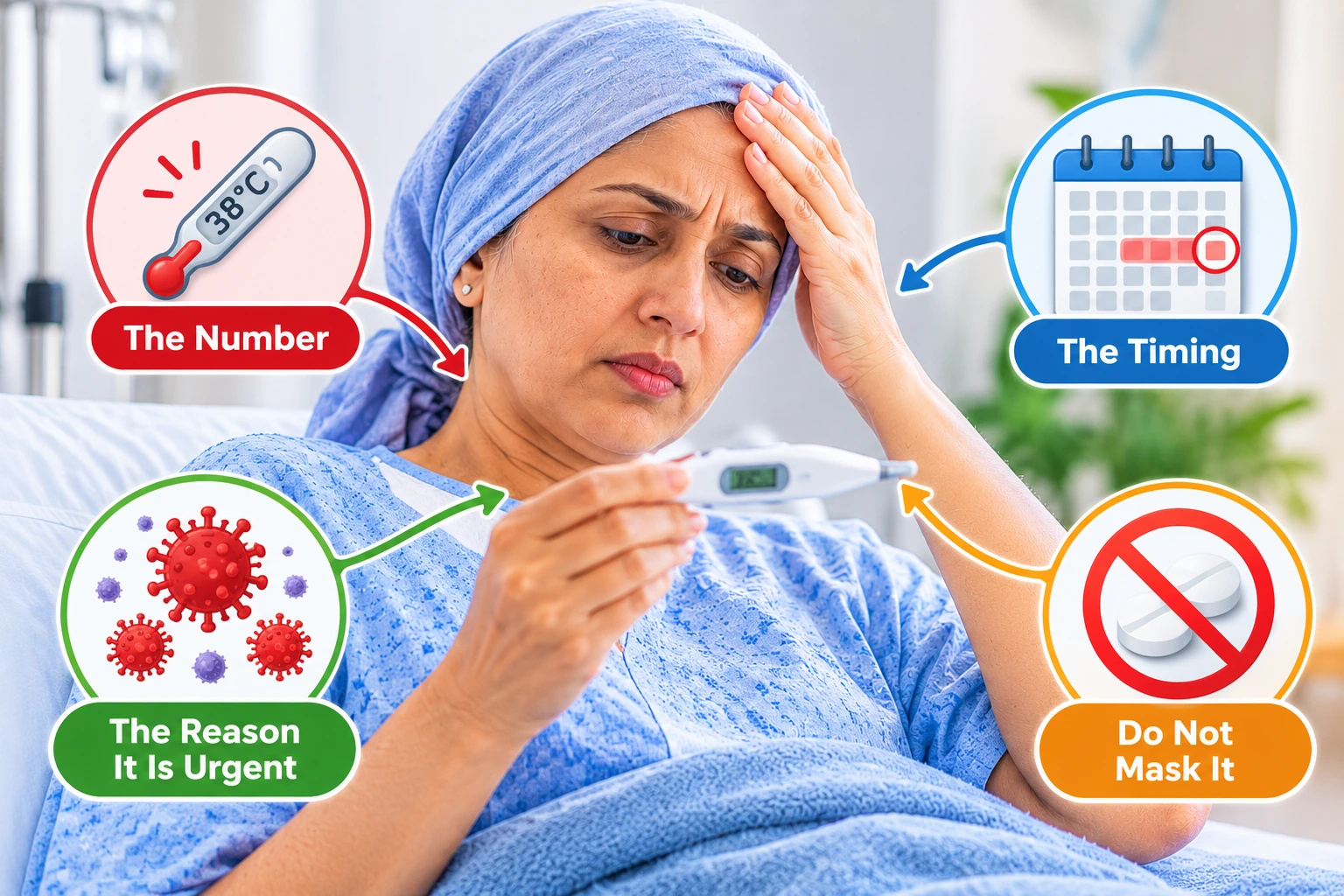
- The number. A reading of 38°C (100.4°F) or higher on an oral thermometer counts. Check whenever you feel hot, shivery or generally off, and do not rely on touching your forehead. Rectal readings should be avoided during chemotherapy.
- The timing. White cell counts are usually at their lowest about 7 to 14 days after a cycle, the period doctors call the nadir, so fever after chemotherapy that appears in that window carries the highest risk. It can still happen at any point during treatment and for some weeks after, a pattern explained in our post on common chemotherapy side effects and how to manage them.
- The reason it is urgent. With few neutrophils, the body cannot contain an infection locally, so bacteria can reach the bloodstream quickly and cause sepsis. Febrile neutropenia is treated as an emergency for exactly that reason.
- Do not mask it. Unless your team has told you otherwise, avoid taking paracetamol, ibuprofen or aspirin before speaking to them. These bring a temperature down and can hide the very signal the doctors need to see.
What Are the Chemotherapy Fever Symptoms to Watch For, Even Without a High Reading?
Chemotherapy fever symptoms are not always dramatic, and some patients never reach a high number.
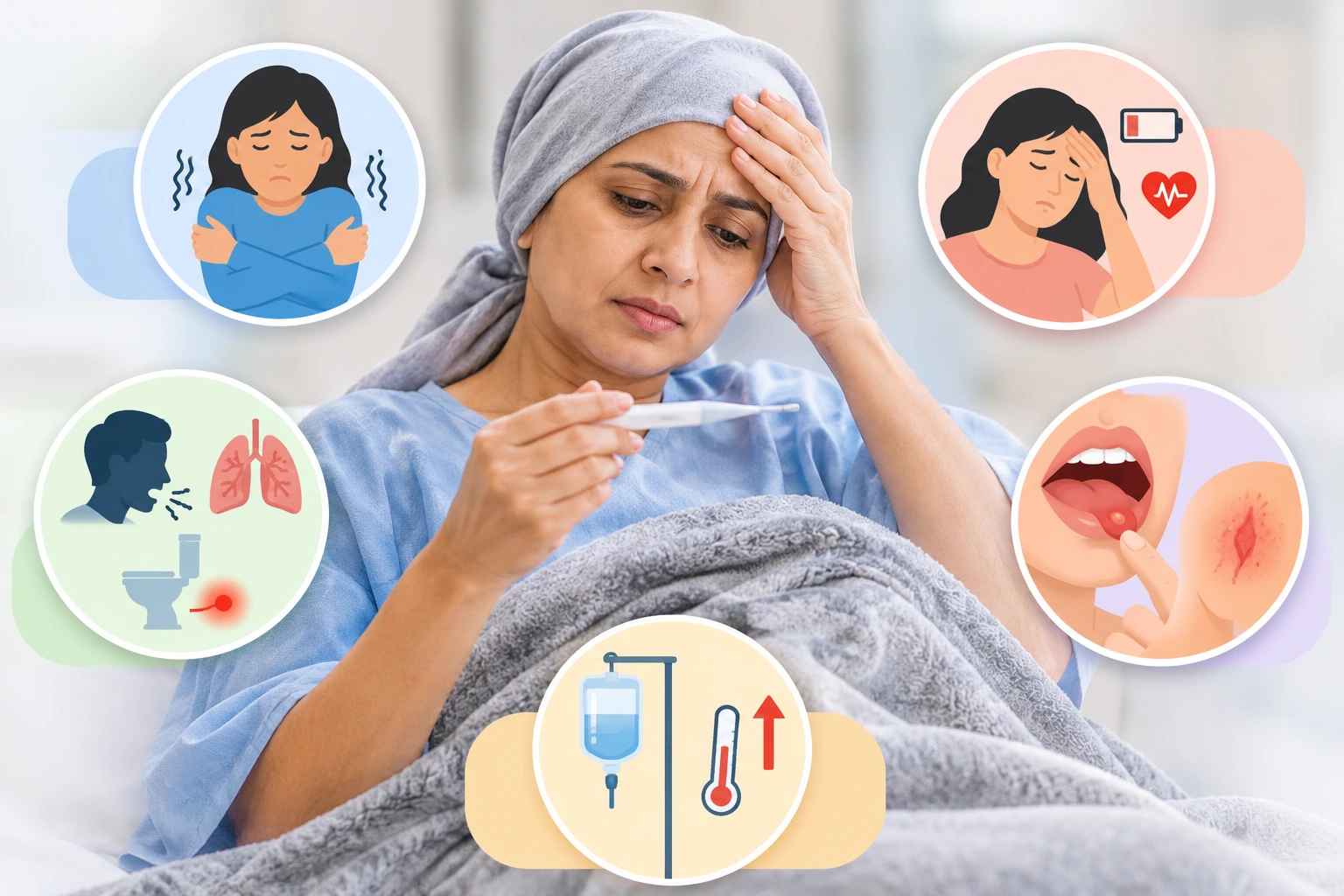
- Chills, shaking or rigors. Especially when they come on suddenly, or around the time a port or central line is used. Our post on what a port is used for in chemotherapy explains why those lines need particular care.
- Feeling suddenly very unwell. Weakness, light headedness, confusion, a racing heart or fast breathing deserve urgent attention even when the thermometer looks normal. A temperature below 36°C can also signal serious infection, and older patients or those on steroids may not develop a fever at all.
- Signs pointing to a source. A new cough or breathlessness, burning when passing urine, a sore throat, diarrhoea, or redness, swelling or pus at a port site or drip site.
- Mouth sores or skin wounds that look infected. Broken skin and sore mouths are easy routes in for bacteria.
- A brief fever soon after an infusion. Some drugs cause a short rise in temperature in the first day or so, but that is a judgement for the team to make, not an assumption for the patient to make at home.
What Happens When You Go to the Hospital?
Knowing what to expect makes it easier to go without delay.
- Quick tests. Blood counts and blood cultures are sent straight away, sometimes with a urine test and a chest X-ray, to find out how low the counts are and where an infection might be.
- Antibiotics without waiting for results. Treatment with intravenous antibiotics is usually started within the first hour, since delay is dangerous.
- Admission or close observation. Most patients are admitted for a few days, though a carefully selected low risk group may be treated with tablets under supervision.
- Changes to the next cycle. The team may delay the next cycle, adjust the dose, or add growth factor injections in future cycles to help the white cells recover.
What Factors Determine the Treatment for Fever During Chemotherapy?
The response is not the same for everyone, and the team weighs a few things.
- The chemotherapy regimen. Some drug combinations lower the counts much more than others, which decides how closely the team watches and whether preventive injections are given.
- The blood counts. How low the neutrophil count is, or is expected to fall, shapes how aggressively treatment starts.
- The patient’s age and general health. Older patients and those with other illnesses are at higher risk of complications.
- The presence of a central line. A port or catheter can be a site of infection and is checked carefully.
- How unwell the patient looks. Blood pressure, heart rate and breathing show whether the infection is already affecting the body.
- The treating team. At MACS Clinic patients are told before the first cycle which temperature and which symptoms mean going to hospital at once, and our post on working during chemotherapy covers the everyday precautions that lower the risk.
Frequently Asked Questions
1.Can I take paracetamol first and see if the fever goes down?
Not unless your oncology team has told you to. Fever tablets can hide a fever and delay treatment. Check your temperature, and if it is 38°C or higher, go to hospital or call your team at once.
2.What if my temperature is only 37.8°C?
Call your team and describe how you feel. Thresholds vary slightly between hospitals, and a reading just below the limit with chills or feeling unwell can still need urgent assessment. When in doubt, ask.
3.Can fever after chemotherapy ever be harmless?
Sometimes. A brief rise in temperature can follow an infusion with certain drugs. But that has to be decided by the treating team, because a fever from infection and a fever from the drug look identical at home.
4.How long after chemotherapy can this happen?
Most often 7 to 14 days after a cycle, when counts are lowest, but it can occur at any point during treatment and for some weeks after treatment ends.
Disclaimer
This content is published for educational and informational purposes only.