

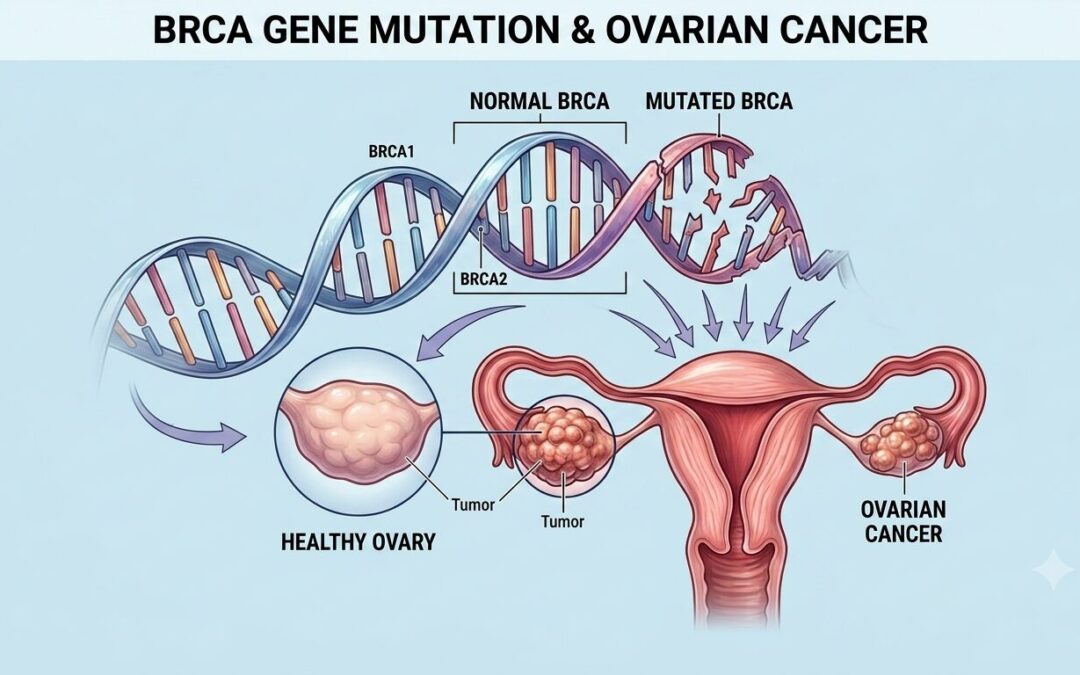
Yes, the average woman’s lifetime ovarian cancer risk sits around 1% to 2%. A BRCA1 mutation pushes that to somewhere between 39% and 44%. A BRCA2 mutation takes it to 11% to 17%. So we’re not talking about a modest increase. We’re talking about a twenty to forty times higher risk depending on which mutation someone carries. What makes that matter clinically is that BRCA is testable from a blood sample, the risk is quantifiable, and the cancer itself is largely preventable in carriers who know about it in time.
According to Dr. Sandeep Nayak,who provides Best cancer treatment in Bangalore, “BRCA mutation carriers are one of the very few groups where we can genuinely get ahead of the disease. The mutation shows up on a blood test. We can measure what it means for that individual. And removing the ovaries and fallopian tubes after family planning is done cuts that ovarian cancer risk by over 90%. That’s about as close to cancer prevention as oncology gets.”
Mum, sister, or aunt with ovarian or breast cancer before 50? Your family history is exactly the scenario where BRCA testing makes direct clinical sense. Not a theoretical conversation. A blood test
How do BRCA mutations actually cause ovarian cancer?
It starts with what these genes are supposed to do normally.
- The job these genes do:
Every time a cell copies its DNA before dividing, it makes mistakes. BRCA1 and BRCA2 produce proteins that catch and fix those mistakes before they build up. Lose that repair function and the errors accumulate over thousands of cell divisions. Eventually some of those errors hit genes that control cell growth and that’s when things go wrong. Cancer isn’t a sudden event. It’s the result of years of damage that wasn’t corrected. - Where the cancer actually starts:
This surprises most people. BRCA-related ovarian cancer usually doesn’t start in the ovary. It starts at the fimbriated end of the fallopian tube. High-grade serous carcinoma, which is the type BRCA carriers predominantly develop, originates there and spreads from there. So when preventive surgery is offered, it removes the fallopian tubes alongside the ovaries. Leaving the tubes in misses the actual origin site. - BRCA1 versus BRCA2:
BRCA1 carriers face the higher ovarian cancer risk and tend to develop it earlier, often in their 40s and 50s. BRCA2 risk is real but lower, and onset tends to be slightly later. Both mutations also raise breast cancer risk considerably, which is why the whole thing gets called hereditary breast and ovarian cancer syndrome. Same mutation, two organs affected. One condition, not two. - Other genes worth knowing about:
BRCA1 and BRCA2 are the biggest players but PALB2, RAD51C, RAD51D, and BRIP1 also raise ovarian cancer risk, though not as dramatically. Standard BRCA-only testing misses people who carry these. A multigene panel tests all of them at once and is now the standard approach when someone has a significant family history.
Genetic Counselling Bangalore at MACS Clinic includes multigene panel testing with proper family risk assessment before anything gets ordered.
What does a positive BRCA test actually change?
Quite a lot. Testing positive doesn’t mean cancer is inevitable. But the clinical plan shifts significantly.
- Surveillance has limits people don’t always hear:
CA125 blood tests and transvaginal ultrasound get offered to BRCA carriers as ovarian cancer monitoring. They’re better than nothing. But they miss enough cases that no guidelines recommend them as a standalone alternative to preventive surgery. They’re used while someone is still building their family or hasn’t reached the age for surgery. They’re not the long-term answer. - The surgery that actually changes the odds:
Taking out both ovaries and fallopian tubes after family planning is complete reduces ovarian cancer risk by over 90%. BRCA1 carriers are generally advised to think about it between 35 and 40. BRCA2 carriers are a bit later, around 40 to 45, because their average cancer onset is later. Earlier surgery in premenopausal women also brings down breast cancer risk as a secondary benefit, which makes the timing decision more complex than just the ovarian numbers alone. - Breast surveillance changes at the same time:
Finding out you have a BRCA mutation means annual breast MRI from around 25 to 30 alongside mammography, not instead of it. BRCA-related breast cancers tend to appear earlier and in denser tissue where mammography alone misses too many. So the ovarian risk conversation and the breast surveillance conversation happen together. One test result, two organs to plan for. - If cancer develops anyway:
BRCA-mutated ovarian cancers respond better to platinum-based chemotherapy than sporadic ovarian cancer does. They also qualify for PARP inhibitor maintenance therapy, olaparib or niraparib, after first-line treatment. The same mutation that contributed to the cancer also creates a specific vulnerability that these drugs exploit. Counterintuitively, BRCA-positive ovarian cancer has better treatment options at equivalent stages than the sporadic version.
Our previous blog on Silent Signs Ovarian Cancer is worth a read. BRCA carriers should take persistent pelvic symptoms more seriously than most and investigate them faster. That context matters.
Why choose MACS Clinic for BRCA and ovarian cancer?
Dr. Sandeep Nayak’s team at MACS Clinic assesses BRCA carriers for ovarian cancer risk with formal genetic counselling, multigene panel testing, and a structured plan that covers both ovarian and breast risk simultaneously. Women who test positive get a clear recommendation on surveillance timing, the age at which preventive surgery should be discussed, and what PARP inhibitor eligibility means if cancer is eventually diagnosed.
A BRCA mutation is actionable information. It changes what you do before cancer develops, not just how you treat it after. Those who want to discuss their family history or test results can reach the team at +91 8035740000.
FAQs
Can BRCA mutation always cause ovarian cancer?
No. It raises the risk considerably but most carriers never develop it. BRCA1 puts lifetime ovarian cancer risk at 39% to 44%. High compared to the 1% to 2% general risk, but still means the majority of carriers don’t get it.
Should I get tested for BRCA if my mother had ovarian cancer?
Yes, and ideally test the affected family member first. If a mutation is found there, first-degree relatives each have a 50% chance of carrying it too, and targeted testing for that specific mutation becomes much simpler.
What's the best way to prevent ovarian cancer in BRCA carriers?
Removing both ovaries and fallopian tubes after family planning is complete. It cuts ovarian cancer risk by over 90% and is the most effective preventive option currently available for BRCA carriers.
Does BRCA mutation affect how ovarian cancer is treated?
Yes. BRCA-mutated ovarian cancers respond better to platinum chemotherapy and qualify for PARP inhibitor maintenance therapy after first-line treatment. Better treatment options than sporadic ovarian cancer at equivalent stages.
Disclaimer: This content is published for educational and informational purposes only.