

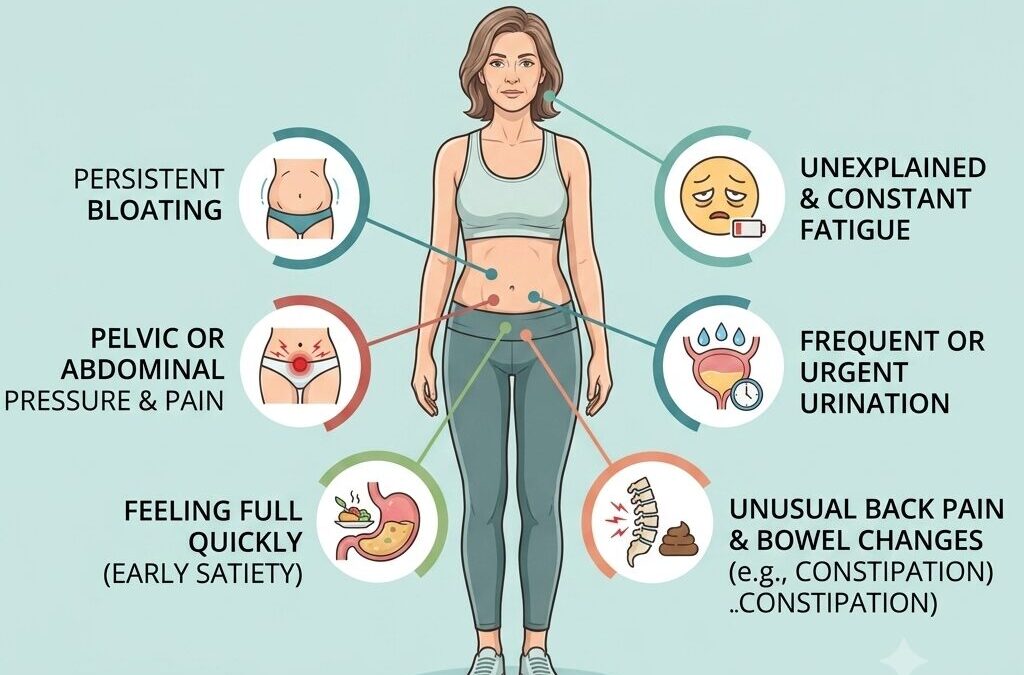
Ovarian cancer earns the silent killer label because its early symptoms are real but easy to explain away. Persistent bloating, a feeling of pressure in the pelvis, needing to urinate more often, back pain, and getting full quickly after eating are the main ones. None of them scream cancer on their own. All of them get blamed on IBS, hormonal changes, or a bad week of eating. What separates ovarian cancer from those explanations is that the symptoms don’t go away. They stay. And they slowly get worse. That persistence is the signal most women miss.
According to Dr. Sandeep Nayak,who provides Best cancer treatment in Bangalore, “Ovarian cancer doesn’t hide. It gives signals for months before diagnosis. What it does is mimic conditions so common that nobody investigates properly until the abdomen is distended or a scan for something else picks up a pelvic mass. Any woman over 40 with new onset bloating or pelvic pressure that’s been there daily for more than three to four weeks needs a pelvic ultrasound and CA125, not reassurance and dietary advice.”
Something in the pelvis that’s been bothering you for weeks and keeps getting explained away? Trust the persistence. Get scanned
What Are the Actual Silent Signs of Ovarian Cancer?
These aren’t vague or obscure. They’re symptoms women notice and then spend months attributing to something else.
- Persistent Bloating:
Not the kind that comes and goes with meals. Constant abdominal distension that’s there every morning when you wake up and builds through the day. Clothes feel tight around the waist. Abdomen looks visibly swollen. Most women with this symptom spend three to six months trying dietary changes, probiotics, and laxatives before anyone suggests a pelvic scan. That delay costs them staging. - Pelvic or Abdominal Pressure:
A low, dull pressure or heaviness in the lower abdomen or pelvis. Not sharp pain. Not cramps. Just a persistent sense that something is sitting there that shouldn’t be. Often described as a feeling of fullness or weight. Gets dismissed as uterine fibroids, constipation, or musculoskeletal pain. Each of those is more common. But each of them also resolves with treatment. If the pressure doesn’t, it needs imaging. - Urinary Urgency or Frequency:
Needing to urinate more often, sometimes urgently, without a UTI or any other explanation. A growing ovarian mass presses on the bladder from behind. The bladder fills faster and signals urgency earlier than it should. Most women get treated for a UTI that doesn’t respond to antibiotics. Some get diagnosed with overactive bladder. An ultrasound with the bladder in view would show a pelvic mass immediately. - Early Satiety and Appetite Changes:
Feeling full after eating very little. Appetite disappearing without explanation. These happen because ascites, fluid that accumulates in the abdomen when ovarian cancer spreads to the peritoneum, compresses the stomach and reduces its capacity. By the time this symptom appears, the disease is often already at stage 3. But the bloating and pressure that preceded it by months were the earlier signal nobody pursued.
Ovarian Cancer Treatment including cytoreductive surgery and HIPEC for peritoneal spread is available at MACS Clinic for patients at all stages.
Why Do These Symptoms Get Missed for So Long?
The delay between the first symptom and diagnosis in ovarian cancer averages several months. That’s not bad luck. It’s a pattern with specific reasons.
- Symptoms Mimic Common Conditions:
Bloating, pelvic pain, urinary changes, and back pain are the top four presenting symptoms of ovarian cancer. They’re also the top presenting symptoms of IBS, endometriosis, UTI, and musculoskeletal pain. All of those are far more common. So every investigation starts with those first. And ovarian cancer waits. - No Routine Screening Exists:
There’s no pap smear equivalent for ovarian cancer. CA125 is too unreliable as a standalone screening test. Ultrasound isn’t recommended for the general population. So a woman without known risk factors like BRCA1 or BRCA2 mutation or family history has no systematic way to catch ovarian cancer before symptoms appear. It’s found when someone investigates symptoms seriously enough. - Postmenopausal Symptoms Get Normalised:
Older women get told bloating and pelvic discomfort are normal parts of ageing. They often are. But the volume and persistence of ovarian cancer symptoms should cross a threshold that prompts investigation. A postmenopausal woman with new daily bloating and pressure lasting more than a month needs a pelvic ultrasound before any other explanation is entertained. - CA125 Is Misunderstood as a Diagnostic Test:
CA125 is elevated in roughly 80% of advanced ovarian cancers but in only 50% of stage 1 disease. And it rises in endometriosis, fibroids, liver disease, and menstruation. So a normal CA125 doesn’t rule it out and an elevated one doesn’t confirm it. Used alongside a pelvic ultrasound in a symptomatic woman it’s a useful flag. Used as a standalone screening tool it misses too much and raises too many false alarms.
Our previous blog on Ovarian Cancer Both Ovaries is worth a read for understanding what happens after ovarian cancer is found, including when fertility-sparing surgery is actually possible and what staging laparoscopy involves.
Why Choose MACS Clinic for Ovarian Cancer Symptoms Investigation?
Dr. Sandeep Nayak’s team at MACS Clinic doesn’t dismiss vague symptoms. A woman presenting with persistent bloating, pelvic pressure, or unexplained urinary changes gets a pelvic ultrasound and CA125 at the first visit not six weeks of dietary advice first. If imaging suggests a pelvic mass, staging laparoscopy follows to confirm histology and assess extent of disease before any surgical plan is confirmed.
Ovarian cancer caught early is highly curable. The problem is that the symptoms are easy to explain away and most women do, for months. The ones who get to surgery at an early stage are the ones whose symptoms were investigated rather than managed. Those who want to discuss their symptoms can reach the team at +91 8035740000
FAQs
Can pancreatic cancer be cured if caught early?
Sometimes yes. Surgery before it spreads gives a real shot at long-term survival. Most people don’t get that chance because it’s found too late.
Who should be screened for pancreatic cancer?
Anyone with BRCA2, Lynch syndrome, Peutz-Jeghers, hereditary pancreatitis, or a close family member who had it. These people should be getting annual MRI or EUS, starting around 40 to 50.
What are the early warning signs of pancreatic cancer?
New diabetes after 50, back pain that hangs around, jaundice, pale stools, losing weight for no clear reason. None of these alone point to cancer but together they’re worth investigating properly.
Does CA19-9 detect pancreatic cancer early?
Not really. It goes up in other conditions too and some cancer patients never have a raised level. It’s more useful for checking whether treatment is working once someone’s already diagnosed.
Disclaimer: This content is published for educational and informational purposes only.