

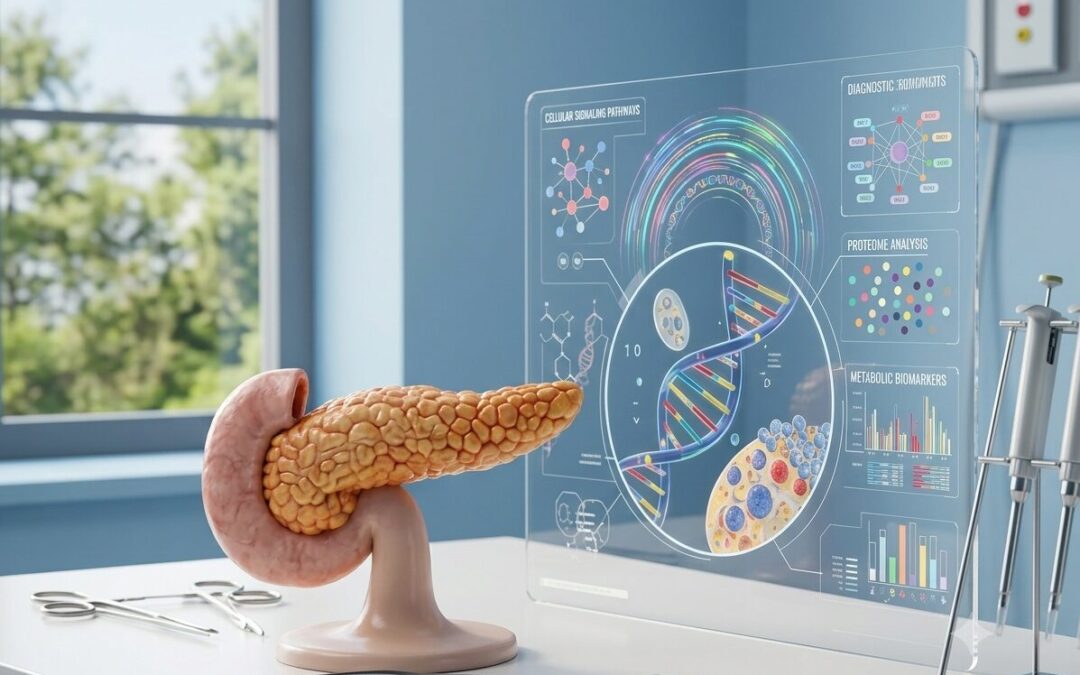
Yes, pancreatic cancer can be detected before stage 3 but it happens far less often than it should. No routine screening exists for the general population and the pancreas sits deep behind the stomach where early tumours cause no symptoms worth investigating. Most diagnoses happen at stage 3 or 4 because nothing signals trouble earlier. The cases that get caught before then are almost always found through surveillance programmes in high-risk patients, incidental imaging for something unrelated, or investigation of vague symptoms that someone took seriously enough to pursue.
According to Dr. Sandeep Nayak,who provides Best cancer treatment in Bangalore, “Pancreatic cancer’s lethality is tied directly to how late it’s found. The biology of the tumour isn’t inherently more aggressive than other cancers at an equivalent stage. The problem is that by the time it announces itself through jaundice, back pain, or weight loss, it’s already been growing for years. Finding it before that window closes requires knowing who’s at risk and actually looking.”
Family history of pancreatic cancer, a new diabetes diagnosis after 50, or a known genetic mutation and not on a surveillance programme? That gap is exactly where early detection fails
Who Actually Gets Pancreatic Cancer Detected Early?
Early detection isn’t random. It follows a pattern. Patients who get found early almost always fit one of these categories.
- High-Risk Genetic Carriers:
BRCA2 mutations, Lynch syndrome, Peutz-Jeghers syndrome, familial atypical multiple mole melanoma, and hereditary pancreatitis all carry significantly elevated pancreatic cancer risk. Carriers get enrolled in surveillance programmes using annual MRI or endoscopic ultrasound from age 40 to 50 depending on their specific mutation. These are the patients who get found at stage 1 or 2. - Familial Pancreatic Cancer:
Someone with two or more first-degree relatives with pancreatic cancer has a lifetime risk ten times the general population. No genetic mutation is identified in most of these families but the risk is real. Annual MRI surveillance starting at 40, or ten years before the youngest family diagnosis, is what catches these cases while they’re still resectable. - Incidental Discovery on Imaging:
CT or MRI scans done for other reasons, back pain, kidney stones, abdominal symptoms, pick up pancreatic cysts or small masses in people who had no idea anything was growing there. A pancreatic cystic lesion found this way, particularly an intraductal papillary mucinous neoplasm, needs surveillance because a proportion of them progress to cancer. Catching the precursor is catching it early. - New Diabetes After 50:
New-onset diabetes in someone over 50 with no obvious metabolic risk factors is a recognised pancreatic cancer signal. The cancer often causes glucose intolerance before it causes anything else. Most new diabetics don’t have pancreatic cancer but the association is strong enough that unexplained new diabetes in this age group warrants pancreatic imaging.
Precision Oncology genetic profiling in pancreatic cancer identifies BRCA2, PALB2, and ATM mutations that determine both hereditary risk assessment and eligibility for PARP inhibitor therapy in metastatic disease.
What Happens After Jaundice Is Investigated?
The reasons are structural, anatomical, and biological. None of them are going away soon.
- No Symptoms in Early Disease:
A small pancreatic tumour causes nothing. No pain, no jaundice, no weight loss. The pancreas doesn’t swell in a way you’d feel. It doesn’t produce symptoms until it’s large enough to block the bile duct, invade adjacent structures, or spread to distant organs. By that point it’s past stage 2 in most patients. - No Population Screening Test:
There’s no pancreatic cancer equivalent of a mammogram or colonoscopy that works in general population screening. CA19-9 is too unreliable as a standalone marker to screen unselected patients. Endoscopic ultrasound is accurate but invasive and expensive at population scale. The tools exist but the economics and logistics of applying them broadly don’t work yet. - Rapid Progression from Precursor to Cancer:
Pancreatic intraepithelial neoplasia, the most common precursor lesion, progresses to invasive cancer faster than colorectal adenomas. And unlike colonoscopy where you can see and remove polyps, there’s no practical way to identify and remove PanIN in a standard clinical workflow. By the time imaging catches it, it’s often already invasive. - Late Referral of Vague Symptoms:
Back pain, mild indigestion, unexplained fatigue, and new glucose intolerance are the early signals of pancreatic cancer. They’re also the symptoms of dozens of benign conditions. Patients wait, GPs investigate common causes first, and by the time someone orders a pancreatic CT, months have passed. That delay is often the difference between resectable and unresectable disease.
Our previous blog on Hepatocellular Carcinoma is worth a read for understanding how surveillance programmes in high-risk populations work to catch cancer before symptoms appear, a model that pancreatic cancer surveillance is trying to replicate for genetic risk groups.
Why Choose MACS Clinic for Pancreatic Cancer Assessment?
Dr. Sandeep Nayak’s team at MACS Clinic moves fast when pancreatic cancer is confirmed. CT staging same week. Resectability assessed before the window narrows. Borderline cases go straight to neoadjuvant chemotherapy planning not a waiting list. And when the tumour is resectable, Whipple or distal pancreatectomy is performed laparoscopically, with the same oncological clearance as open surgery and significantly less recovery time.
Pancreatic cancer is curable in the patients who get to surgery. The ones who get to surgery are the ones whose workup happened quickly enough. Those who want to discuss their situation can reach the team at +91 8035740000.
FAQs
Can pancreatic cancer be cured if caught early?
Sometimes yes. Surgery before it spreads gives a real shot at long-term survival. Most people don’t get that chance because it’s found too late.
Who should be screened for pancreatic cancer?
Anyone with BRCA2, Lynch syndrome, Peutz-Jeghers, hereditary pancreatitis, or a close family member who had it. These people should be getting annual MRI or EUS, starting around 40 to 50.
What are the early warning signs of pancreatic cancer?
New diabetes after 50, back pain that hangs around, jaundice, pale stools, losing weight for no clear reason. None of these alone point to cancer but together they’re worth investigating properly.
Does CA19-9 detect pancreatic cancer early?
Not really. It goes up in other conditions too and some cancer patients never have a raised level. It’s more useful for checking whether treatment is working once someone’s already diagnosed.
Disclaimer: This content is published for educational and informational purposes only.