

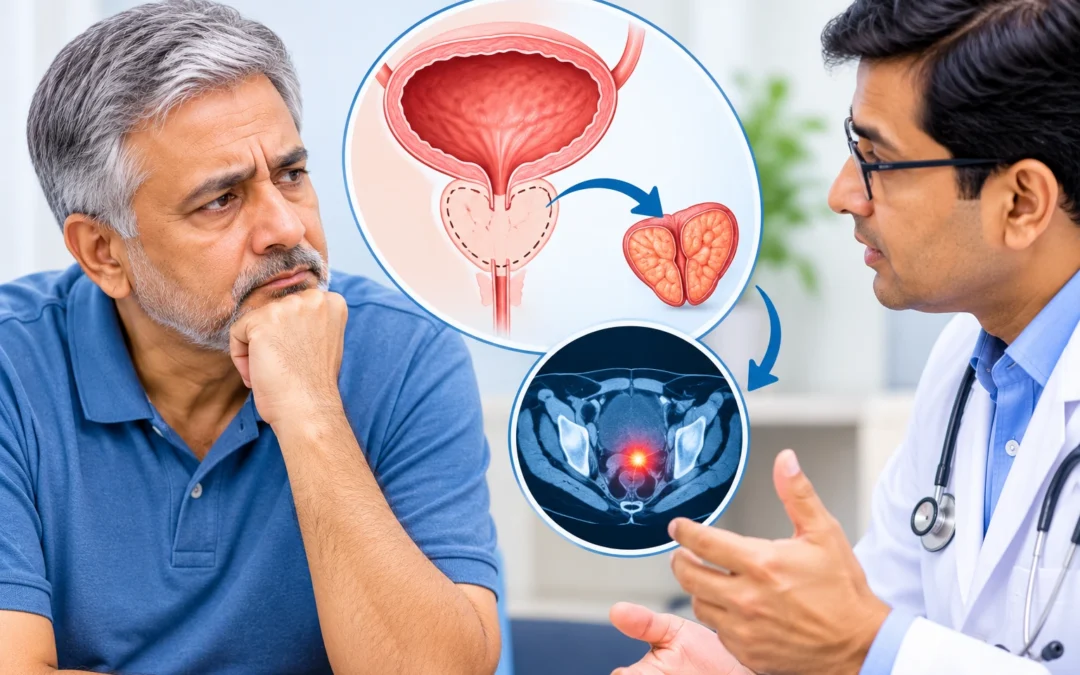
Yes, prostate cancer can come back even after the prostate has been removed. It happens when a few cancer cells had already slipped out before surgery, too small to show up on any scan, and they start growing again later. The first sign is usually a PSA that begins to rise. That’s called biochemical recurrence, and blood tests pick it up long before it causes symptoms, which gives doctors time to act.
Dr. Sandeep Nayak, Surgical Oncologist at MACS Clinic, which provides the Best Cancer Treatment in Bangalore, says men are often told the cancer is out and then spend years waiting on a PSA result. “That’s understandable. But I want them to know what a rising PSA means and what it doesn’t. It means a few cells survived. It doesn’t mean the end. Caught early, while the PSA is still very low, we can often treat it with radiation to the area where the prostate was, sometimes with hormone therapy, and many men do well. So the follow-up blood tests aren’t a formality. They’re how we catch it early.”
Had surgery and worried about your PSA?
Prostate Cancer Recurrence After Prostatectomy: Why It Happens

It isn’t a sign that surgery was done badly. It comes down to what the cancer was like before the operation:
- A few cells can escape before surgery. They’re far too small to see on scans. In roughly one in three men, a PSA rise appears at some point after a prostatectomy.
- Some findings raise the risk. If the pathology report shows cancer at the edge of the specimen, growth beyond the prostate or into the seminal vesicles, cancer in the lymph nodes, or a high Gleason grade (8 to 10), the risk can climb to somewhere between 50% and 80%. Our prostate cancer treatment in Bangalore page explains how the surgery and the report fit together.
- Where it returns matters. It might be in the area where the prostate sat, in nearby lymph nodes, or further away, such as the bones. How quickly the PSA doubles gives a clue, and a fast rise is more worrying than a slow one.
- A rising PSA doesn’t always mean trouble. Some men with a slow rise never develop symptoms or spread for years, and some can be watched. That’s why the pattern matters more than a single number.
PSA Levels After Prostate Removal: What the Numbers Mean and What Happens Next

Once the prostate is gone, the PSA should be close to zero. These are the points to know:
- After surgery, the PSA should fall to undetectable. There’s no prostate left to make it. A PSA that stays detectable, or starts creeping up again, means some prostate cells remain somewhere.
- Recurrence is usually defined as a PSA of 0.2 ng/mL or more, confirmed by a second rise. You’ll normally have the test every three to six months in the early years, then less often. Ask your team for your own schedule.
- Scans can help find where it is. A PSMA PET scan can often locate the cancer, though it picks it up more reliably as the PSA climbs. At a PSA of 0.2 to 0.5 it finds the spot in around four in ten men, and above 1 in most. A scan that shows nothing doesn’t rule out treatment.
- Radiation to the prostate area works best when the PSA is still low. Guidelines recommend salvage radiation at a PSA of 0.5 or below, with hormone therapy added for higher-risk cases. Treating at the first rise turned out to work about as well as giving radiation straight after surgery to everyone, and it spared many men radiation they didn’t need. Our radiation therapy page explains how it’s planned.
What Determines the Right Treatment Approach?
Two men with a rising PSA can be offered different plans. A few things decide it:
- How fast the PSA is rising, and where it started. A slow rise from a very low level gives more options than a fast one, and the PSA level at the start of treatment affects the result.
- What the surgery report showed. Margins, stage and grade help predict whether the cancer is likely to be local or has spread.
- What the scans show. If the cancer looks local, radiation to the area can aim to cure it. If it has spread, treatment moves toward hormone therapy and other drugs.
- Your health and the side effects you can live with. Radiation can irritate the bowel and bladder, and hormone therapy has its own effects, which our post on hormone therapy and heart health in prostate cancer covers.
- A team view, and your own preference. Some men with a slow rise are simply watched for a while. Reviewing the case with the surgeon and the radiation and medical oncologists, as in our post on what a tumour board is, helps. The final decision is yours.
Key Takeaways
- Prostate cancer can come back after the prostate is removed, in roughly one in three men, and it’s usually found first as a rising PSA.
- After surgery, the PSA should fall to undetectable, and recurrence is usually defined as 0.2 ng/mL or more with a confirming rise.
- Risk is higher with cancer at the edge, growth beyond the prostate, lymph node involvement or a high Gleason grade.
- Treating early, at a low PSA, gives the best chance, often with radiation to the prostate area and sometimes hormone therapy.
- For questions about your own situation, you can contact the clinic at +91 9482202240.
Frequently Asked Questions
1.How common is recurrence after a prostatectomy?
Roughly three in ten men will have a rising PSA at some point after surgery. It’s higher when the pathology report shows higher-risk features, and lower when the cancer was small and fully contained.
2.What PSA level means the cancer has come back?
Doctors usually use a PSA of 0.2 ng/mL or more, confirmed by a second rise. Some centres act on a rising trend at lower levels using very sensitive tests. A single borderline result usually leads to a repeat test, not to treatment.
3.Can prostate cancer that returns after surgery be cured?
Sometimes, especially when it’s caught early and stays in the area where the prostate was, where radiation can often control or clear it. If it has spread, hormone therapy and other treatments can keep it in check for long periods, even though a cure is less likely.
4.How often should I have my PSA checked after surgery?
Commonly every three to six months for the first couple of years, then less often, and for many years afterwards. Your team will set a schedule based on your risk, so ask for it in writing.
Disclaimer
This content is published for educational and informational purposes only and is not a substitute for medical advice. Please talk to your urologist and oncologist about your own PSA results and follow-up.
References:
- Salvage Therapy for Prostate Cancer: AUA/ASTRO/SUO Guideline, American Urological Association
- Biochemical Relapse After Radical Prostatectomy: Risk Factors and Timing of Salvage Radiotherapy, PubMed Central
- Adjuvant Versus Early Salvage Radiotherapy After Radical Prostatectomy, PubMed Central
- PSMA-PET/CT-Guided Salvage Radiotherapy in Recurrent or Persistent Prostate Cancer and PSA < 0.2 ng/ml, European Journal of Nuclear Medicine and Molecular Imaging
- Prostate Cancer Treatment in Bangalore, MACS Clinic