

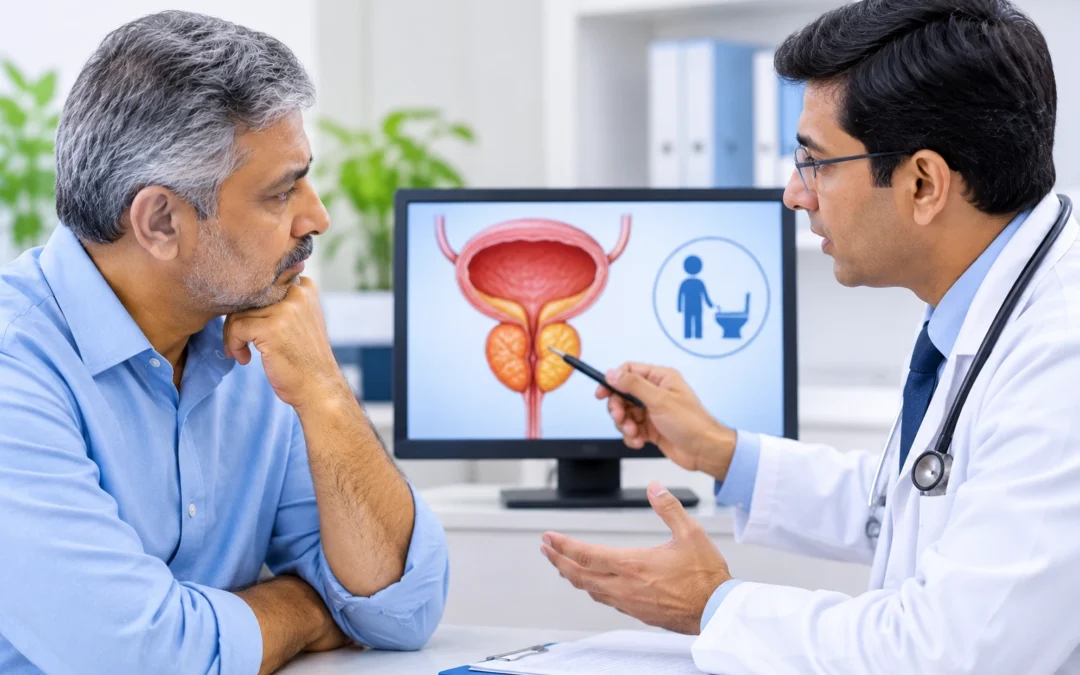
Often for a while, and sometimes for longer. When the prostate is removed in a radical prostatectomy, the bladder is joined directly to the urethra, the tube that carries urine out. The muscles and nerves that hold urine in sit right beside the prostate, and they get bruised, stretched or irritated during the operation. The result is leakage that is usually worst in the first weeks and improves over months. Most men regain good control, but not all, and it is better to know that before surgery than after.
Dr. Sandeep Nayak, Surgical Oncologist at MACS Clinic, Bangalore, says leakage is the worry men raise most. “They want a number, and the honest answer is that it varies. Most men are using far fewer pads by three months and are close to dry within a year. Some have lasting leakage. How you recover depends on your age, the size of the prostate, how much control you had before, and the surgical technique. Pelvic floor exercises started early make a real difference.”
Questions about your own situation? The clinic’s number is +91 9482202240.
Why Does Urinary Incontinence After Prostate Cancer Surgery Happen?

Urinary incontinence after prostate cancer surgery has a clear anatomical cause, and a few things add up.
- The urethral sphincter is affected. This ring of muscle just below the prostate is the main valve that keeps urine in. It lies close to the gland and can be bruised or shortened when the prostate is removed.
- Pelvic floor muscles tire. The muscles that support the bladder are weaker after surgery and need rebuilding.
- Nerves are irritated. The nerves that help control these muscles can stay irritated for a while.
- The leakage is usually stress type. It happens when you cough, sneeze, lift, stand up or exercise.
- Urgency can occur too. Some men feel a sudden strong need to go, because the bladder itself is irritable after surgery.
- The catheter adds to it. It stays in for about a week or two, which prolongs early irritation.
How Long Does Urinary Control Take to Return After Prostatectomy?

Urinary control after prostatectomy improves gradually, not in a straight line.
- The first few weeks are the leakiest. After the catheter comes out, many men use several pads a day.
- Three to six months brings steady improvement. It can continue up to a year or longer.
- By twelve months, most are dry or nearly dry. A majority need no pad or only a small protective one.
- A smaller group has persistent leakage. They may need further treatment.
- Younger men and those with strong pelvic floors recover faster. Good muscle strength before surgery helps.
- A larger prostate, earlier prostate surgery or radiation can slow recovery. These make the road longer.
- Nerve-sparing surgery may help in selected men. It depends on how far the cancer has grown. Our blog on robotic vs open surgery for rectal cancer shows how magnified pelvic surgery can help protect nerves.
What Helps With Urine Leakage After Prostate Removal?
Urine leakage after prostate removal usually responds to a few practical steps.
- Pelvic floor exercises. These strengthen the muscles that hold urine in. Starting before surgery, and continuing after the catheter is out, helps recovery. A physiotherapist can check you are doing them correctly, because many men squeeze the wrong muscles.
- Bladder habits. Going at set times, cutting down on caffeine and alcohol, and avoiding drinking a lot late in the evening all reduce leaks and urgency.
- Pads and protection. Using pads is not failure. It lets you carry on with work and walks while recovering.
- Weight and constipation. Extra weight and straining both push on the bladder, so keeping both in check helps.
- Medicines. If urgency is the problem, certain tablets can calm the bladder, as prescribed by your doctor.
- Further treatment. If leakage persists after about a year, options such as a sling or an artificial urinary sphincter can be discussed.
What Determines the Right Treatment Approach for Prostate Cancer and Urinary Control?
The team looks at several things together before recommending surgery or anything else.
- Cancer stage and grade. How aggressive the cancer is decides whether surgery, radiation or monitoring suits. Our blog on hormone therapy vs surgery for prostate cancer covers the other options.
- Your age and general health. Both affect recovery and risk.
- Urinary function before surgery. Existing leakage or a weak stream changes expectations.
- Prostate size and position. These affect how technically difficult the operation is.
- Priorities. Some men weigh cure first, others weigh continence and sexual function heavily.
- Surgeon experience. Outcomes for control depend on how often the team performs the operation. Precision oncology testing can also inform how aggressive the tumour is.
Key Takeaways
- Urinary incontinence after prostate cancer surgery is common at first, because the sphincter and nearby nerves are bruised.
- Most men improve steadily over three to twelve months.
- Some have lasting leakage, so it is worth discussing the risk before surgery.
- Pelvic floor exercises, ideally started before the operation, help recovery.
- Persistent leakage after a year can be treated further.
- Questions about your own situation? The clinic’s number is +91 9482202240.
Frequently Asked Questions
1.Will I be dry after prostate surgery?
Most men are dry or nearly dry within a year. Some are not.
2.When do pelvic floor exercises start?
Ideally before surgery, and again once the catheter is out, as your team advises.
3.Does nerve-sparing surgery help continence?
It may help in selected men, though outcomes vary.
4.When should I seek help for leakage?
If it is not improving after several months, or if it is severe or painful.
Disclaimer
This content is published for educational and informational purposes only.
References:
- National Cancer Institute, Prostate Cancer Treatment (PDQ)
- American Cancer Society, Incontinence After Prostate Cancer Treatment
- Cancer Research UK, Bladder Problems After Prostate Surgery