

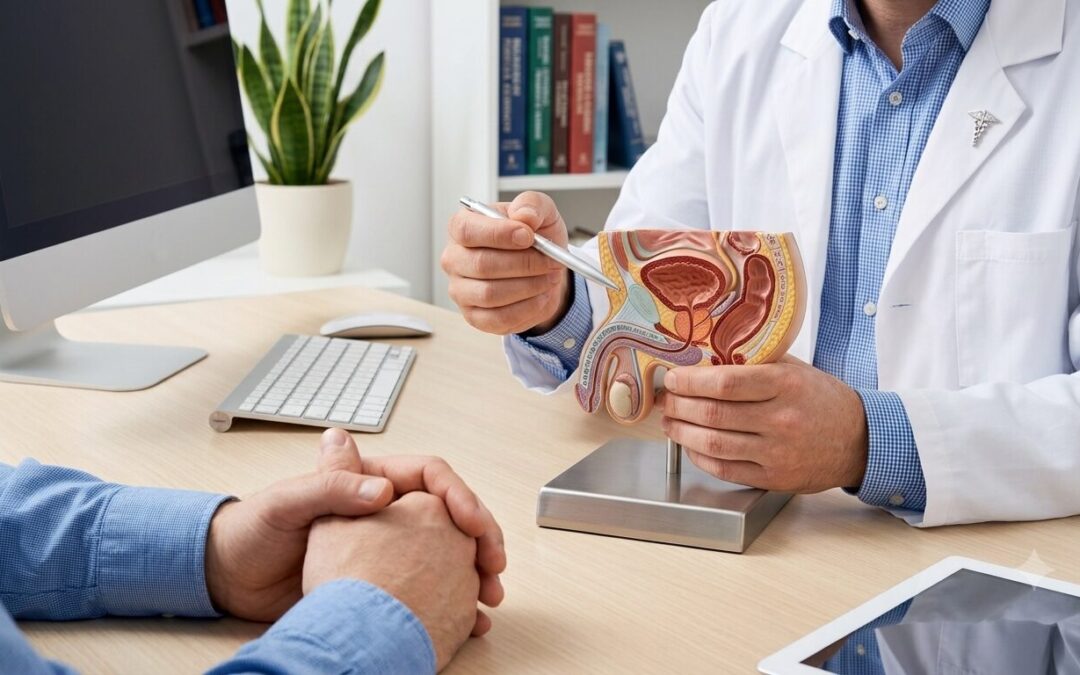
These two treatments are not competing options sitting on either side of a choice. They do completely different things and are used at different points in the disease. Surgery removes the prostate gland entirely, with the intent of curing localised cancer before it spreads. Hormone therapy, also called androgen deprivation therapy, cuts off the testosterone supply that prostate cancer feeds on. It doesn’t remove the cancer. It slows or stops its growth. For early, localised disease, surgery is the curative option. For advanced, high-risk, or recurring disease, hormone therapy becomes central to keeping it under control.
Dr. Sandeep Nayak, Best Cancer Treatment in Bangalore, explains where the confusion usually starts: “Patients come in having heard about both and assume they’re choosing between them. In most cases they aren’t. Surgery is a treatment for localised prostate cancer with curative intent. Hormone therapy is used when the disease is beyond the prostate, when surgery isn’t appropriate, or when it’s added around radiation for high-risk cases. They answer different clinical questions.”
Want to know which treatment applies to your stage?
Hormone Therapy vs Surgery: What's the Difference?
| Surgery (Radical Prostatectomy) | Hormone Therapy (ADT) | |
| What It Does | Removes the prostate gland entirely | Blocks testosterone to slow cancer growth |
| Intent | Curative | Control, not cure |
| Used For | Localised prostate cancer | Advanced, high-risk, or recurring disease |
| How It’s Done | Robotic or laparoscopic surgery | Injections or oral medication |
| Cancer Removed | Yes, physically removed | No, suppressed |
| PSA After | Should drop to undetectable | Reduced but monitored ongoing |
| Side Effects | Incontinence, erectile dysfunction risk | Fatigue, loss of libido, bone density loss |
| Duration | One-time procedure | Months to years depending on case |
| Cure Possible | Yes, for localised disease | No, manages disease long term |
Worth noting — these two treatments work alongside each other more often than people realise. High-risk localised cases may get surgery first, then hormone therapy after. Locally advanced cases often get hormone therapy running alongside radiation. The table shows the differences, but the reality is more layered than a straight comparison suggests.Our blog on radiation and hormone therapy for prostate cancer covers how the two work together in practice.
When Does Surgery Make Sense?
Surgery is the right conversation when the cancer is still inside the prostate and complete removal gives a realistic shot at cure.
Localised Disease: Cancer sitting within the prostate capsule is where surgery earns its place. Robotic radical prostatectomy removes the gland, the seminal vesicles, and nearby lymph nodes where needed. When it goes well, PSA drops to undetectable and stays there.
Younger, Fit Patients: Men who are fit enough for surgery and young enough that long-term cancer control over decades matters tend to lean toward surgery as the curative option. Robotic prostatectomy is a different experience from open surgery less blood loss, faster recovery, and patients are usually home within two to three days.
High-Risk Localised Cases: Some high-risk cases still go to surgery, but hormone therapy gets added after to reduce the chance of recurrence. Surgery alone doesn’t finish the job in every high-risk case.
Rising PSA After Previous Radiation: If PSA climbs after a course of radiation, salvage prostatectomy is sometimes on the table though it’s technically more demanding than primary surgery and not every patient qualifies.
More on how prostate cancer is staged and treated at MACS Clinic.
Why Choose MACS Clinic for Prostate Cancer?
Dr. Sandeep Nayak’s team at MACS Clinic reviews every prostate cancer case across urology, surgical oncology, medical oncology, and radiation oncology before a plan is made. For localised disease, robotic and laparoscopic radical prostatectomy is done with nerve-sparing technique where the cancer allows it because what happens to quality of life after surgery matters, not just what the PSA does.
For patients where hormone therapy is part of the picture, the regimen is built around the actual stage and risk profile. Not a generic protocol applied to everyone. Those who want to understand what their diagnosis actually calls for can reach the team at +91 9482202240.
FAQs
Can hormone therapy cure prostate cancer?
No. It controls it by cutting off testosterone but doesn’t eliminate the cancer. Highly effective at slowing things down and managing symptoms but not curative the way surgery is for early disease.
Is robotic surgery better than open surgery?
For most patients, yes. Less blood loss, shorter hospital stay, faster recovery. Nerve-sparing technique is also more reliably done robotically, which matters for urinary and sexual function after the operation.
Can surgery and hormone therapy be used together?
Yes, regularly. High-risk localised cases often get surgery then hormone therapy. Locally advanced cases get hormone therapy alongside radiation. They’re not mutually exclusive — they do different jobs in the same treatment plan.
What happens if PSA rises after surgery?
It usually means something was left behind or the cancer has returned somewhere. Salvage radiation to the prostate bed is often the first step, sometimes with hormone therapy added depending on how fast PSA is climbing and what the imaging shows.
Disclaimer: This content is published for educational and informational purposes only.