
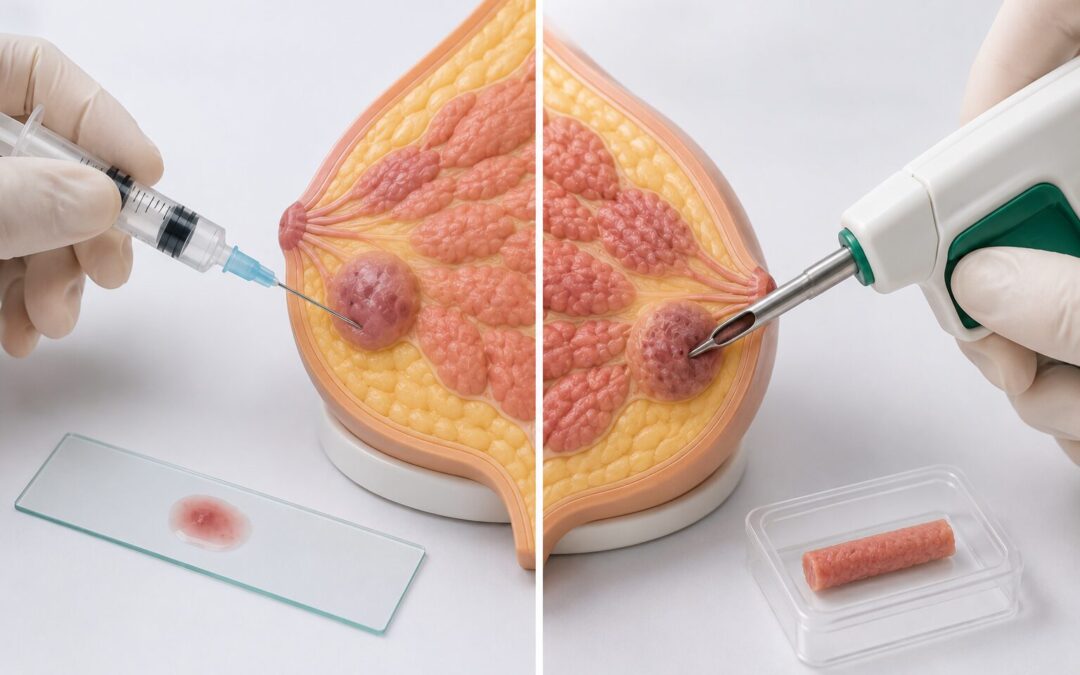
Core biopsy is generally more accurate, and for most cancer diagnoses today it’s the preferred starting point. But that doesn’t make FNAC useless. These two procedures collect tissue differently, give different amounts of information, and serve different clinical purposes. FNAC uses a fine needle to draw out individual cells from a lump. Core biopsy uses a thicker needle to extract a small cylinder of intact tissue. The difference sounds minor but it changes everything about what the pathologist can actually read. Individual cells under a microscope tell you whether something looks abnormal. A tissue core tells you how the cells are arranged, whether invasion is happening, and allows full receptor and molecular testing on top of that.
Dr. Sandeep Nayak,who provides Best Cancer Treatment in Bangalore, explains where each fits: “FNAC has a role, particularly for initial assessment of thyroid nodules and lymph nodes where it gives a quick, low-risk answer. But for a breast lump or any mass where the question is not just benign or malignant but what kind, what grade, what receptors, core biopsy is the starting point. The tissue core is what makes molecular profiling and targeted treatment planning possible.”
Been told you need a biopsy and want to understand what comes next?
FNAC vs Core Biopsy: What's the Difference?
|
FNAC |
Core Biopsy |
|
|---|---|---|
|
What It Takes |
Individual cells |
Cylinder of intact tissue |
|
Needle Size |
Very fine, thin needle |
Thicker cutting needle |
|
Accuracy |
70 to 90% depending on site |
90 to 98% in most studies |
|
Pain |
Minimal, usually no anaesthetic |
Local anaesthetic needed |
|
What It Shows |
Cell appearance only |
Cell arrangement, architecture, invasion |
|
Receptor Testing |
Limited or not possible |
Full ER, PR, HER2, molecular testing possible |
|
Risk |
Very low |
Low, minor bruising or bleeding |
|
Result Time |
24 to 48 hours |
3 to 7 days |
|
Best Used For |
Thyroid, lymph nodes, quick initial screen |
Breast lumps, solid tumours, definitive diagnosis |
The table captures the practical differences, but the clinical decision about which to use comes down to what question needs answering. A quick yes or no on a thyroid nodule is a different question from characterising a breast lump well enough to plan surgery and systemic treatment. More on how biopsy findings feed into treatment planning is on the precision oncology page.
When Is Each Test Actually Used?
The choice between FNAC and core biopsy isn’t random. It follows the clinical question being asked.
FNAC Is Used When: The lump is in a location where a fine needle gives enough information quickly and safely. Thyroid nodules are the classic example. A thyroid FNAC classifies nodules into benign, suspicious, or malignant categories reliably and guides whether surgery is needed. Superficial lymph nodes are another common FNAC target, particularly when infection or reactive changes are the more likely diagnosis. FNAC is also used in salivary gland lumps and some soft tissue masses where a rapid cytology result changes the immediate management plan.
Core Biopsy Is Used When: The clinical question needs more than just cell appearance. Breast lumps are the clearest example. A breast cancer diagnosis needs ER, PR, and HER2 receptor status before surgery is planned, because those receptors determine whether chemotherapy or hormone therapy is needed before the operation. You cannot get that information from an FNAC. Our blog on lumpectomy vs mastectomy covers how receptor status from the biopsy feeds directly into which surgery is appropriate.
When FNAC Comes Back Inconclusive: This happens more often than patients expect. If a fine needle aspirate doesn’t yield enough cells or gives an uncertain result, a core biopsy almost always follows. An inconclusive FNAC is not a failed test. It’s a signal that more tissue is needed for a definitive answer.
When Molecular Testing Is Planned: For any cancer where precision oncology and molecular profiling will guide treatment, core biopsy is the minimum requirement. The tissue architecture and cell volume from a core sample allow NGS, immunohistochemistry, and receptor testing that an FNAC sample simply can’t support reliably.
Why Choose MACS Clinic for Cancer Biopsy and Diagnosis?
Dr. Sandeep Nayak’s team at MACS Clinic selects the biopsy method based on what the result needs to tell them, not just what’s quickest or easiest to perform. For breast and solid tumour cases where molecular profiling will shape the treatment plan, core biopsy is the standard. For thyroid and lymph node cases where cytology gives a reliable answer, FNAC remains appropriate. Biopsy findings are reviewed alongside imaging, clinical examination, and where applicable, liquid biopsy results before any diagnosis is confirmed or treatment plan made.
Getting the biopsy right the first time avoids repeat procedures and delays. Those who want to discuss a lump or a biopsy result can reach the team at +91 9482202240.
FAQs
Is FNAC painful?
Most people find it no worse than a routine blood draw. The needle is very fine and the procedure takes a few minutes. No anaesthetic is usually needed. Some mild soreness at the site for a day or two is normal.
Can FNAC diagnose cancer definitively?
It can strongly suggest cancer but in many situations it can’t confirm the type, grade, or receptor status needed to plan treatment. For a definitive diagnosis that guides surgery and systemic therapy, core biopsy is usually required.
How long does a core biopsy take to get results?
Usually three to seven days. The tissue needs to be processed, sectioned, stained, and reviewed by a pathologist. If additional molecular testing is requested, results can take longer.
Is core biopsy safe?
Yes. It’s done under local anaesthetic and guided by ultrasound in most cases. Minor bruising or soreness afterward is common. Serious complications like infection or significant bleeding are rare.
Disclaimer: This content is published for educational and informational purposes only.