

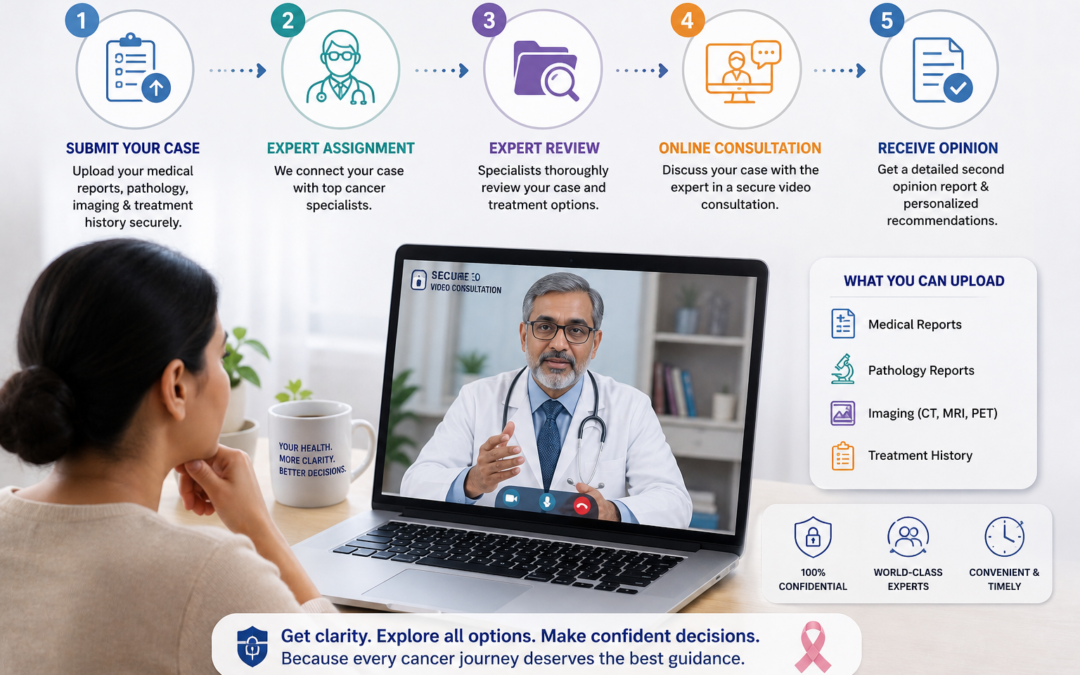
You send your records, and a specialist reviews them without you leaving home. That usually means the biopsy report, the scans, the treatment notes so far and sometimes the pathology slides. The reviewing oncologist, or a team of them, goes through everything independently and tells you whether they agree with the diagnosis and plan, or would suggest something different. Some opinions are written, some are a video call, and many are both
Dr. Sandeep Nayak, who provides cancer treatment in Bangalore, says most people expect it to be harder than it is. “Patients assume a second opinion means starting again or upsetting their current doctor. It doesn’t. It’s a fresh set of eyes on the same reports. Often it confirms the plan, and that alone brings relief. Sometimes it raises a question worth asking. Either way you decide with more information.”
How Does an Online Cancer Second Opinion Work?
What Happens Step by Step in a Cancer Second Opinion Online?
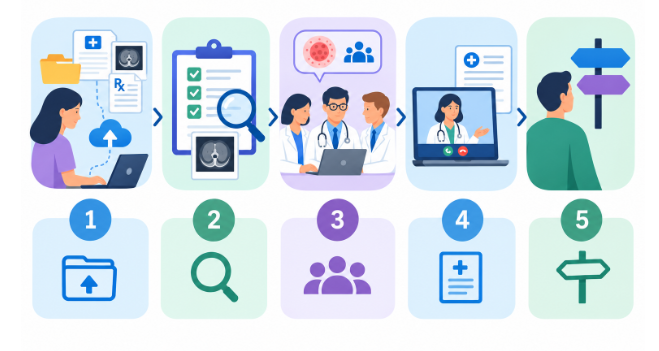
A cancer second opinion online follows a fairly simple path.
You share your records. Upload reports, scans and prescriptions through a secure portal or email.
The case is checked for gaps. The team may ask for missing items, such as the original scan images, not just the written report.
A specialist reviews it. For complex cases, surgical, medical and radiation oncologists may look at it together. Our blog on what a tumour board does covers how that discussion fits into care.
You get the opinion. Usually a written summary, often with a video call to talk it through.
You decide what to do next. You can stay with your current team or change course. Nothing is compulsory.
When Does an Online Oncology Consultation Work Well?
An online oncology consultation suits some situations better than others.
Before major surgery. Confirming the plan before a big operation is a common reason.
When treatment isn’t working. Our blog on what happens if cancer doesn’t respond to chemotherapy explains why a new view can help.
When doctors disagree. Two different recommendations are a good reason to ask a third.
When living far from a cancer centre. Travel can wait until a plan is confirmed.
Its limits. It can’t replace a physical exam, and urgent symptoms still need to be seen in person.
What Determines the Right Treatment Approach?
The opinion you receive depends on what is in the records and on a few other things.
Complete reports and images. The more complete the records, the more reliable the opinion.
Cancer type and stage. These guide which specialists should review the case.
What treatment you have already had. It shapes what options remain.
Your health and preferences. Age, other conditions and goals all count.
Molecular testing. Where available, precision oncology results can change the advice.
The opinion supports your decision. It doesn’t replace your treating team.
Key Takeaways
- An online cancer second opinion is an independent review of your records, scans and pathology without travelling.
- It often confirms the existing plan, and sometimes raises useful questions.
- Complete reports and original scan images give the most reliable opinion.
- It suits planning decisions, not emergencies.
- You stay free to continue with your current team.
- For questions about your own situation, you can contact the clinic at +91 9482202240.
FAQs
Will my doctor mind if I ask for another opinion?
Most doctors are used to it. It’s a normal part of cancer care.
Do I need to send everything?
Send as much as you can, especially scans and the pathology report. Missing items slow things down.
Is an online opinion as good as an in-person visit?
For reviewing records, yes. It can’t replace an examination.
How long does it take?
It varies, often a few days once records are complete.
References
- National Cancer Institute. Finding Cancer Care: Getting a Second Opinion After a Cancer Diagnosis. https://www.cancer.gov/about-cancer/managing-care/finding-cancer-care
- American Cancer Society. Seeking a Second Opinion. https://www.cancer.org/latest-news/getting-a-second-opinion.html
Disclaimer
This content is published for educational and informational purposes only and is not a substitute for medical advice. Please speak to your oncologist before changing or stopping any treatment.