

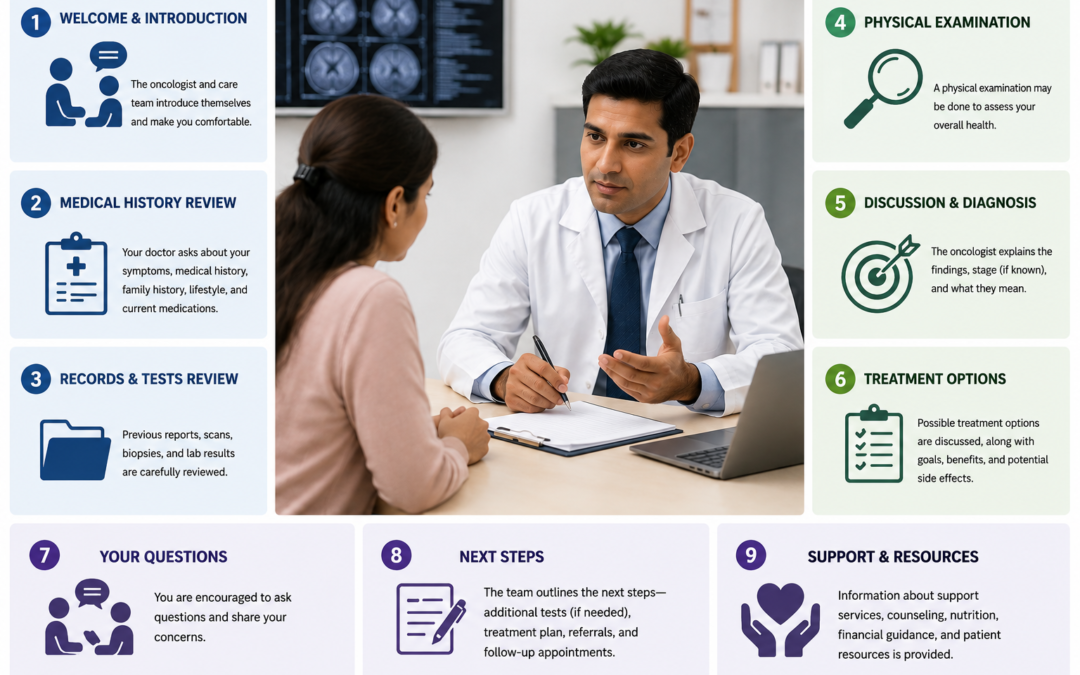
Mostly it’s the doctor getting the full picture before anything else moves forward. Your medical history gets reviewed, along with whatever test results, scans, and biopsy reports have already come in. There’s usually a brief physical exam too, nothing lengthy. Then comes the part most patients are actually bracing for, the diagnosis and stage get explained clearly, followed by a conversation about what treatment options actually exist and what the realistic next steps look like. It’s less a decision-making appointment and more an introduction, the start of building an actual care plan together.
Dr. Sandeep Nayak, who provides Best Cancer Treatment in Bangalore, sees the same nervousness walk through the door constantly. “Patients come in expecting to leave with a treatment date already fixed, and that’s rarely how the first visit works. This appointment is about understanding what we’re dealing with completely, the pathology, the imaging, the patient’s overall health, before any treatment plan gets built. I’d rather take the time to get that right than rush into something without the full picture.”
Preparing for your first oncology consultation and unsure what to expect?
What Actually Happens Step by Step During That First Visit?
The appointment tends to follow a fairly consistent structure, even though every patient’s specific situation is different.
Reviewing medical history and prior records. Existing scans, biopsy reports, blood work, any treatment already started elsewhere, all of it gets gone through carefully before the doctor forms any opinion. Bringing physical copies or digital files of everything genuinely speeds this part up.
A brief physical examination. Usually straightforward, checking general health, sometimes examining the area relevant to the specific cancer directly. Nothing invasive at this stage in most cases.
Explaining the diagnosis and stage clearly. This is often the part patients remember most vividly. What the pathology report actually shows, what stage the cancer is at, and what that specific stage means in plain terms, not just medical shorthand.
Discussing potential treatment paths. Surgery, chemotherapy, radiation, or some combination, laid out as genuine options rather than a single fixed plan, since more information sometimes still needs gathering before anything gets finalized. Our blog on what questions should you ask before cancer surgery covers what’s worth bringing up during exactly this kind of conversation.
Time for questions, genuinely. A good first consultation leaves real room for the patient and family to ask whatever’s actually on their mind, not just a rushed summary followed by a hurried exit.
How Can You Actually Prepare Before Walking In?
A little preparation beforehand can make the whole appointment far more useful.
Bring every report and scan you have. Even if it feels redundant, having everything in one place means the doctor isn’t working from an incomplete picture, which can genuinely change how the consultation unfolds.
Write down your questions in advance. It’s easy to forget everything once you’re actually in the room. A written list ensures nothing important gets missed in the moment.
Bring someone with you. A second person hearing the same information helps enormously, since it’s genuinely hard to absorb everything alone, especially when emotions are running high. Our blog on how to support a family member during cancer treatment covers how that person can actually help beyond just being present in the room.
Note down current medications and other health conditions. This affects what treatment options are actually viable, so having an accurate list ready saves time and avoids gaps in the picture.
Expect that not everything gets decided immediately. Some cases need additional tests before a full treatment plan comes together, and that’s completely normal, not a sign of anything being missed.
Why Choose MACS Clinic for Your First Oncology Consultation?
Dr. Sandeep Nayak’s team at MACS Clinic treats the first consultation as the foundation everything else gets built on, not a formality before treatment begins. Time is taken to genuinely explain the diagnosis, answer questions properly, and make sure the patient actually understands what’s happening before any plan moves forward.
For patients where additional staging or molecular testing is needed before treatment decisions can be finalized, that process is explained clearly upfront, so nothing feels uncertain or rushed. Preparing for your first consultation and want to know what to bring? Reach the team at +91 9482202240.
FAQs
How long does a first oncology consultation typically take?
Usually 30 to 60 minutes, though this can vary depending on how much needs reviewing and how many questions come up. Complex cases sometimes need a bit longer.
Will I get a treatment plan on the very first visit?
Sometimes, but not always. If staging is already complete and the picture is clear, an initial plan might be outlined that day. In other cases, additional tests are needed first before anything gets finalized.
Should I get a second opinion before this first appointment?
Not necessarily beforehand, though it’s completely reasonable to seek one afterward if you want additional input before committing to a treatment path. Many patients do this and it’s a normal part of the process.
What if I don't understand something the doctor explains?
Ask again, right there in the room. A good oncologist expects questions and will explain things multiple times or in different ways if needed. Nothing about this process should feel rushed past.
Disclaimer: This content is published for educational and informational purposes only.