

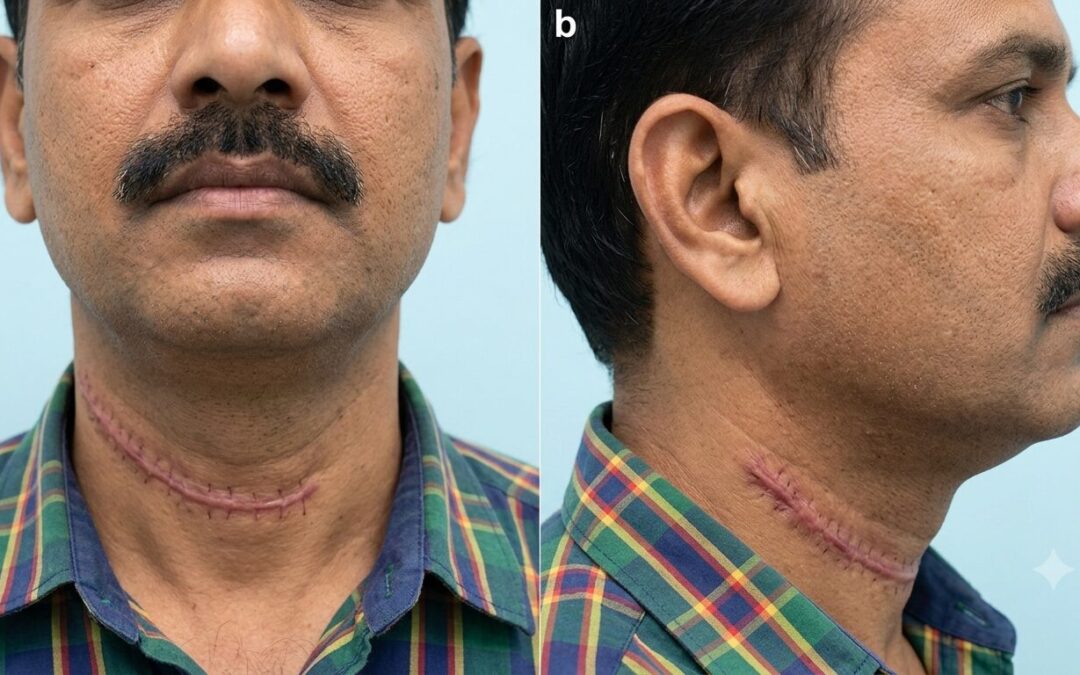
With most oral cancers, the surgeon doesn’t just remove the tumour in the mouth and stop there. The neck gets operated on in the same sitting even when scans show no obvious spread, even when the nodes feel normal, even when the patient has no symptoms in the neck at all. That’s not overcaution. It’s the biology of oral cancer. These tumours spread to neck lymph nodes early, quietly, and in patterns that imaging regularly misses. By the time a node shows up on a CT scan, the cancer has often already been there for months.
According to Dr. Sandeep Nayak,who provides Best Cancer Treatment in Bangalore, explains the reasoning directly: “In oral cancer, the neck is not an afterthought. It’s part of the primary surgery. We know that a significant percentage of patients with clinically clear necks have microscopic nodal disease the scan didn’t catch. Operating on the neck upfront rather than waiting to see if disease appears is what gives patients the best chance of not coming back with a neck recurrence six months later.”
Wondering whether a neck dissection is relevant to your diagnosis or treatment?
Elective vs Therapeutic Neck Dissection — What's the Difference?
|
Elective Neck Dissection |
Therapeutic Neck Dissection |
|
|---|---|---|
|
When it’s done |
Neck appears clinically clear on imaging |
Confirmed lymph node involvement on scan or biopsy |
|
Purpose |
Remove microscopic disease before it becomes visible |
Remove confirmed, palpable or scan-detected nodal spread |
|
Who it applies to |
T2 or higher oral cancers, depth of invasion >4mm |
Any stage where nodes are proven positive |
|
Nodes removed |
Levels I to III typically |
Levels I to V depending on extent of spread |
|
Approach |
Prophylactic — acting before disease declares itself |
Curative or disease-controlling |
For most oral cancers, elective neck dissection is now standard practice rather than a case-by-case decision. The SEND trial, the largest randomised study on this question showed that elective neck dissection reduced mortality by 37% compared to watchful waiting in early-stage oral cancer. That evidence ended most of the debate.
How the Decision Is Made — and What MIND Changes About the Operation?
Depth of invasion is the trigger for elective neck dissection
Tumour thickness above 4mm carries a meaningful risk of occult nodal spread cancer already in the neck that no scan has detected. Below 4mm, the risk is low enough that neck dissection may not be needed. Above it, the neck gets treated as part of the same operation regardless of what imaging shows.
Which levels of nodes get removed depends on the primary site
Oral cavity tumours drain predictably to levels I, II, and III the upper and middle neck. Those levels are always included. If imaging or intraoperative findings suggest spread beyond those, levels IV and V are added. The decision is made based on where the primary tumour sits and what the surgeon finds during the operation.
MIND — Minimally Invasive Neck Dissection — changes what the recovery looks like
Traditional open neck dissection leaves a scar running 15 to 20 centimetres from behind the ear to the collarbone. MIND a technique developed by Dr. Sandeep Nayak achieves the same node clearance through small incisions hidden behind the ear and in the hairline. Same oncological outcome, dramatically less visible scarring, lower risk of nerve damage to the marginal mandibular nerve and spinal accessory nerve, and patients are typically discharged on day two or three rather than five or six.
For a detailed look at how MIND works, who qualifies, and what recovery involves, the previous blog on MIND Surgery for Oral Cancer covers the technique in full.
Why Choose MACS Clinic for Oral Cancer Surgery and Neck Dissection?
Dr. Sandeep Nayak’s team at MACS Clinic developed the MIND technique specifically because standard open neck dissection was leaving patients with a visible scar for the rest of their lives long after the cancer was gone. The oncology was right but the cosmetic damage wasn’t necessary.
Every oral cancer case is reviewed through a tumour board before surgery is planned. Depth of invasion, nodal staging, and the feasibility of minimally invasive neck dissection are all assessed before the patient goes to theatre. Where MIND is possible, it’s performed. Where it isn’t because of nodal burden or anatomy open dissection is done with the same precision and nerve-preservation focus. Reach the team at +91 8035740000.
FAQs
Does every oral cancer patient need a neck dissection?
Not every single case but most do. T2 and above tumours, and any tumour with depth of invasion above 4mm, carry enough risk of occult nodal spread that elective neck dissection is now standard practice. Early T1 tumours with shallow invasion may not need it.
What happens if cancer has already spread to neck nodes?
That’s when therapeutic neck dissection is performed removing confirmed positive nodes along with the surrounding tissue. The extent of the dissection depends on which levels are involved and how far the spread has gone.
Will there be a visible scar after neck dissection?
With traditional open surgery, yes a long scar running down the side of the neck. With MIND, incisions are hidden behind the ear and in the hairline. The same nodes are cleared but the scar isn’t visible in everyday life.
Can neck dissection and oral tumour removal be done in the same operation?
Yes and that’s exactly how it’s planned. Both are performed in a single surgical sitting. Staging the operations separately would mean two anaesthetics, two recoveries, and a delay between the primary surgery and neck treatment that the biology of the disease doesn’t allow for.
Disclaimer: This content is published for educational and informational purposes only.