
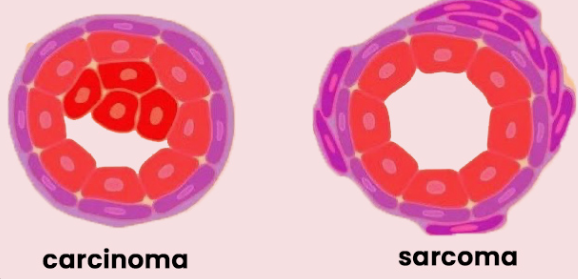
Carcinoma is cancer that originates in epithelial cells which line the skin surface, organ cavities, and glandular tissue throughout the body. It accounts for 80-90% of all cancers making it the most common cancer category. The four main types are adenocarcinoma from glandular cells, squamous cell carcinoma from flat surface cells, basal cell carcinoma from the deepest skin layer, and transitional cell carcinoma from stretchable bladder lining cells. Each type behaves differently and requires different treatment.
According to Dr. Sandeep Nayak, Best cancer treatment in Bangalore, “Patient’s biopsy report says adenocarcinoma and they Google it thinking it’s something rare and fatal. It’s the most common type of cancer in the world. Breast cancer is adenocarcinoma. Colon cancer is adenocarcinoma. The word sounds terrifying but it just describes which cell the cancer started in.”
Carcinoma isn’t a diagnosis. It’s a category. The specific type and location decide everything.
What Are the Main Types?
Each carcinoma type originates from a different cell type and behaves according to the biology of those cells. Treatment, aggressiveness, and prognosis depend on which type the biopsy confirms.
- Adenocarcinoma: Starts in glandular cells that produce mucus, digestive juices, or other fluids. Most breast, colon, prostate, lung, and pancreatic cancers are adenocarcinoma. Patient hears “adenocarcinoma of lung” and panics at the word when actually the cell type is what helps the oncologist pick the right drug.
- Squamous cell carcinoma: Originates from flat surface-lining cells found in skin, mouth, throat, esophagus, cervix, and lungs. Strongly linked to tobacco, alcohol, and HPV exposure. Mouth cancer from gutka is squamous cell. Cervical cancer from HPV is squamous cell. Same cell type, different organ, different cause.
- Basal cell carcinoma: Most common cancer worldwide but least dangerous. Starts in the deepest skin layer. Grows slowly, almost never spreads to distant organs. Sun exposure over decades is the primary cause. Needs removal but rarely threatens life.
- Transitional cell carcinoma: Starts in transitional cells lining the bladder, ureter, and renal pelvis. These cells stretch when the organ fills and contract when it empties. Blood in urine is the hallmark symptom. Smokers carry the highest risk because carcinogens concentrate in urine and sit against the bladder wall for hours.
Your oncologist confirms carcinoma type through precision diagnostics with biopsy and immunohistochemistry before treatment planning begins.
Why Does the Type Matter for Treatment?
Same word carcinoma on two reports can mean completely different diseases. Cell type determines drug selection, surgical approach, radiation sensitivity, and expected behaviour.
- Drug selection: Adenocarcinoma of lung with EGFR mutation gets targeted therapy. Squamous cell of lung doesn’t. Same organ, different carcinoma type, completely different drug. Oncologist who doesn’t check the cell type before prescribing is treating the organ not the disease.
- Surgical approach: Basal cell carcinoma needs simple excision with margins. Squamous cell of the same skin area may need wider excision and sentinel node biopsy because it carries higher metastatic potential. Same location, different cell type, different operation.
- Radiation response: Squamous cell carcinomas of head and neck respond well to chemoradiation which is why many throat cancers are treated without surgery. Adenocarcinoma of the same region responds less reliably to radiation making surgery the primary approach.
- Prognosis: Basal cell carcinoma has near 100% cure rate. Pancreatic adenocarcinoma has under 12% five-year survival. Both are carcinoma. The word means nothing without the specific type and location attached. Report that says “carcinoma” without specifying which type is incomplete and the treatment plan shouldn’t start until it does.
Understanding how Stage 1 vs Stage 2 differences change treatment explains why carcinoma type adds another critical layer to treatment decisions beyond staging alone.
Why Choose MACS Clinic?
Dr. Sandeep Nayak’s team at MACS Clinic confirms carcinoma type through biopsy with immunohistochemistry and molecular profiling before any treatment decision. No surgery gets scheduled until the pathology report specifies exactly which carcinoma the patient has and what molecular markers it carries.
Patient walking in with a biopsy report here gets the cell type explained in language they understand. Because knowing you have squamous cell carcinoma of the throat versus adenocarcinoma of the throat changes the entire treatment roadmap and nobody should start treatment without understanding that distinction.
Call +91 8035740000 to book your consultation.
FAQs
What is the most common type of carcinoma?
Adenocarcinoma, accounting for most breast, colon, prostate, lung, and pancreatic cancers.
Is carcinoma the same as cancer?
Carcinoma is one category of cancer starting in epithelial cells. Not all cancers are carcinomas.
Is basal cell carcinoma dangerous?
Least dangerous cancer type. Grows slowly, almost never spreads, near 100% cure rate with excision.
Does carcinoma type affect treatment choice?
Critically yes. Same organ cancer with different cell type gets completely different drug and surgical approach.
References
- Carcinoma types and classification — National Cancer Institute
- Cancer cell types — World Health Organization