

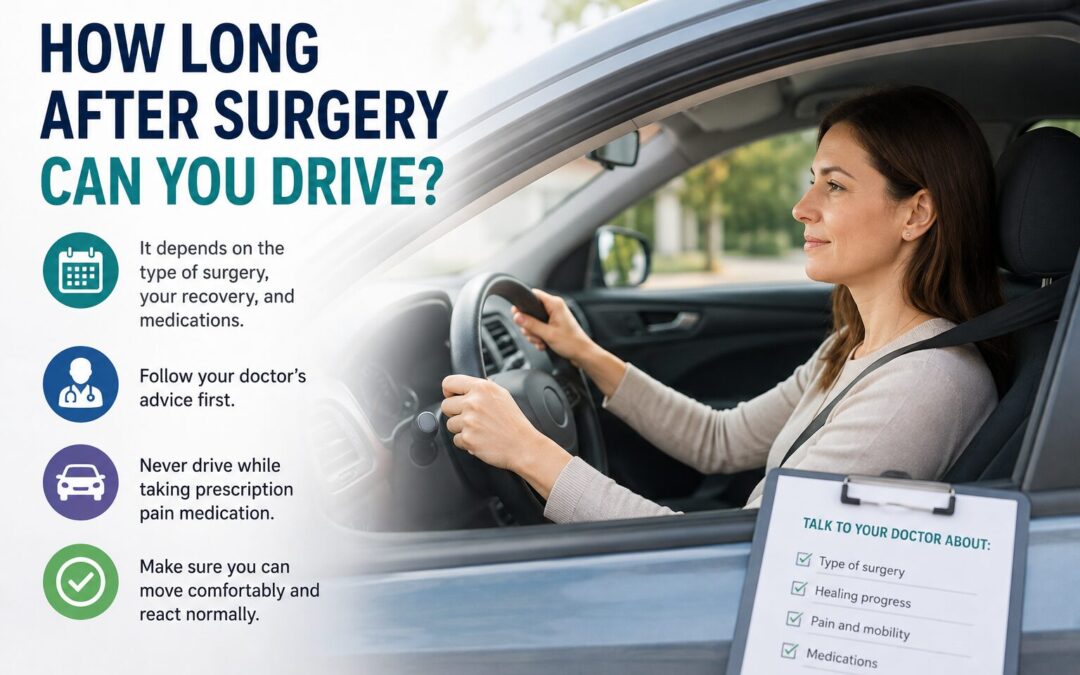
Nobody tells you this clearly before the operation. You’re focused on the procedure and the results and then you’re home, feeling better than expected after a few days, wondering whether you can just drive yourself to the pharmacy. The answer is almost certainly no.Two things make driving dangerous after surgery: residual anaesthesia affecting reaction time, and opioid pain medication impairing judgement. The first clears within 24 hours. The second doesn’t clear until the medication stops. Beyond that, the surgery itself matters; a minor laparoscopic procedure has a very different driving timeline from a major open abdominal operation.
According to Dr. Sandeep Nayak, Best Cancer Treatment in Bangalore, “Feeling ready and being safe to drive are not the same thing after surgery. Reaction time is measurably impaired by opioid medication regardless of how alert you feel. The test isn’t whether you feel fine, it’s whether you can perform an emergency stop without hesitation.”
Recovering from surgery and wondering when driving is genuinely safe again?
What Actually Decides When You Can Drive?
The timeline isn’t arbitrary. Three specific factors determine it for every patient.
Anaesthesia clears first — but it still takes 24 hours minimum
General anaesthesia and sedation affect coordination, reaction time, and decision-making for longer than people expect. The standard recommendation across all surgical centres is no driving for at least 24 hours after any procedure involving general anaesthesia or sedation, regardless of how straightforward the surgery was or how quickly the patient feels normal. This applies to laparoscopic cancer surgery and day procedures equally.
Opioid pain medication is the bigger issue for most patients
This is where most people get the timeline wrong. Opioids tramadol, codeine, oxycodone, morphine impair reaction time and judgement even when the patient feels alert and functional. Driving on opioids is both unsafe and illegal in most jurisdictions. The driving restriction continues for as long as these medications are being taken, not just for the first few days. Switching to non-opioid pain relief is what removes this barrier, and that transition only happens when pain has settled enough to allow it.
The surgery itself sets the minimum recovery window
Even when anaesthesia has cleared and opioids have stopped, the body needs time to heal enough that an emergency braking movement doesn’t cause pain, disruption to the wound, or physical incapacity mid-drive.
Driving Timelines by Surgery Type?
Minor laparoscopic or keyhole procedures: 1 to 2 weeks
Small incisions, limited internal trauma, faster recovery. Robotic and laparoscopic cancer surgery typically falls here shorter hospital stay, less post-operative pain, and a quicker return to normal activity including driving compared to open surgery. The exact timeline still depends on opioid use and the specific procedure.
Abdominal surgery, open or major laparoscopic: 4 to 6 weeks
Larger operations involving the bowel, stomach, liver, or pancreas require significantly longer recovery. An emergency braking movement engages the core, which directly involves abdominal wounds. Driving before those structures have healed enough to handle sudden physical force is a real risk, not a theoretical one.
Orthopaedic surgery involving the lower limbs: 6 to 8 weeks or longer
Hip replacements, knee operations, and lower limb procedures affect the physical mechanics of driving directly. The operated leg needs to be capable of full and immediate braking force before driving resumes, which takes considerably longer than the wound itself appearing healed.
Cardiac and thoracic surgery: 4 to 8 weeks
Chest surgery affects posture, upper body movement, and emergency reaction capacity. Cardiac surgery in particular carries specific guidelines that vary by institution and country, and the treating cardiologist or surgeon’s guidance takes precedence over general timelines.
For a detailed look at what recovery actually looks like week by week after robotic and laparoscopic cancer surgery, the previous blog on What Is Recovery Like After Robotic Cancer Surgery covers each phase in full.
Why Choose MACS Clinic for Cancer Surgery and Recovery?
Dr. Sandeep Nayak’s team at MACS Clinic performs cancer surgery laparoscopically and robotically wherever the clinical situation allows. Smaller incisions mean less post-operative pain, faster reduction in opioid requirement, and a shorter overall recovery window — including the time before patients can drive again and return to normal daily life. Discharge instructions here include specific, practical guidance on activity resumption, not a generic “take it easy” and a follow-up appointment three weeks away.
Those who want to discuss surgical options or recovery timelines for a specific cancer can reach the team at +91 8035740000 or through the contact page.
FAQs
Can I drive 24 hours after surgery?
Only if the procedure was done under local anaesthesia and no opioid pain medication is being taken. After general anaesthesia, 24 hours is the minimum — and only once opioids are stopped.
What if I feel completely fine after surgery?
Feeling fine and being safe to drive are different things. Opioids impair reaction time even when the patient feels alert. The test is emergency braking capacity, not subjective feeling.
Who decides when I can actually drive again?
Your surgeon. General timelines are a guide — the specific procedure, your individual recovery, and whether you’re still on opioid medication all factor into the actual clearance date.
Does laparoscopic surgery mean I can drive sooner?
Generally yes. Less physical trauma, faster reduction in pain medication requirement, and smaller wounds that tolerate movement sooner all contribute to an earlier return to driving compared to open surgery.
Disclaimer: This content is published for educational and informational purposes only.