

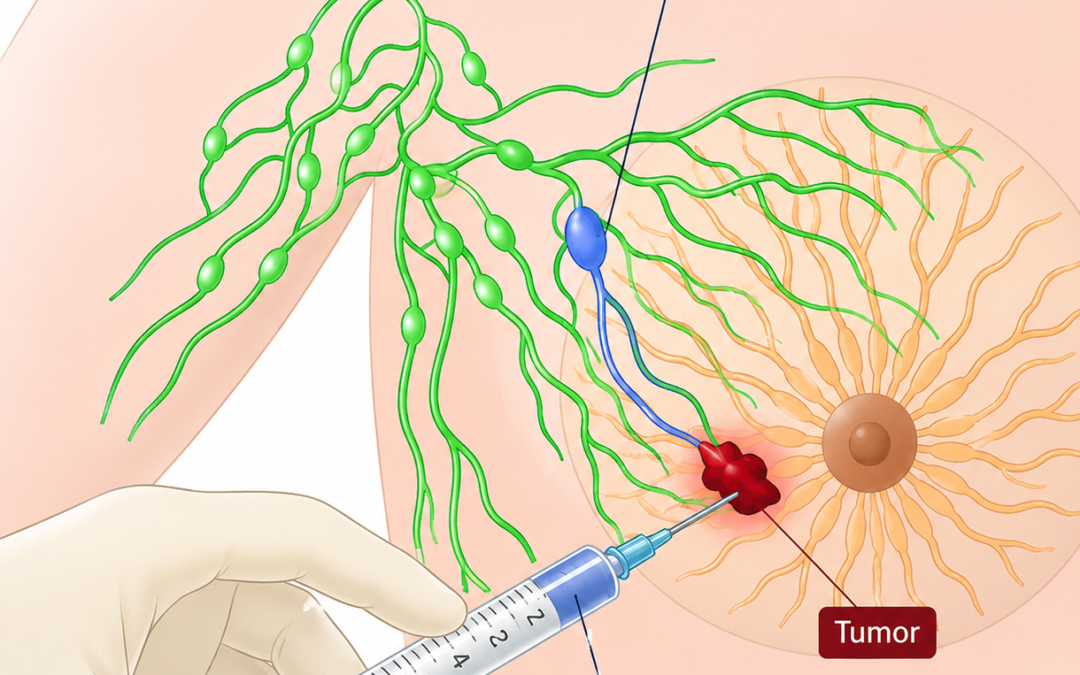
Full axillary lymph node dissection was once routine in breast cancer surgery, but it could lead to problems such as lymphoedema, nerve damage, and reduced shoulder movement. Sentinel node biopsy offers a less invasive approach by removing only the first few lymph nodes draining the tumour. If these nodes are clear, further node removal can often be avoided, reducing the risk of long-term arm swelling and other complications.
According to Dr. Sandeep Nayak, Best Cancer Treatment in Bangalore, “Sentinel node biopsy is the standard now for the vast majority of breast cancers. The data is very clear when the axilla is clinically clear and sentinel nodes come back negative, dissection adds morbidity without adding survival benefit. The question is identifying the patients where that rule doesn’t apply, and that’s where the clinical assessment before surgery matters.”
Find Out If Sentinel Node Biopsy Is Right for You?
When Sentinel Node Biopsy Can Replace Full Dissection?
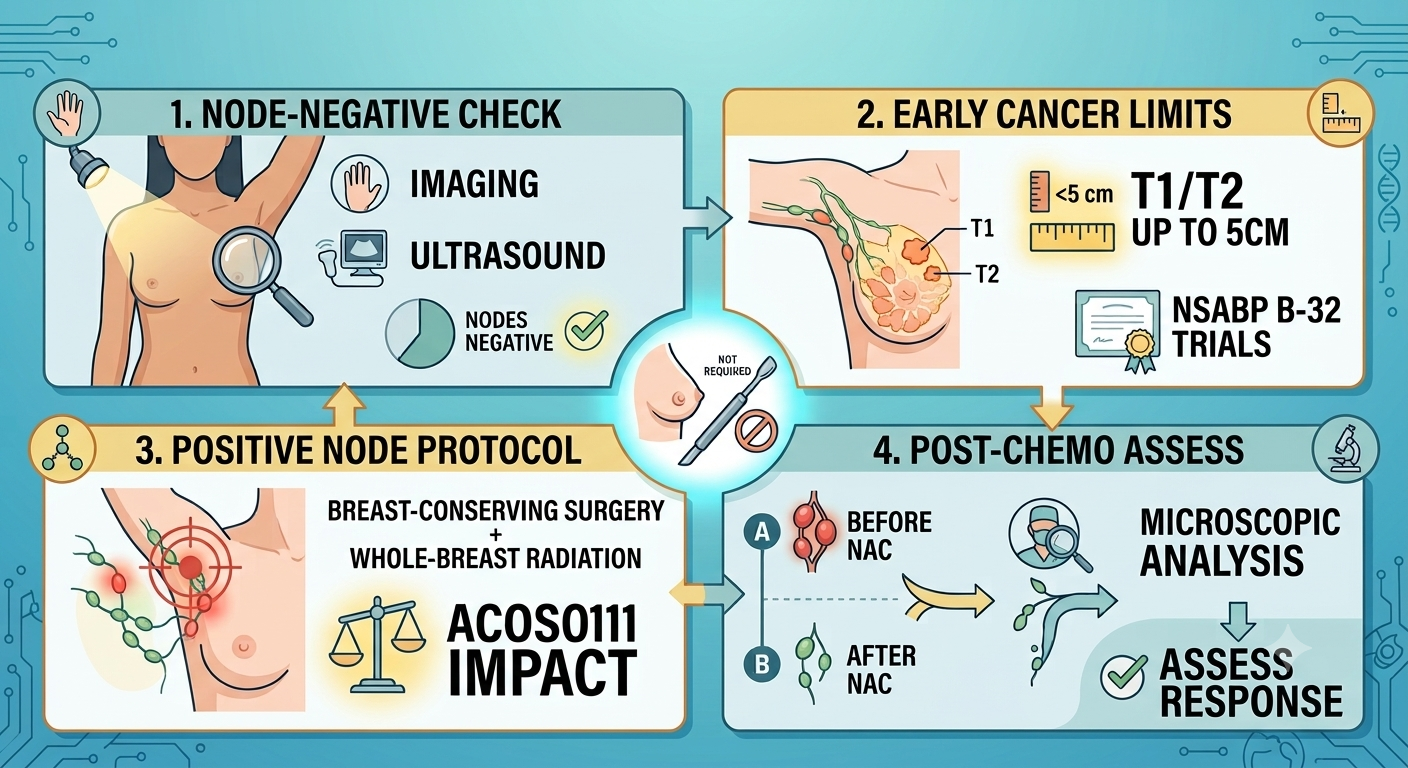
- No Suspicious Nodes: If exams and scans come back clear, sentinel biopsy is the go-to step—saving up to 70% of early breast cancer patients from a full clearance they didn’t actually need.
- Small, Early Tumors: For breast tumors up to 5 cm (T1/T2), major trials like NSABP B-32 showed that sentinel biopsy gives the exact same survival rates as full dissection without extra surgery.
- Just 1 or 2 Positive Nodes: Thanks to the ACOSOG Z0011 trial, if only 1 or 2 nodes show cancer and you’re having lumpectomy plus radiation, taking out more nodes usually isn’t necessary.
- Checking After Chemo: If chemotherapy clears out previously affected nodes, sentinel bio
When Full Dissection Is Still Needed?
Clinically node-positive axilla confirmed on biopsy
When pre-operative ultrasound shows suspicious nodes and fine needle aspiration or core biopsy confirms metastatic disease, full axillary dissection remains the standard. Sentinel biopsy in a biopsy-proven node-positive axilla understages the patient.
More than two positive sentinel nodes
When sentinel nodes return more significant nodal involvement than the Z0011 criteria allow, full dissection is still required to achieve adequate locoregional control and staging accuracy.
Inflammatory breast cancer
The lymphatic channels are so disrupted by the inflammatory process in this subtype that sentinel node mapping is unreliable. Full dissection is standard.
Previous axillary surgery
Prior surgery disrupts normal lymphatic drainage patterns, making sentinel node mapping inaccurate. In these cases, full dissection remains the safer staging procedure.
For a detailed look at what happens when sentinel nodes come back positive and how that changes the surgical plan, the previous blog on How Many Nodes in Sentinel Node Biopsy covers those decisions in full.
Why Choose MACS Clinic for Breast Cancer Surgery and Sentinel Node Biopsy?
Dr. Sandeep Nayak’s team at MACS Clinic performs sentinel node biopsy using double dye technique methylene blue and indocyanine green avoiding the radioactive tracers used at many other centres while maintaining mapping accuracy. The lymphoedema risk with this approach drops to under 2% compared to the 40% risk that comes with routine axillary dissection.
Every breast cancer case is assessed pre-operatively for axillary status through clinical examination and ultrasound. Whether sentinel biopsy alone is appropriate or whether dissection is needed is confirmed through tumour board review before any operation is planned. Those who want to discuss their surgical options can reach the team at +91 8035740000
FAQs
Is sentinel node biopsy as accurate as full dissection for staging?
In clinically node-negative patients, yes. False negative rates with proper technique run below 10%, and axillary recurrence rates after a negative sentinel biopsy without dissection are extremely low.
Does a positive sentinel node always mean full dissection?
Not anymore. The Z0011 trial showed that selected patients with one or two positive sentinel nodes undergoing breast-conserving surgery and whole-breast radiation do not benefit from completing dissection.
How is the sentinel node found during surgery?
A tracer blue dye, radioactive colloid, or indocyanine green is injected near the tumour before surgery. It travels through lymphatic channels to the sentinel node, which the surgeon identifies visually or with a detection probe.
What is the lymphoedema risk with sentinel biopsy versus full dissection?
Under 2% with sentinel biopsy. Around 20% to 40% with full axillary dissection. That difference is the primary reason sentinel biopsy became standard practice.
Disclaimer:This content is published for educational and informational purposes only.