

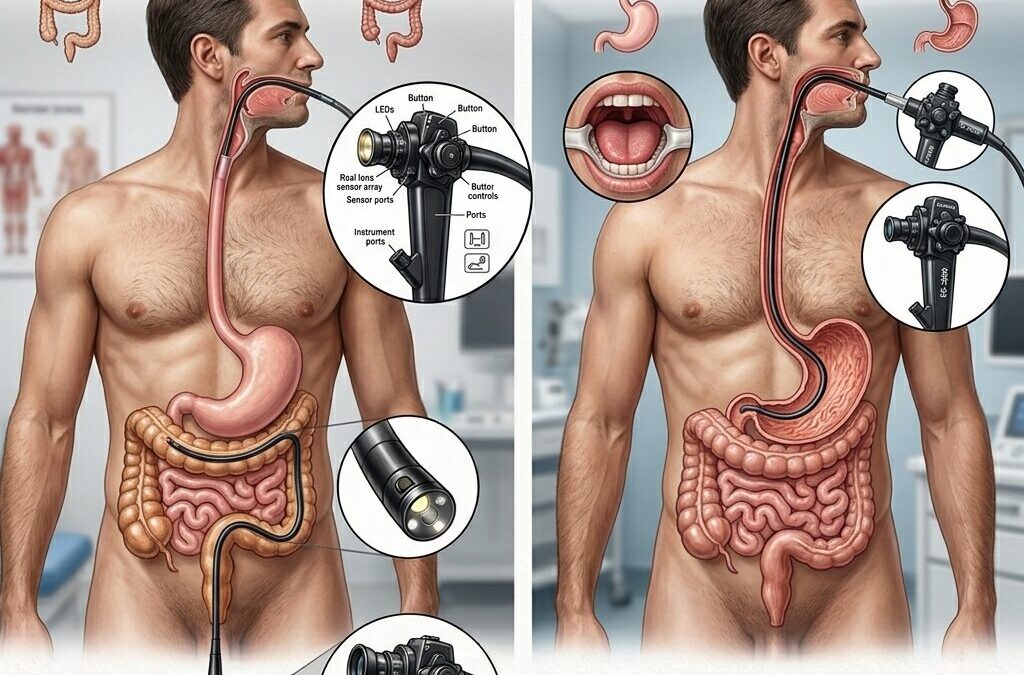
Both procedures use the same basic idea: a thin, flexible tube with a camera on the end, fed into the digestive tract to see what’s happening inside. That’s where the similarity ends. An endoscopy goes in through the mouth and looks at the upper digestive tract, the oesophagus, stomach, and the beginning of the small intestine. A colonoscopy goes in through the other end and looks at the large intestine and rectum. Same tool, completely different territory, completely different clinical purpose.
Dr. Sandeep Nayak,best Oncologist in Bangalore, explains what drives the choice: “The symptom tells us where to look. Difficulty swallowing, persistent acid reflux, upper abdominal pain, or blood in vomit points us toward an endoscopy. Rectal bleeding, altered bowel habits, or a family history of colorectal cancer points us toward a colonoscopy. Ordering the wrong scope for the symptom wastes time and misses the diagnosis entirely.”
Been told you need a scope and not sure which one or why?
Endoscopy vs Colonoscopy: What's the Difference?
|
Endoscopy (EGD) |
Colonoscopy |
|
|
Entry Point |
Through the mouth |
Through the anus |
|
Area Examined |
Oesophagus, stomach, duodenum |
Large intestine, rectum |
|
Used For |
Upper GI symptoms, ulcers, reflux, cancer |
Lower GI symptoms, polyps, colorectal cancer |
|
Preparation |
Fasting for 6 to 8 hours |
Full bowel prep day before |
|
Anaesthesia |
Light sedation |
Light sedation |
|
Duration |
15 to 30 minutes |
30 to 60 minutes |
|
Biopsy Possible |
Yes |
Yes |
|
Polyp Removal |
Yes, in stomach or duodenum |
Yes, from colon during same procedure |
|
Cancer Screening |
Oesophageal, gastric cancer |
Colorectal cancer |
The table shows the structural differences but the clinical decision is simpler than it looks. Symptoms point to a location and the scope follows. More on how GI cancers are diagnosed and treated at MACS Clinic is on the colon cancer treatment page and esophageal cancer treatment page.
When Is Each Procedure Actually Used?
Symptoms almost always make this obvious once someone knows where each scope actually goes.
Endoscopy Is Used When: Heartburn that won’t budge after weeks of medication. Food getting stuck somewhere between the throat and stomach. Blood in vomit. Upper abdominal pain that scans haven’t explained. Anaemia that keeps coming back with no clear reason. All of these sit in the upper gut and the endoscope goes there. Anything suspicious gets biopsied in the same sitting, no second appointment needed. Our blog on oesophageal cancer covers the specific symptoms that shouldn’t wait.
Colonoscopy Is Used When: Blood in the stool or coming from the rectum. Bowel habits that have shifted noticeably and stayed that way for weeks. Unexplained weight loss alongside lower abdominal symptoms. Colonoscopy is also the go-to cancer screening tool from age 45, and earlier for anyone with family history. What makes it genuinely valuable beyond diagnosis is that polyps found during the procedure come out in that same session, before they get a chance to become cancer.
When Both Are Needed: Unexplained anaemia, bleeding without an obvious source, or cancer staging that needs the full picture sometimes means both procedures happen together under one sedation. Same visit, same recovery, both done.
Biopsy in the Same Session: Both scopes take tissue samples from anything that looks abnormal without needing a separate procedure. That’s what makes scoping diagnostic and interventional at the same time, and why catching things early through a scope genuinely changes what’s possible.
Why Choose MACS Clinic for GI Cancer Diagnosis?
Dr. Sandeep Nayak’s team at MACS Clinic approaches GI symptoms as a clinical question requiring the right investigation at the right time. Endoscopy and colonoscopy findings are reviewed alongside imaging, biopsy results, and the patient’s full symptom history before any cancer diagnosis is confirmed or treatment plan made. For patients where rectal cancer or colon cancer is found on colonoscopy, surgical planning using robotic and minimally invasive techniques begins immediately after staging is complete.
Getting the scope done is just the start. What happens with the findings is what determines outcomes. Those who want to discuss GI symptoms or a recent scope result can reach the team at +91 9482202240.
FAQs
Which procedure is harder to go through?
Most people say the colonoscopy prep the evening before is the worst part. The procedure itself is fine for both. Light sedation means you’re not really aware of what’s happening and most people wake up with no memory of it.
Can an endoscopy find colon cancer?
It can’t reach that far. The scope only gets as far as the upper gut. The large intestine is a completely separate territory that only a colonoscopy covers.
How regularly does someone need a colonoscopy?
For someone with no risk factors and nothing found, once a decade from age 45 is the standard. Find some polyps and remove them though, and the next one comes sooner depending on what was found.
Do polyps have to be removed in a separate procedure?
No and that’s actually one of the main advantages. If polyps show up during a colonoscopy, they come out in the same session right then. No second appointment, no second prep, no second sedation.
Disclaimer: This content is published for educational and informational purposes only.