

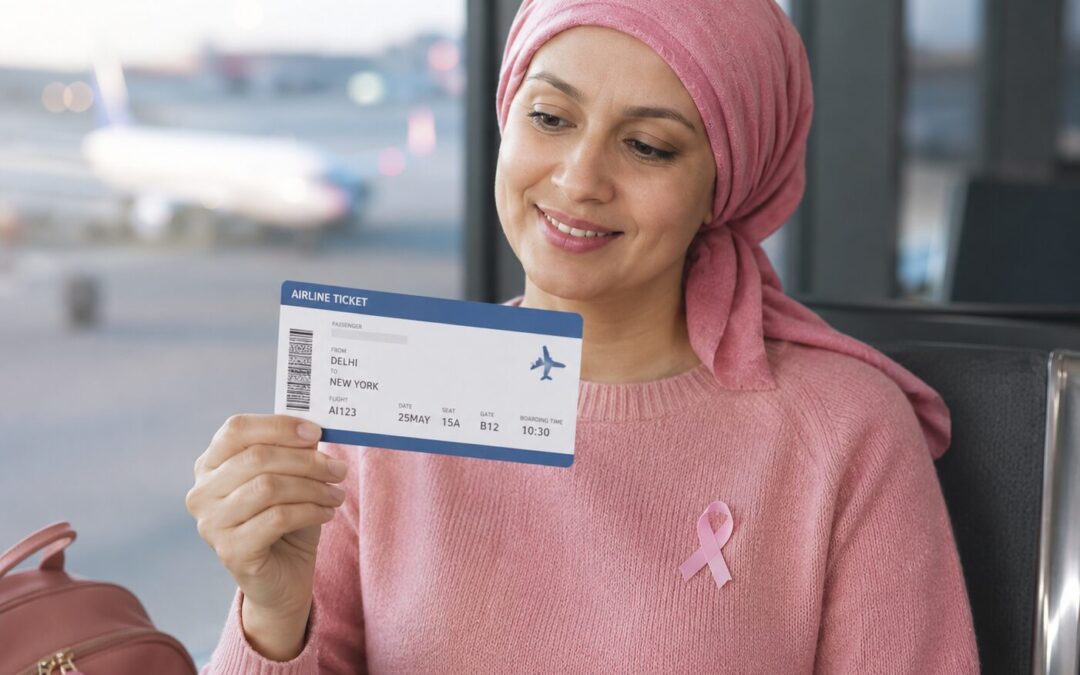
Yes, many cancer patients do fly during treatment and manage it safely. But it’s not a simple yes, book the ticket and go. Air travel during active cancer treatment involves real considerations that need to be thought through before any flight is booked, not at the boarding gate. Blood clot risk, immune suppression, cabin pressure, access to emergency care at the destination, where the patient is in their treatment cycle all of these feed into whether a particular trip at a particular time is safe for a particular patient. The answer isn’t the same for everyone and it isn’t the same for the same person at every point in treatment.
Dr. Sandeep Nayak, Best Cancer Treatment in Bangalore, explains how this conversation typically goes: “Patients ask whether they can fly and the answer starts with when, how far, and where in their treatment they are. Someone two weeks after a clean surgical procedure with good wound healing is different from someone mid-chemotherapy with low platelet counts. Someone flying two hours domestically is different from a fourteen-hour international flight. The question isn’t just can you fly it’s is this specific trip safe right now.”
Planning travel during cancer treatment and want to understand the risks?
What Makes Air Travel Risky During Cancer Treatment?
The risks aren’t the same for every patient or every stage of treatment. But several specific factors come up consistently.
Blood Clot Risk: Cancer itself increases clotting risk significantly. Prolonged immobility in a pressurised cabin amplifies that risk further. Deep vein thrombosis and pulmonary embolism are genuine concerns for cancer patients on long flights in a way they aren’t for healthy travellers. Patients on certain chemotherapy agents that further increase clotting risk need to take this particularly seriously. Those already on blood thinners need to understand what happens if they need emergency care at the destination. Our blog on what is metastatic cancer covers how cancer’s systemic effects, including clotting changes, reflect the broader biology of advanced disease.
Immune Suppression: Chemotherapy suppresses the immune system in ways that make a crowded aircraft cabin a genuinely higher-risk environment. Recirculated air, close contact with other passengers, and the physical stress of travel all raise infection risk at a time when the body has reduced capacity to fight it. The timing relative to chemotherapy cycles matters here. Neutropenia typically peaks seven to fourteen days after a cycle and that window is when infection risk is highest.
Cabin Pressure and Oxygen: Commercial aircraft cabins are pressurised to the equivalent of roughly 6,000 to 8,000 feet altitude. For patients with significant anaemia, respiratory compromise from lung metastases, or pleural effusions, that reduced oxygen environment can cause real symptoms. Patients with these conditions need specific medical assessment before flying, not a general clearance.
Access to Care at the Destination: This is the one that gets underestimated. If something goes wrong mid-trip or at the destination, will appropriate oncology care be available? Can the patient get to a hospital quickly? Is there a language barrier? For cancer patients travelling internationally, these aren’t abstract concerns. A fever during chemotherapy is a medical emergency that needs hospital assessment within hours.
Treatment Continuity: Missing a scheduled infusion or follow-up because of travel complications isn’t just inconvenient. In certain treatment protocols, delays between cycles affect outcomes. The treatment schedule needs to be built around any planned travel, not the other way around.
When Is Flying Safer and When Should It Be Avoided?
The timing within treatment makes a significant difference to how much risk air travel carries.
Generally Safer Times to Fly: Several weeks after surgery when wound healing is confirmed and no complications have developed. During chemotherapy, in the window between cycles when blood counts have recovered rather than at nadir. During targeted therapy or hormone therapy where immune suppression is less severe than with conventional chemotherapy. Short domestic flights carry less risk than long-haul international travel regardless of treatment stage. Our blog on can cancer return after complete remission covers why staying on track with treatment schedules during this period matters for long-term outcomes.
Times to Avoid Flying: Immediately after major surgery before wound healing is confirmed. During the nadir period after chemotherapy when neutrophil counts are at their lowest. When platelet counts are very low and bleeding risk is high. When active infection is present. When there is known deep vein thrombosis or recent pulmonary embolism. When oxygen saturation is already borderline at sea level. When the destination lacks adequate medical facilities for oncology emergencies. Our blog on what is metastatic cancer covers how systemic disease affects the body in ways that make certain situations including high-altitude cabin pressure genuinely riskier.
Practical Steps Before Flying: Get explicit medical clearance from the treating oncologist, not a general practitioner who doesn’t know the full treatment picture. Carry a full medical summary including current medications, treatment protocol, and emergency contact details for the treating team. Carry adequate medication for the full trip duration plus several extra days in case of delays. Consider compression stockings for flights over two hours. Aisle seats allow easier movement and reduce the barrier to getting up and walking during long flights. For patients travelling internationally for treatment itself, MACS Clinic provides full medical documentation and remote follow-up after patients return home.
Why Choose MACS Clinic for Cancer Treatment Planning?
Dr. Sandeep Nayak’s team at MACS Clinic treats travel planning as part of the broader conversation about how patients live during treatment, not a separate concern. When a patient needs to travel for work, family, or personal reasons during active treatment, the team works out what’s clinically safe given where they are in their cycle, what their blood counts look like, and what the destination involves. Treatment schedules at MACS Clinic are built around precision oncology principles and individual patient circumstances, which includes practical life considerations alongside clinical ones.
For patients who need medical documentation for airlines or travel insurance purposes, the team provides appropriate clinical letters based on the patient’s current treatment status. Those planning travel during treatment can reach the team at +91 9482202240.
FAQs
Do airlines allow cancer patients to fly?
Most do, but many ask for a medical certificate depending on the treatment and recent procedures. Check with the airline before booking and get clearance from the oncologist first, not after the ticket is bought.
Can flying make cancer spread?
No. Metastasis is biology, not altitude. The actual concerns during a flight are blood clots, infection in a crowded cabin, and what happens if something goes wrong at the destination.
Should the airline know about the treatment?
Yes, especially if special assistance, seating, or medical equipment might be needed. Airlines arrange these things easily when told in advance. Finding out at the gate is a different experience entirely.
What goes in hand luggage, not checked bags?
All medications, full stop. A medical summary with diagnosis, current treatment, and the oncologist’s contact. Anti-nausea medication if that’s been an issue. Compression stockings for anything over two hours. And a clear plan for what to do if a fever develops mid-trip.
Disclaimer: This content is published for educational and informational purposes only.