

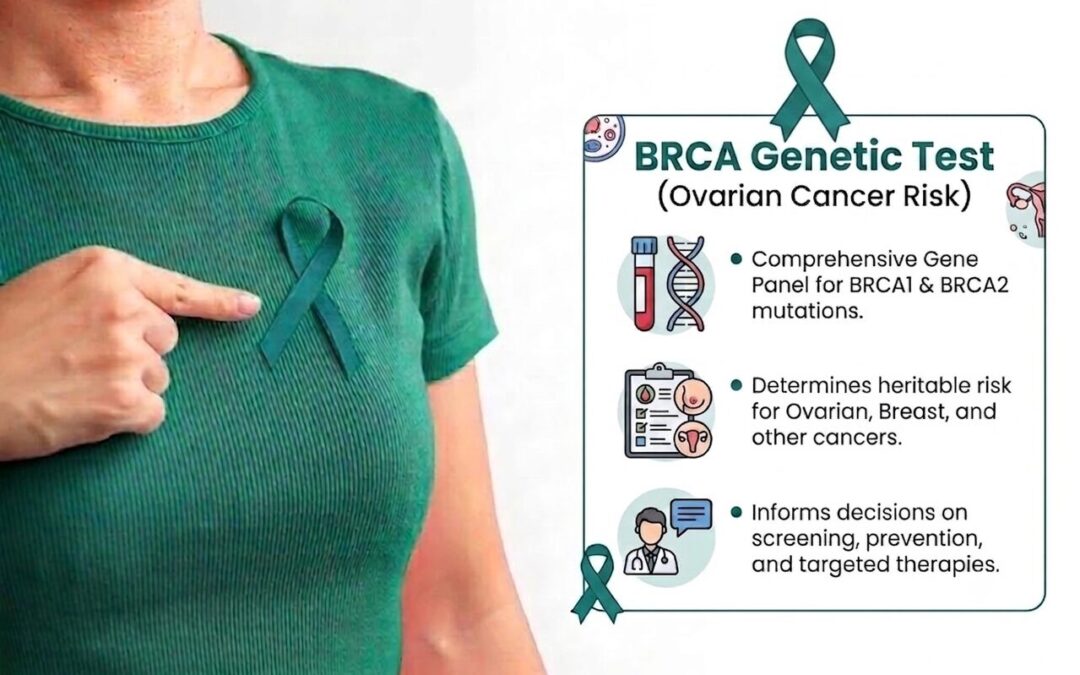
Yes, in a lot of cases, If your family history shows a pattern, breast cancer, ovarian cancer, pancreatic cancer, or aggressive prostate cancer showing up across relatives, that’s not just something to note and move past. It’s a signal worth actually acting on. Same goes if a close relative already knows they carry a BRCA1 or BRCA2 mutation. Testing won’t change your genes, obviously, but it changes what you know about your own risk, and that knowledge shapes what screening or prevention options actually make sense for you specifically.
Dr. Sandeep Nayak, who provides Best Cancer Treatment in Bangalore, sees families wrestle with this decision often. “People sometimes avoid testing because they’re scared of the answer. I understand that completely. But not knowing doesn’t protect anyone, it just delays the conversation. If someone tests positive, we can build a screening plan around that, sometimes prevention options too, years before cancer would ever show up on its own. That’s real, actionable information. Fear of finding out shouldn’t be the reason someone skips it.”
Family history that makes you wonder about your own risk?
Who Should Actually Consider BRCA Testing?
Not every family history warrants testing, but certain patterns raise it as a genuine consideration.
Multiple relatives with breast or ovarian cancer. Especially if diagnoses happened at a younger age than typical, or if the same side of the family shows repeated cases across generations.
A known BRCA mutation in the family already. If a parent, sibling, or close relative has tested positive, that’s often the clearest signal to get tested yourself, since the mutation can be passed down directly.
Pancreatic cancer in close relatives. Less commonly discussed than breast or ovarian cancer, but pancreatic cancer does show up more often in families carrying BRCA mutations, and it’s worth mentioning during any family history conversation.
Aggressive or early-onset prostate cancer. Men aren’t exempt from BRCA-related risk. A family history of prostate cancer, particularly aggressive or early cases, can be relevant here too. Our blog onBRCA gene mutation covers how this mutation specifically drives risk on the ovarian side of things.
Ashkenazi Jewish ancestry. This population carries a notably higher baseline rate of BRCA mutations, which is factored into risk assessment regardless of how detailed the known family history is.
What Actually Happens During Testing and Afterward?
Understanding the process helps take some of the mystery out of a decision that can feel bigger than it needs to.
Genetic counselling usually comes first. Before the test itself, a genetic counsellor typically reviews family history in detail, explains what a positive or negative result would actually mean, and helps decide whether testing makes sense for that specific situation.
The test itself is simple. Usually just a blood or saliva sample, sent for analysis. Nothing invasive, though results can take a few weeks to come back.
A positive result doesn’t mean cancer is guaranteed. It means elevated risk, sometimes significantly elevated, but not certainty. What it does open up is a much more proactive conversation about screening frequency and, for some, preventive options. Our blog on what is a multi-cancer early detection test covers one of the newer screening tools sometimes considered for people carrying elevated genetic risk.
A negative result isn’t always the full story either. If a specific family mutation was tested for and not found, that’s genuinely reassuring. But a negative result without a known family mutation to compare against carries less certainty, since other genetic factors could still be at play.
Why Choose MACS Clinic for BRCA Testing and Genetic Counselling?
Dr. Sandeep Nayak’s team at MACS Clinic treats genetic counselling as a real conversation, not a formality before ordering a test. Family history gets reviewed properly, and testing decisions are made with full understanding of what results, either direction, would actually mean for that person and their family.
For patients who test positive, screening plans and, where appropriate, precision oncology considerations get built around that specific risk profile. Family history that’s making you think about your own risk? Reach the team at +91 9482202240.
FAQs
Does a positive BRCA test mean I'll definitely get cancer?
No. It means elevated lifetime risk, which varies depending on the specific mutation and other factors, but it’s not a certainty. It’s information that guides more proactive monitoring and, for some people, preventive choices.
Can men benefit from BRCA testing too?
Yes. Men carrying BRCA mutations face elevated risk for prostate cancer and, less commonly, male breast cancer. Family history involving male relatives shouldn’t be dismissed as irrelevant to this decision.
Is BRCA testing covered by insurance?
It depends on the specific policy and whether family history meets certain criteria insurers typically look for. Checking directly with the insurer beforehand avoids surprises, and genetic counselling can often help clarify what documentation supports coverage.
What happens if I test positive but don't want preventive surgery?
That’s a completely valid choice. Testing positive doesn’t obligate anyone toward a specific path. Enhanced screening alone is a reasonable and common approach for many people who choose closer monitoring over preventive procedures.
Disclaimer: This content is published for educational and informational purposes only.