

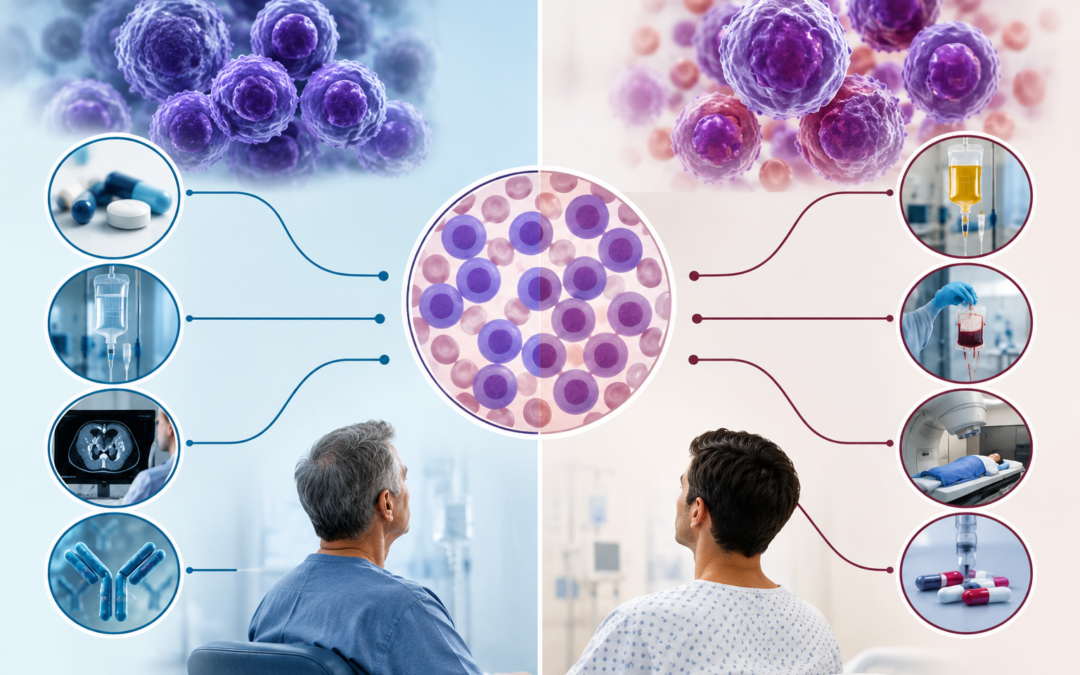
Mostly the pace. CLL is a slow cancer of mature B lymphocytes, and plenty of people diagnosed with it feel fine and don’t need a single drug at the start. Doctors check blood counts every few months and wait. Acute leukemias are the opposite. They arrive fast, make people properly unwell within weeks, and need intensive treatment almost straight away. Same word, leukemia, but a completely different speed of decisions.
Dr. Sandeep Nayak, who provides Best Cancer Treatment in Bangalore, hears the same worry from nearly every CLL patient. “People get alarmed when I say we’re not starting treatment today. It feels backwards when the word is cancer. But treating early, before the disease gives any reason to, hasn’t been shown to help most of these patients live longer. So we watch closely and act when something changes. Waiting here is a plan, not a delay.”
Just diagnosed with CLL and unsure what comes next?
When Does CLL Actually Need Treatment?

Chronic lymphocytic leukemia treatment starts when the disease causes a problem, not when it is first found. Doctors usually look for one or more of these.
Falling blood counts. Anaemia or low platelets, because the bone marrow is getting crowded out.
Swollen glands or spleen that keep growing. Especially if they become uncomfortable or start pressing on things.
Lymphocyte count climbing fast. Doubling in under six months is the kind of pace that gets attention.
Symptoms that won’t go away. Drenching night sweats, fevers with no infection, weight loss without trying, tiredness that sleep doesn’t touch.
Autoimmune trouble. The body attacking its own red cells or platelets, and steroids not settling it.
A high white cell count by itself is not a reason to start. Our blog on what actually causes leukemia explains how these blood cell changes begin in the first place.
How Do CLL Treatment Options Differ From Other Leukemias?

The CLL treatment options available today look very different from what acute leukemia patients go through.
AML. Intensive chemotherapy, started quickly, often with weeks in hospital.
ALL. Chemotherapy in several phases, and the whole course can stretch over a couple of years.
CML. A daily tablet that keeps the disease under control long term, taken for years.
CLL. Targeted drugs, usually a BTK inhibitor or a venetoclax based combination. Some are taken for as long as they work, others for a set period, often around a year.
Genetic tests decide which one. IGHV status and changes involving TP53 or 17p guide the choice, which is where NGS testing comes in. Our blog on immunotherapy vs targeted therapy covers why that kind of testing matters so much for picking a drug.
Why Choose MACS Clinic for a CLL Diagnosis?
Dr. Sandeep Nayak’s team at MACS Clinic starts with proper staging and genetic testing, so CLL isn’t handled like every other leukemia. Precision oncology testing looks at the features that decide which drugs are worth using, and the plan is coordinated with the haematology team where specialist drug therapy is needed.
Not sure whether you need treatment yet or just close monitoring? Reach the team at +91 9482202240.
FAQs
Can CLL be cured?
For most people it is managed rather than cured. Modern drugs keep it under control for many years though, and some people get long stretches off treatment.
Is watch and wait the same as ignoring it?
No. It means regular blood tests and exams, usually every few months, so treatment starts the moment it’s needed.
Does CLL treatment last forever?
Depends on the drug. Some tablets continue as long as they’re working. Some combinations run for a fixed period, often about a year.
Do people with CLL get infections more easily?
Yes, the immune system doesn’t work as well. Ask the care team which vaccines are safe, and get fevers checked early instead of waiting them out.
Reference
- National Cancer Institute (NCI). Chronic Lymphocytic Leukemia Treatment (PDQ®). https://www.cancer.gov/types/leukemia/patient/cll-treatment-pdq
- American Cancer Society. Treating Chronic Lymphocytic Leukemia (CLL). https://www.cancer.org/cancer/types/chronic-lymphocytic-leukemia/treating.html
Disclaimer:This content is published for educational and informational purposes only.