
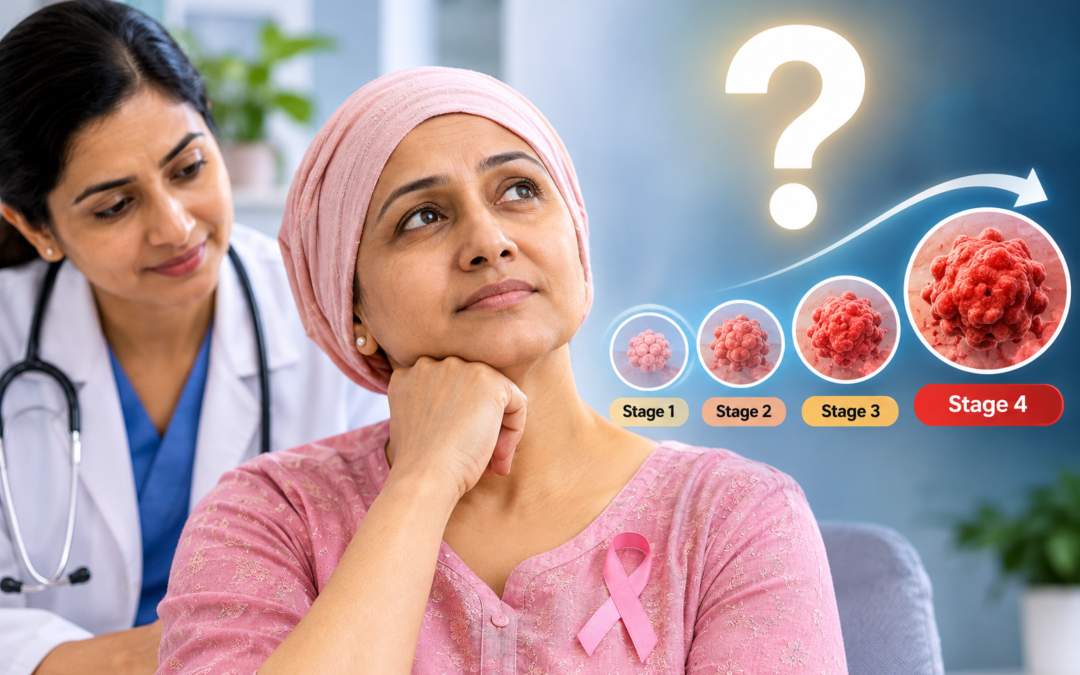
No. Stage 4 cancer is not 100% death, and it isn’t the same thing as “terminal”. Stage 4 means the cancer has spread from where it started to another part of the body, which is why it’s also called metastatic cancer. For most types it can’t be cured, and that’s the hard part. But it can often be controlled, sometimes for years, with treatment that slows or stops the cancer and keeps you feeling well. A few cancers that have spread can still be cured, testicular cancer being the best-known. What happens next depends heavily on the type of cancer, where it has spread and how it responds. So the numbers you’ll find online, including any stage 4 cancer survival rate, describe groups of people from the past. They don’t describe you.
Dr. Sandeep Nayak, who provides cancer treatment in Bangalore, says the numbers need handling with care. “A survival rate is an average from many past patients, often treated years ago. It can’t tell you what will happen to one person. With stage 4, the type of cancer matters most, then where it has spread, how many places, the tumour’s genetic features and how your body responds to treatment. In some cases, a few spots can be treated with surgery or radiation along with drugs. And treatment keeps changing. Ask your oncologist what the goal is in your case, and what to expect.”
If you or someone you love has been given a stage 4 diagnosis, it helps to have the reports looked at by a team that can explain the options plainly. Our team can go through the scans and pathology with you and explain what treatment could aim for.
Stage 4 Cancer Survival Chances: What the Numbers Can and Can’t Tell You
- Survival rates usually mean five-year relative survival: how many people with this cancer and stage are alive five years after diagnosis, compared with people of the same age without it. They come from patients treated in the past.
- They vary enormously by cancer. Take breast cancer. For disease that has spread to distant organs, about 32 in 100 people are alive at five years, and the figure runs from about 15 in 100 for triple-negative to about 49 in 100 for HR-positive, HER2-positive disease. You can read more on our breast cancer treatment page. Other cancers look very different, so ask for the figures for yours.
- Subtype and tumour testing change the picture. Knowing the tumour’s genes and markers can open the way to targeted drugs, which is the idea behind precision oncology.
- Treatment moves faster than statistics. Doctors now see long-term survivors with several kinds of stage 4 cancer, including breast, lung, kidney and melanoma, and an average can’t capture that.
Advanced Cancer Treatment: What Helps in Stage 4
- The goal is usually control: stopping or slowing the cancer, easing symptoms, and keeping you well for as long as possible. Some people stay on treatment for years.
- Treatment that reaches the whole body does most of the work. That can be chemotherapy, hormone therapy, targeted tablets or immunotherapy. If chemo is part of the plan, our blog on the common chemotherapy side effects tells you what’s normal. Targeted tablets can make a big difference in some cancers, as our post on EGFR-positive lung cancer shows.
- When the cancer has spread to only a few places, local treatments such as surgery, radiation or other procedures may be added.
- Palliative care isn’t only for the end. It can run alongside treatment from the start, to ease pain and other symptoms.
What Decides the Outlook in Stage 4 Cancer?
There’s no single answer, and several things count together.
- The type and subtype of cancer. This matters more than almost anything else.
- Where it has spread, and how many places. Bone, liver, lung and brain behave differently, and a few spots are not the same as many.
- The tumour’s genes and markers, which decide whether targeted treatment or immunotherapy is an option.
- How the cancer responds. A good response early on is a strong sign.
- Your age, general health and other illnesses.
- Whether it was found at stage 4 straight away, or came back after earlier treatment.
- Getting the right treatment at the right time, which is where a second opinion can help.
Key Takeaways
- Stage 4 cancer is not 100% death, and it’s not the same as terminal.
- It usually can’t be cured, but it can often be controlled for months or years, and a few cancers that have spread can still be cured.
- Survival rates are averages from past patients and differ hugely between cancers. They can’t predict your own outcome.
- Palliative care can start at any point, alongside treatment.
- Questions about your own case? You can call the clinic on +91 9482202240.
FAQs
Is stage 4 cancer 100% death?
No. Stage 4 means the cancer has spread, and for most types it can’t be cured. But many people live for months or years with it, and treatment can control it and keep you comfortable.
What is the stage 4 cancer survival rate?
There isn’t one number. It depends on the cancer. For breast cancer that has spread, about 32 in 100 people are alive five years after diagnosis, and the figure runs from about 15 to 49 in 100 depending on the subtype. Other cancers differ. Your oncologist can give you the figures for yours, and explain what they do and don’t mean.
Is stage 4 cancer curable?
Mostly not, but it’s often treatable. A few cancers, like testicular cancer, can be cured even after spreading. For most, the aim is to control the cancer, ease symptoms and help you live well for as long as possible.
Can you live a long time with stage 4 cancer?
Some people do. Treatment can keep certain stage 4 cancers under control for years, and people can stay on treatment long term. How long depends on the type of cancer, where it has spread and how it responds.
Reference Links:
- Metastatic Cancer: When Cancer Spreads, National Cancer Institute
- Living With Metastatic Cancer, NCI Cancer Currents Blog, National Cancer Institute
- Cancer Stat Facts, SEER, National Cancer Institute
- What Is Advanced Cancer?, American Cancer Society
- Breast Cancer Survival Rates by Stage, Type, and Age, Breast Cancer Research Foundation
- Breast Cancer Treatment in Bangalore, MACS Clinic
- Precision Oncology, MACS Clinic
Disclaimer
This content is published for educational and informational purposes only and is not a substitute for medical advice. Survival statistics describe groups of people and cannot predict any one person’s outcome. Please talk to your oncologist about your own situation.