
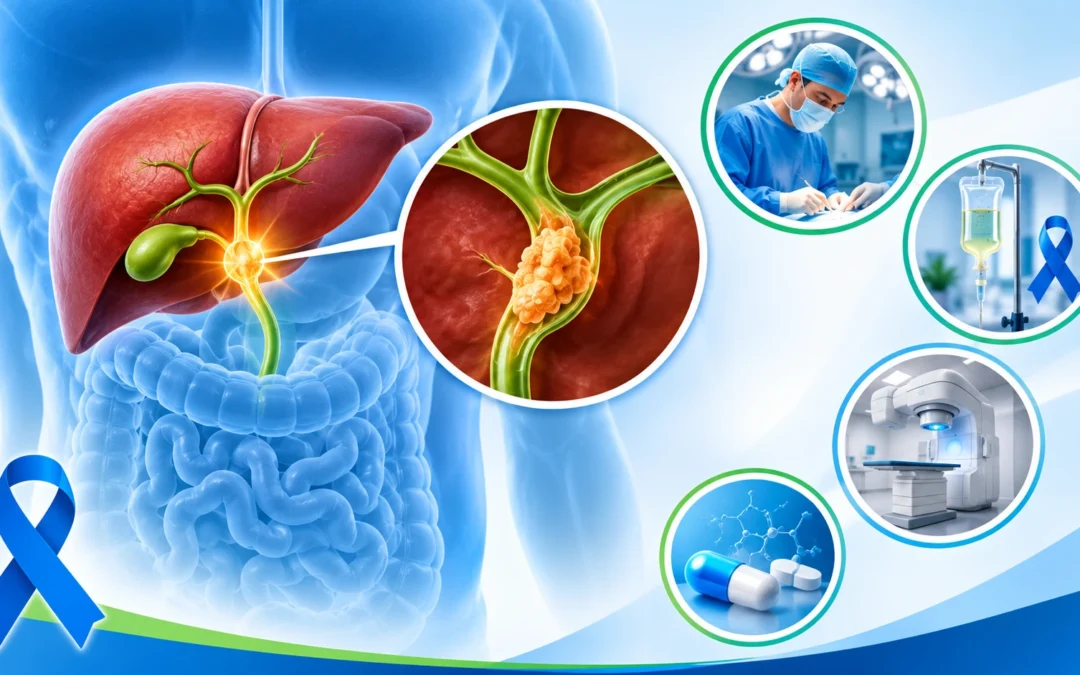
Cholangiocarcinoma is bile duct cancer. Same thing, longer name. Your liver makes bile to help digest fat, and a network of thin tubes, the bile ducts, carries it to the small intestine. When a cancer starts in those tubes, that’s cholangiocarcinoma. It’s rare. It also tends to turn up late, because the early signs are vague, and even the obvious one, yellow skin and eyes, can be put down to something else at first. Cholangiocarcinoma treatment comes down to two questions: where exactly is the tumour, and can it be taken out whole? If yes, surgery is the only thing that can cure it. If not, there’s still plenty to do. Chemotherapy, immunotherapy, targeted tablets, and a stent or drain to get the bile flowing again.
Dr. Sandeep Nayak, who provides cancer treatment in Bangalore, puts the urgency plainly. “If someone’s eyes or skin turn yellow, and the urine goes dark or the itching starts, don’t wait it out. Get blood tests and a scan done soon. With this cancer, the big question is whether we can remove the whole tumour. That depends on very good imaging, and on a team that does liver and bile duct operations all the time. And if surgery isn’t an option, we still have ways to control it and keep the bile draining.”
Whether this cancer can be removed depends on the scans, the health of the liver and exactly where the tumour sits. If you or a family member has been told about a bile duct tumour, our team can go through the reports and explain the options.
What Is Cholangiocarcinoma? Types and Symptoms?
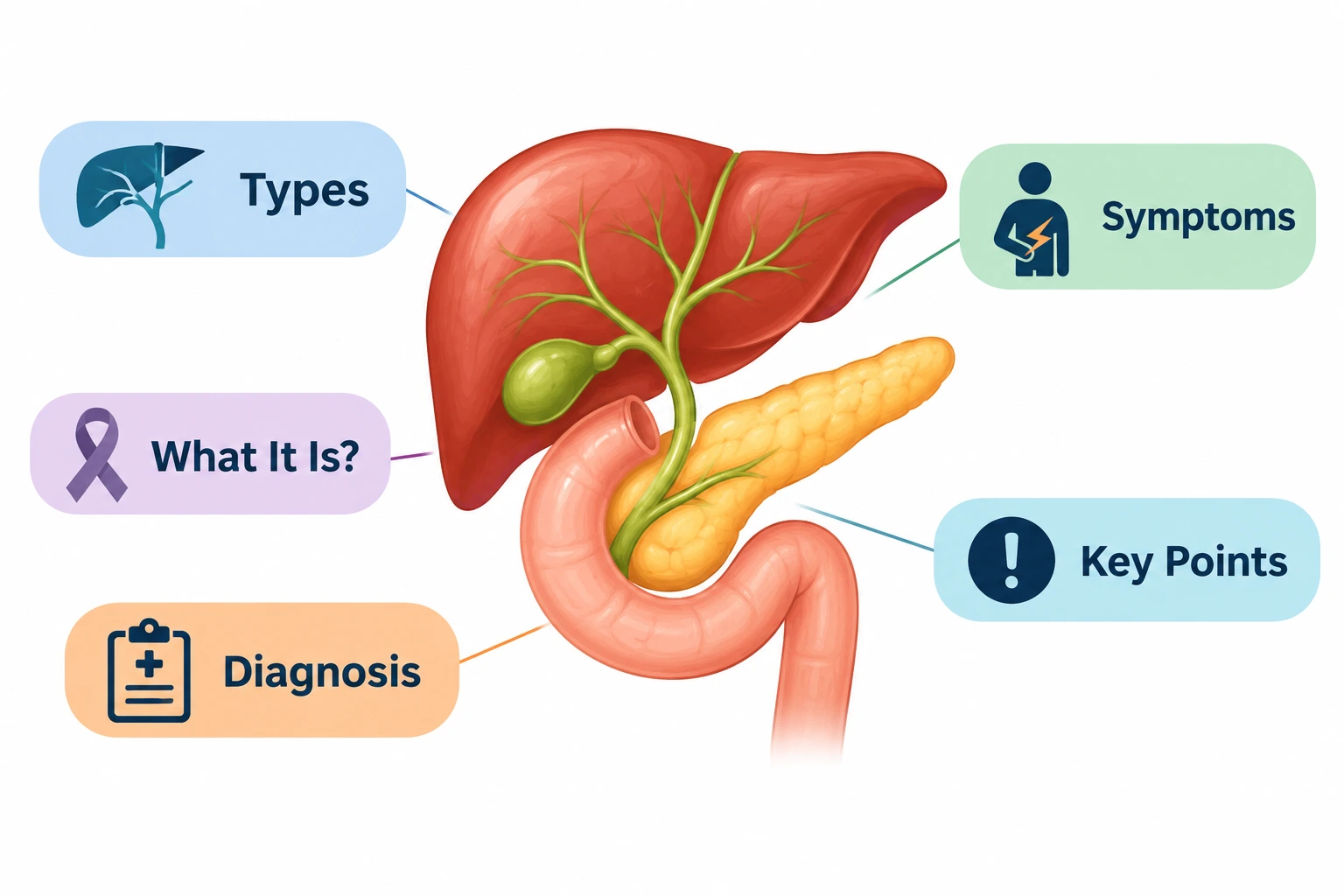
- It’s a cancer of the bile ducts, the tubes that carry bile from the liver and gallbladder to the small intestine. It can start inside the liver (intrahepatic), where the right and left ducts join just outside it (perihilar), or in the lower part near the pancreas (distal). Our page on pancreas and bile duct tumours goes through these.
- Cholangiocarcinoma symptoms include jaundice, dark urine, pale stools, itching, pain in the upper abdomen, fever, loss of appetite and weight loss.
- Tumours at or below the liver’s exit tend to block the duct and cause jaundice early. Tumours inside the liver can stay quiet for longer, which is one reason they’re found late.
- Diagnosis usually combines blood tests, scans such as CT or MRI (often with an MRCP, a scan of the bile ducts), a look inside the ducts and a biopsy. Sometimes a keyhole look called diagnostic staging laparoscopy checks for spread before major surgery.
Bile Duct Cancer Treatment: The Main Options?
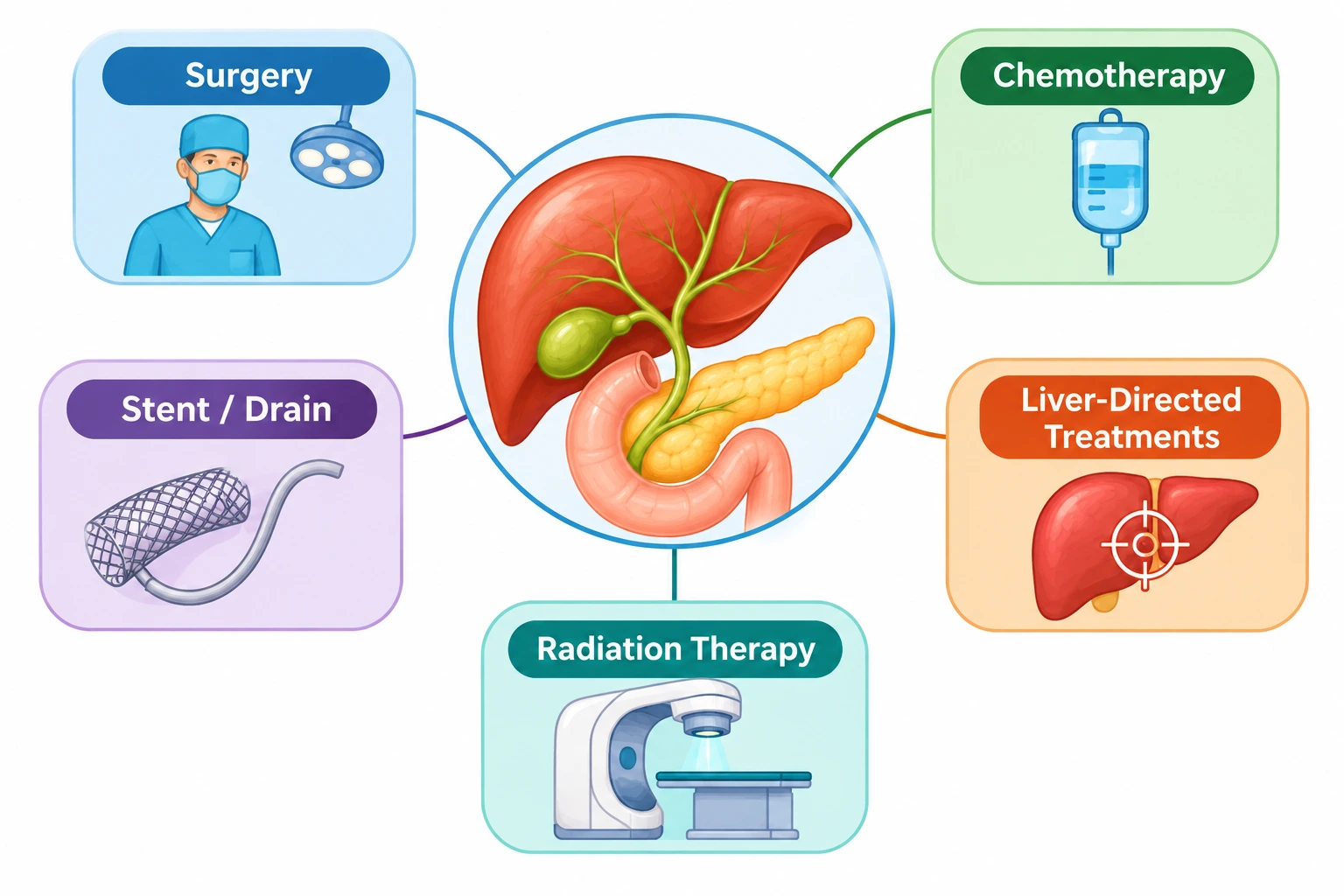
- Surgery is the only potentially curative treatment, but it can be offered to only a minority of people, roughly one in four or five. The operation depends on the type: part of the liver for tumours inside it or near it, and a Whipple procedure for tumours in the lower duct. These decisions are usually made by a tumour board, which our blog on the tumour board explains.
- After surgery, chemotherapy is often advised to lower the chance of the cancer coming back. A tablet called capecitabine for about six months is the usual choice.
- If the tumour can’t be removed, the standard first treatment is chemotherapy with an immunotherapy drug. If you’re having chemo, read up on the common chemotherapy side effects.
- A blocked duct can be opened with a stent or a drain, which clears jaundice and itching and makes other treatment safer. Radiation and other liver-directed treatments are used in some cases.
What Decides Cholangiocarcinoma Treatment?
There’s no single plan, and the team weighs several things together.
- Where the tumour is. Inside the liver, near the liver, or lower down each call for a different operation.
- Whether it can be removed completely, and how much healthy liver would be left afterwards.
- How far it has spread, to nearby lymph nodes or to other organs.
- The tumour’s own genetic changes. Around 15 in 100 bile duct cancers have an IDH1 change, and some have FGFR2 changes, which can open the way to targeted drugs. This is where tumour testing and precision oncology come in.
- Your general health, and how badly the bile flow is blocked, since jaundice often has to be relieved first.
FAQs
What is cholangiocarcinoma?
It’s a rare cancer that forms in the bile ducts, the tubes that carry bile from the liver and gallbladder to the small intestine. It’s also called bile duct cancer.
What are the first symptoms of bile duct cancer?
Often jaundice, where the skin and whites of the eyes turn yellow. Dark urine, pale stools, itching, upper abdominal pain and weight loss are common too.
Can bile duct cancer be cured?
Surgery to remove the whole tumour is the only treatment that can cure it, and it’s possible for only a minority of people, usually when the cancer is found early. For others, treatment aims to control the cancer and ease symptoms.
What treatment is used if it can’t be removed?
Chemotherapy with an immunotherapy drug is the usual first choice. If the tumour has certain gene changes, such as IDH1 or FGFR2, targeted drugs may be an option. Stents or drains can relieve jaundice.
Reference Links:
- Bile Duct Cancer (Cholangiocarcinoma) Treatment (PDQ®), Patient Version, National Cancer Institute, NCBI Bookshelf
- Bile Duct Cancer (Cholangiocarcinoma) Treatment (PDQ®), Health Professional Version, National Cancer Institute
Disclaimer
This content is published for educational and informational purposes only and is not a substitute for medical advice. Please speak to your oncologist before changing or stopping any treatment.