


Cancer surgery isn’t painful while it’s happening. You’re either fully asleep under general anaesthesia, or the area is numbed, so you don’t feel the operation. The real question is what comes afterwards. Some soreness is normal once the anaesthesia wears off, and some people have more than they expected. It can be managed, usually with a mix of medicines and, for certain operations, a nerve block. How strong it is and how long it lasts depends on the surgery, the size of the cut and the person. A good cancer surgery recovery plan is built around keeping you comfortable enough to move, eat and sleep.
Dr. Sandeep Nayak, who provides cancer treatment in Bangalore, says the fear is usually bigger than the experience. “During the operation, the anaesthesia team keeps you asleep and pain-free, and monitors you throughout. After surgery, we don’t wait for pain to build up. Pain relief is planned beforehand, often by combining a few different medicines and, for some operations, a nerve block. If something isn’t working, say so early. Pain that’s controlled in the first days tends to be easier to keep under control later.”
How much pain to expect depends on which operation you need and how it’s done. If you’ve been advised surgery and want to understand what recovery will look like, our team can walk you through it based on your reports.
Cancer Surgery Pain: What You’ll Feel and When?
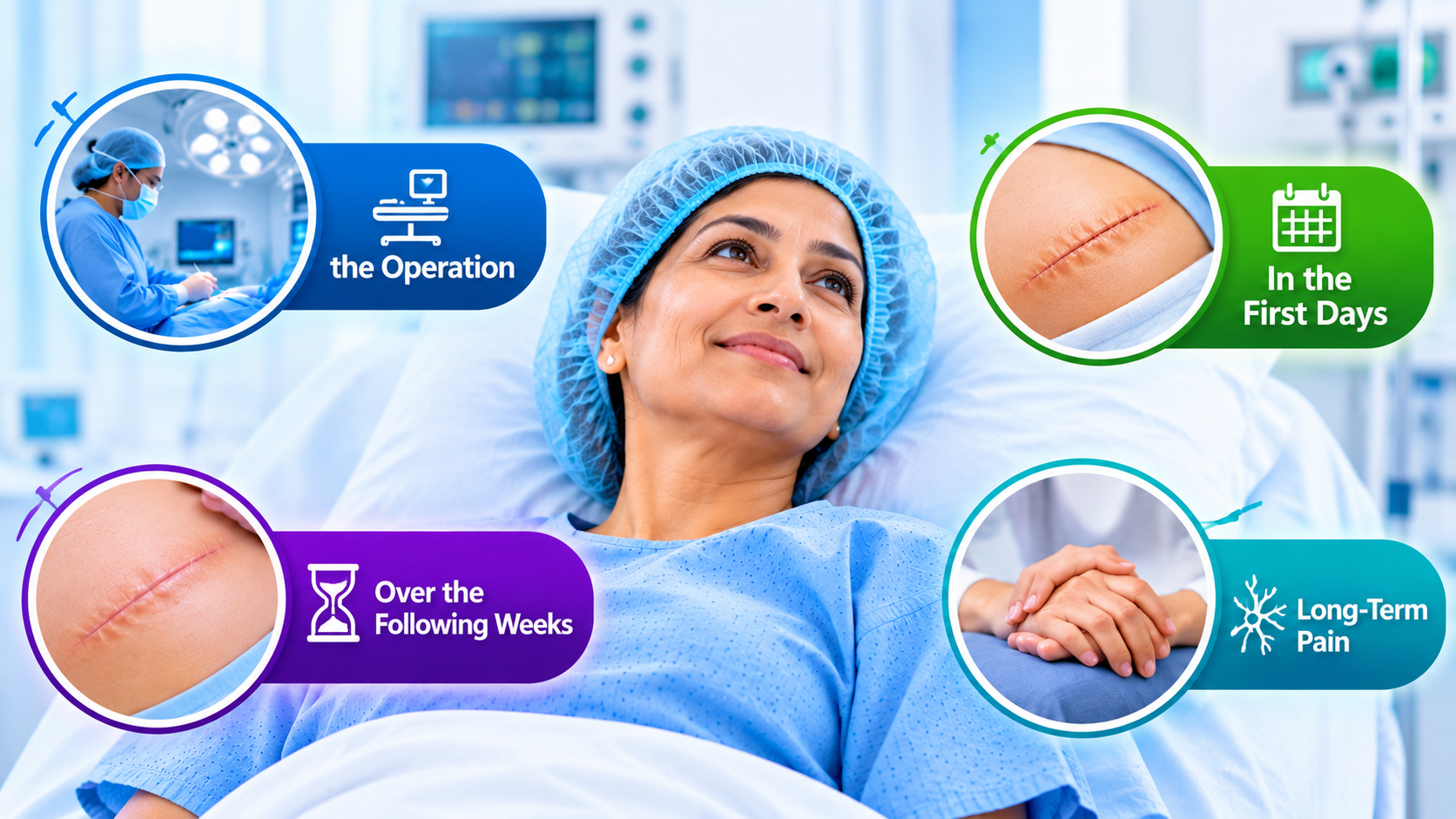
- During the operation, nothing. You’re under general anaesthesia, or the area is numbed with a regional or local block, and the anaesthesia team watches you the whole time.
- In the first days, soreness around the cut and the area worked on is common. It’s treated with tablets, sometimes a drip or injections, and for some operations a nerve block placed before or after surgery.
- Over the following weeks it usually eases, though pulling, tightness or patches of numbness near the scar can hang around for a while. Smaller cuts help here, which is part of the thinking behind minimal access surgery.
- A smaller group of people have pain that lingers for months, often a burning or tingling nerve-type pain. It’s reported more often after breast surgery, and studies give wide estimates. If it doesn’t settle, ask about pain management, because there are treatments for it.
Cancer Surgery Recovery: What Helps?

- Take pain relief as it’s planned, not only when it gets bad. It’s easier to stay ahead of pain than to catch up with it.
- Get moving early. Short walks, breathing exercises and physiotherapy all help recovery, and your team will tell you when to start.
- Smaller cuts usually mean less pain and a quicker recovery than a large open incision. Our blog on minimally invasive surgery explains how that works.
- Surgical pain is different from treatment side effects. If chemotherapy follows, tiredness and nausea are a separate matter, and the common chemotherapy side effects are worth reading up on.
What Decides How Painful Your Recovery Will Be?
It isn’t the same for everyone. A few things make the difference.
- The operation itself. Large open operations on the chest or abdomen tend to hurt more than keyhole ones, and the size of the cut and how much tissue is worked on both count.
- The pain plan. A mix of medicines, with or without a nerve block, usually works better than one medicine on its own.
- Your own situation. Pain you had before surgery, anxiety and poor sleep can all make recovery feel harder.
- Nerves near the surgery. Operations around the breast, armpit or neck can leave numbness or tingling.
- Complications. A wound infection or a fluid collection can raise the pain, so mention anything that suddenly gets worse.
FAQs
Will I feel anything during cancer surgery?
No. You’re either asleep or the area is numb, and the anaesthesia team stays with you throughout.
How long does pain after cancer surgery last?
It depends on the operation. For many people it’s worst in the first few days and eases over a few weeks. Some have tingling, tightness or nerve-type pain for months. If it isn’t settling, tell your surgeon.
Is keyhole or robotic surgery less painful than open surgery?
Usually, because the cuts are smaller. But not every cancer can be done that way, and your surgeon will tell you what suits yours.
What if the painkillers aren’t working?
Say so straight away. There are other medicines and nerve blocks to try, and lingering pain can be looked at by a pain specialist.
References
Disclaimer
This content is published for educational and informational purposes only and is not a substitute for medical advice. Please speak to your oncologist before changing or stopping any treatment.