

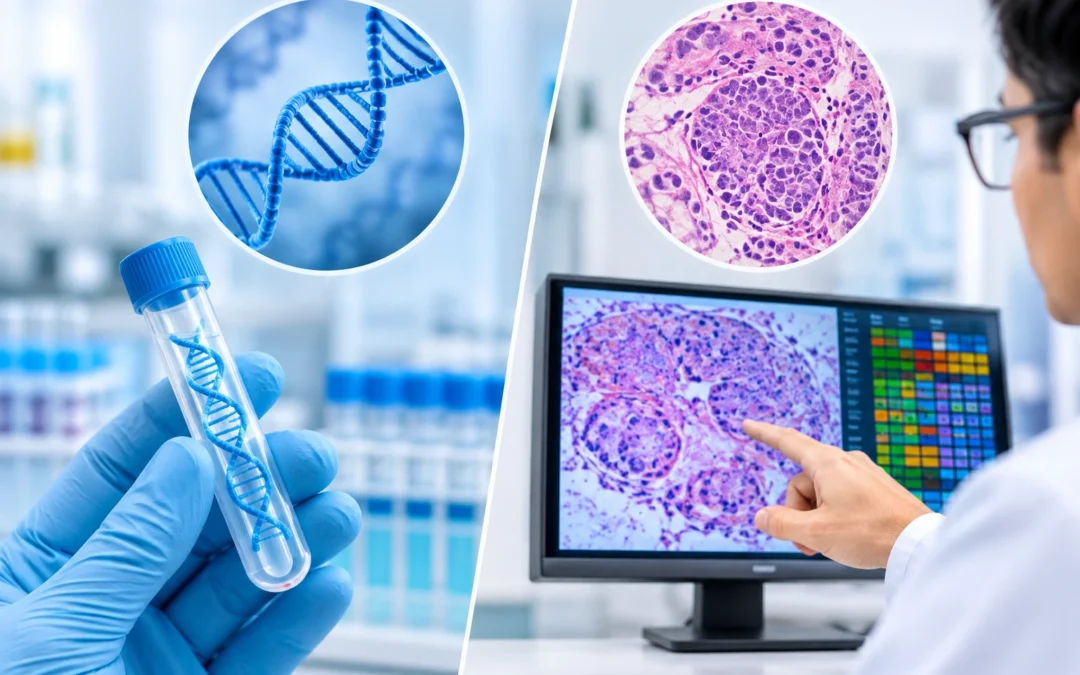
Genetic testing for cancer looks for gene changes you were born with, the inherited kind that can run in families. Tumour profiling, also called tumour genomic or biomarker testing, looks for changes that appeared inside the cancer cells after birth. Cancer genetic testing is usually done on blood or saliva and tells you about risk, for you and for your relatives. Tumour profiling is done on a sample of the cancer and helps choose treatment. Both read genes, but they answer very different questions.
Dr. Sandeep Nayak, who provides cancer treatment in Bangalore,at MACS Clinic, says patients often assume one test covers the other. “It doesn’t. A blood test for inherited mutations tells us about your risk, and your family’s. It says nothing about which drug will suit the tumour. Tumour profiling is the reverse. It reads the cancer’s own DNA to find targets for treatment, but it can’t reliably tell us what was inherited. When both questions matter, we do both.”
Which test applies depends on your cancer type, your age at diagnosis and your family history. If you’re not sure where you fit, our team can look at your reports and explain what’s worth testing and why.
Genetic Testing vs Tumour Profiling: Side by Side?
| Genetic testing (inherited) | Tumour profiling (in the cancer) | |
| What it looks for | Gene changes present from birth | Gene changes found only in the cancer cells |
| Also called | Germline testing, hereditary cancer testing | Tumour genomic testing, biomarker testing, somatic testing |
| Sample used | Blood or saliva | Tumour tissue from a biopsy or surgery, sometimes a blood sample (liquid biopsy) |
| Who it’s for | People with a family history, early-onset cancer or certain cancer types, and sometimes healthy relatives | People who already have cancer, when treatment choices depend on the tumour’s biology |
| The question it answers | “Is my inherited risk higher, and should relatives be tested?” | “Which treatment is most likely to work on this tumour?” |
| What the result can change | Screening, preventive steps, family testing, sometimes treatment | The choice of targeted therapy or immunotherapy |
| Does it matter for relatives? | Yes, results can apply to blood relatives | Generally no, because the changes are in the tumour only |
| Can it change over time? | No, inherited DNA stays the same | Yes, tumours change, so retesting is sometimes needed |
| Counselling | Advised before and after testing | The oncologist usually explains the results |
| Possible limitation | Can raise emotional, family and privacy questions, and some results are uncertain | May find no usable target |
The two can overlap. Tumour profiling sometimes picks up a change that may be inherited, and doctors then usually confirm it with a separate genetic test. You can read more about how this fits into treatment on our precision oncology page, and about the inherited side on our genetic counselling .
After Lymph Node Surgery: What Else to Expect?

- A tumour profile that finds a target can open the door to targeted tablets or immunotherapy. Lung cancer with an EGFR change is a good example, and our blog on EGFR-positive lung cancer shows how that plays out.
- Sometimes profiling finds nothing usable. That doesn’t mean treatment stops. The plan leans on standard options such as chemotherapy, so it helps to know the common chemotherapy side effects.
- An inherited result usually leads to a conversation about relatives: who might be tested, and when screening should start.
- Results are easier to take in when someone explains them in context. That’s what counseling before and after testing is for.
What Decides Which Test You Need?
There’s no single rule. Several things are weighed together.
- Your cancer type. For some cancers, such as ovarian, pancreatic and certain prostate cancers, guidelines recommend inherited testing for everyone diagnosed. For others, it’s offered to selected patients.
- Your age and family history. Cancer at a young age, several relatives with cancer, rare cancers in the family, or a known inherited change in a relative all point towards genetic testing.
- Whether treatment depends on tumour markers. In cancers like lung, breast and colorectal, profiling can change which drug is chosen.
- The sample available. Profiling usually uses tissue from a biopsy or surgery, and a blood sample is sometimes used when tissue isn’t enough or repeat testing is needed.
- How ready you are for the answer. Inherited results can affect family members, and may bring up worry or privacy questions, so counselling beforehand matters.
FAQs
What’s the real difference between genetic testing and tumour profiling?
Whose genes you’re reading. Genetic testing reads yours, from blood or saliva, to see what you inherited. Tumour profiling reads the cancer’s, from a piece of the tumour, to see what has changed inside it.
Can tumour profiling show if my cancer runs in the family?
Not on its own. It might throw up a change that looks inherited, but you’d still need a separate genetic test to be sure.
Will I need both tests?
Possibly. Say your family has had a few cancers, and your treatment also depends on what the tumour is doing. Then both make sense. Your oncologist will tell you.
Is a blood test enough?
For inherited testing, usually yes. For tumour profiling, normally not, because they need a piece of the tumour. A blood test for tumour DNA (a liquid biopsy) is sometimes used when tissue isn’t enough.
Reference Links:
Disclaimer
This content is published for educational and informational purposes only and is not a substitute for medical advice. Please speak to your oncologist before changing or stopping any treatment.