
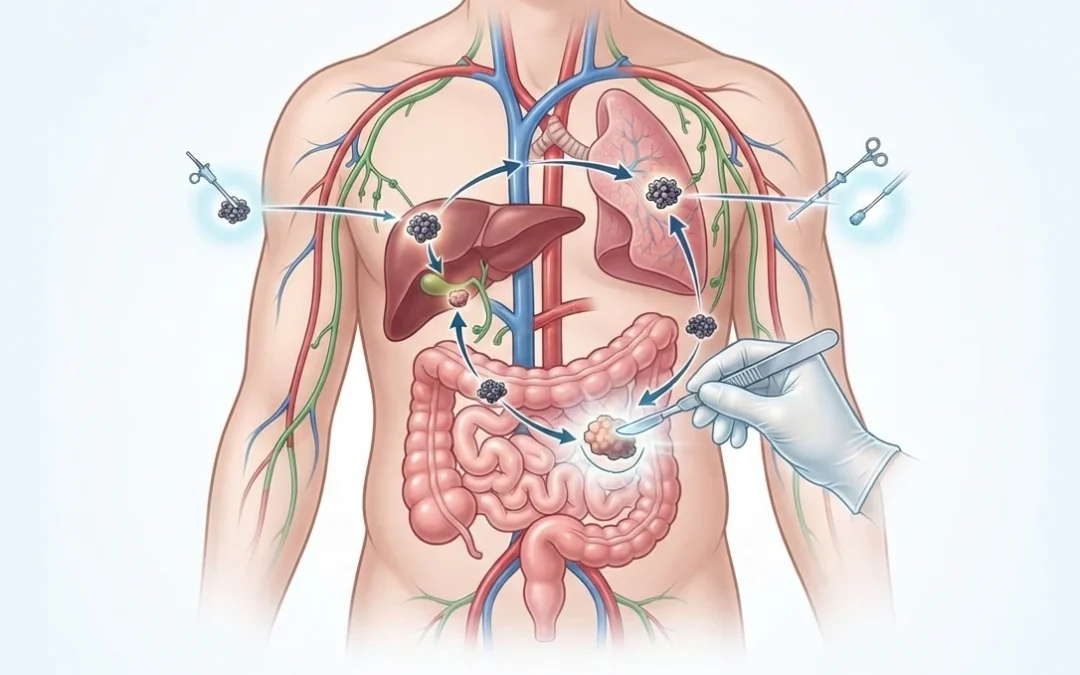
Yes, sometimes. Surgery for metastatic cancer can help when the spread is limited to a few spots that can be removed completely, or when a deposit is causing pain, bleeding or a blockage that an operation can fix. It rarely cures widespread cancer by itself, so it usually works alongside drug treatment, and whether it’s worth considering depends on where the cancer has gone, how many spots there are and how well the patient is.
Dr. Sandeep Nayak, who provides cancer treatment in Bangalore, at MACS Clinic, says, “Spread to another organ doesn’t automatically close the door on surgery. What matters is how many spots there are, whether every one can be removed safely, and how the cancer has behaved on treatment so far. For some patients surgery is part of a plan to keep the disease under control for years, and for others it is simply the best way to take away a painful symptom.”
For background on how cancer travels to other organs, see what metastatic cancer is and how it spreads.
Learn when surgery may help manage cancer that has spread and improve quality of life.
Which Organs Can Surgery Reach When Cancer Has Spread?

- The liver. Some cancers, colorectal cancer most often, spread to the liver first. When only a few spots are involved and enough healthy liver would remain, removing them can give long-term control, usually together with chemotherapy.
- The lungs. A small number of deposits in the lung can sometimes be removed, often through keyhole surgery, in carefully selected patients such as some with sarcoma or colorectal cancer.
- The brain. A single deposit, or one that is easy to reach and causing symptoms, may be removed. Focused radiation is an alternative for small ones.
- The lining of the abdomen. When a cancer seeds the abdominal lining, surgeons strip away every visible deposit and may add heated chemotherapy, known as HIPEC. The blog on debulking surgery for ovarian cancer covers a similar idea.
- Bone and other organs. Surgery can steady a weakened bone or take pressure off the spinal cord, mainly for comfort and movement. A single deposit in a place like the adrenal gland is sometimes removed too.
When Is Surgery Not the Answer, and What Is Palliative Surgery?

- When the spread is widespread. Cancer in many organs at once is usually treated with drugs, since an operation can’t reach all of it.
- When not every spot can be removed. Taking out some and leaving others usually doesn’t change where the cancer is heading.
- When the cancer is moving fast. Surgeons often try chemotherapy first and see how the disease behaves before deciding on an operation.
- Palliative surgery. This isn’t aimed at cure. It can bypass a blocked bowel, stop bleeding, steady a bone or drain fluid, so the person feels better. It isn’t the same as giving up, and the post on palliative care explains how it can sit alongside other treatment.
- When another approach does the job. Focused radiation, heat ablation or drugs can handle some small deposits without an operation.
For a wider look, see Can Stage 4 Cancer Be Treated With Surgery? and the previous blog on what a stage 4 cancer diagnosis actually means.
What Determines the Right Treatment Approach?
- How many spots, and where. Scans such as PET-CT or MRI show how many deposits there are and whether they can all be reached.
- How the cancer has behaved. Response to drugs and the time since the first tumour both count, and precision oncology testing can show which drugs may work.
- Whether the main tumour is under control. If the original cancer is still growing, that usually has to be dealt with first.
- Fitness and organ reserve. Heart and lung checks and blood tests help judge how well the body will cope with an operation.
- What the goal is. Cure, control and comfort are different aims, and each can lead to a different plan.
- Review by the whole team. Surgery, medical oncology, radiology and pathology looking at the same case before anything is decided.
- Risks and limits. These operations can be long, with risks of bleeding, infection and a slower recovery. Surgery rarely cures widespread disease on its own, and no operation can promise a cure.
Key Takeaway
Surgery for cancer that has spread to another organ can help when the spread is limited and every spot can be removed, or when it relieves a painful or dangerous symptom. It usually works alongside drug treatment, and the plan is best made by a team that has seen the scans. Questions about your own situation are best discussed with your treating oncologist.
Frequently Asked Questions
Can surgery cure cancer that has spread?
Sometimes, in selected cases with only a few spots. More often it controls the disease or relieves symptoms.
Does surgery come before or after chemotherapy?
It can be either. Drugs are often tried first to see how the cancer behaves.
Can surgery help stage 4 cancer?
It can when the spread is limited or a deposit is causing symptoms, but not for widespread disease.
Is palliative surgery the same as giving up?
No. It aims to relieve symptoms and can go alongside other treatment.
Disclaimer
This article is for patient education only. It is not medical advice and does not replace consultation with a qualified doctor. Suitability, risks and outcomes differ for each person.
References: