

For most people, strength drops for a while after cancer surgery, and for some it takes longer to come back than they expected. There are three reasons. First, the operation itself: any muscle or nerve that has to be cut or removed can leave that area weaker. Second, surgical stress. Major surgery sets off inflammation and a breakdown of muscle, even when everything goes well. In one study of major abdominal cancer operations, muscle loss in the first week was very common, and it hadn’t fully recovered by six weeks. Third, recovery itself: lying in bed, eating little, pain and tiredness all push muscle down further. Add the effects of the cancer and treatment before surgery, and it’s easy to feel weaker than you did going in. Much of it can be reduced, though, with early movement, enough protein and a bit of preparation.
Dr. Sandeep Nayak, who provides cancer treatment in Bangalore, says patients should expect it and plan for it. “After a big operation, the body breaks down muscle faster than it builds it, and bed rest makes that worse. That’s why we get patients up and moving early, often within a day or two, and why protein matters so much. If you’re stronger going in, you tend to recover faster. So where there’s time, we encourage walking, light strength work and good nutrition before the operation. And if weakness in an arm or shoulder doesn’t improve, tell us, because physiotherapy can help.”
If surgery is coming up, it helps to ask what you can do beforehand to protect your strength. Share your plan with our team, and they’ll explain how exercise, nutrition and early movement can fit into your recovery.
Muscle Weakness After Cancer Surgery: Why It Happens?

- Some weaknesses are local. Where muscle or a nerve has to be cut or removed, that area can stay weaker, such as the shoulder after neck or armpit surgery. You can read about these operations on our oral cancer treatment and breast cancer surgeries pages.
- Surgery puts the whole body under stress. Inflammation, stress hormones and a drop in how well the body handles sugar all push muscle towards breakdown, which is why people lose muscle even in places far from the operation.
- Bed rest and poor intake speed it up. Muscle wastes quickly when you’re lying down, and pain, nausea and tiredness make it harder to move and eat. In one study, patients who lost the most muscle had eaten much less protein in the days after surgery.
- Some people start from behind. Cancer, poor appetite and chemotherapy can mean muscle was already low before the operation, and low muscle before surgery is linked to more complications afterwards.
Muscle Loss After Cancer Surgery: How Common, and How Long?
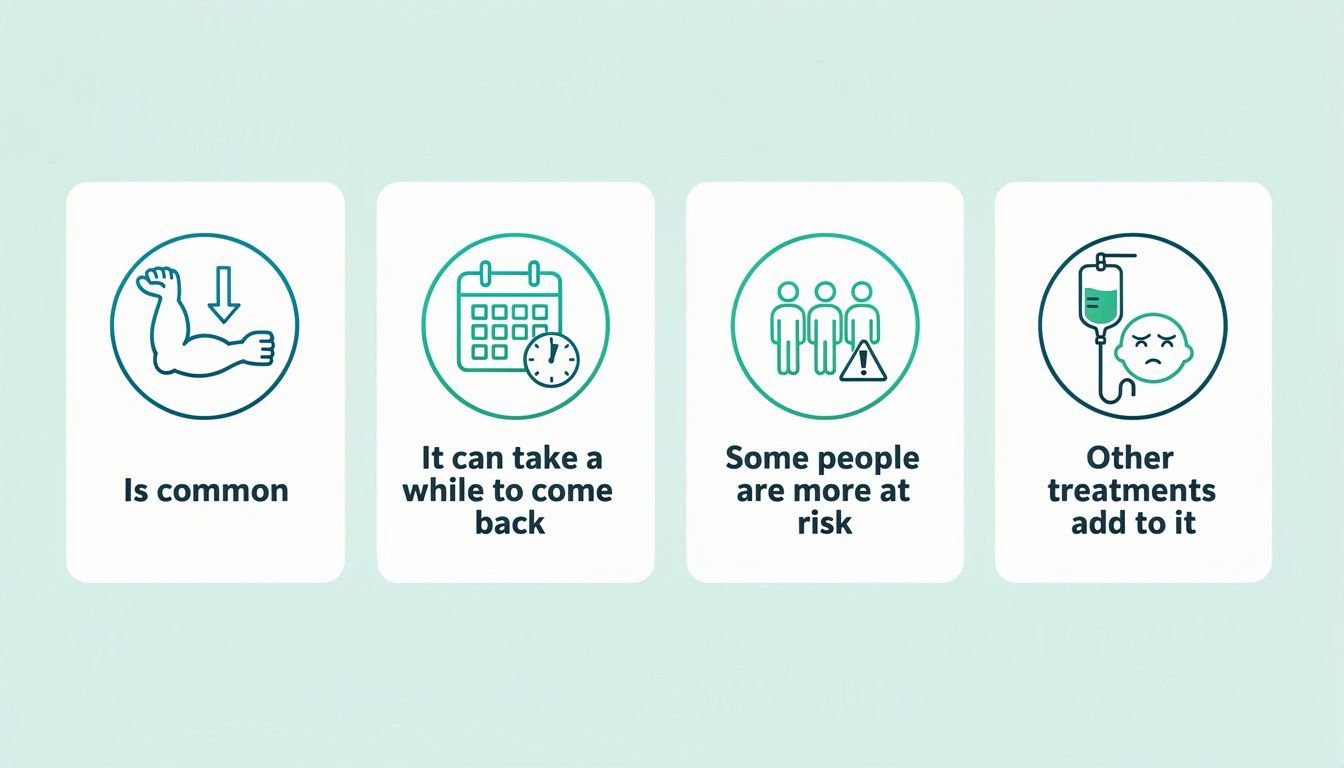
- It’s common. In one study of major abdominal cancer surgery, about 4 in 10 patients had clinically significant muscle loss, and it was linked to poorer outcomes afterwards.
- It can take a while to come back. In another study, the loss of muscle in the first week had not fully recovered at six weeks. Many people keep regaining strength over the following months.
- Some people are more at risk: those who were older, who had lost weight before surgery, who have diabetes, who had complications, or who moved and ate little afterwards.
- Other treatments add to it. Chemotherapy can cause tiredness and a poor appetite, and our blog on the common chemotherapy side effects explains why. Where an operation can be done through smaller cuts, as described in our post on minimally invasive surgery, getting up and walking early is often easier.
Cancer Surgery Recovery: What Helps Rebuild Strength
There’s no single fix, but a few things have good support.
- Prepare before surgery, if there’s time. A mix of walking, light strength work, breathing exercises and better nutrition, often called prehabilitation, has been linked to better strength and fewer complications, especially in people with low muscle.
- Get moving early. Gentle bedside exercises in the first one to three days, then walking and gradually some resistance work, guided by a physiotherapist.
- Eat enough protein. A consensus statement for patients after major surgery suggests about 1 to 1.5 g per kg of body weight a day, adjusted by a dietitian. Our diet counselling service can help you plan it.
- Build up slowly once the wound has healed. Arm and shoulder exercises after neck or breast surgery, and core and leg work after abdominal surgery, should follow your surgeon’s advice.
- Keep pain, nausea and poor sleep under control, because they stop you from eating and moving. Tell your team if weakness is getting worse or only affects one side.
Key Takeaways
- Strength usually drops after cancer surgery, because of the operation, the stress on the body and the time spent resting.
- Muscle loss can be significant and may take weeks to months to recover.
- Being stronger and better nourished before surgery helps you recover faster.
- Early movement and enough protein are the two most useful things afterwards.
- Questions about your own recovery? You can call the clinic on +91 9482202240.
Frequently Asked Questions
1.How does cancer surgery affect muscle strength?
Strength usually dips. Muscle or nerves removed in the operation can weaken one area, and surgical stress, bed rest and poor eating cause general muscle loss. It’s common and often improves with activity and nutrition.
2.How long does muscle weakness after cancer surgery last?
It varies. In one study of major abdominal surgery, muscle hadn’t fully recovered at six weeks, and many people continue to improve over months. Weakness from removed muscle or nerves can last longer, and physiotherapy helps.
3.Can I prevent muscle loss after cancer surgery?
Not completely, but you can reduce it. Getting fitter beforehand, moving early afterwards and eating enough protein all help.
4.How much protein do I need after cancer surgery?
A consensus statement suggests about 1 to 1.5 g per kg of body weight per day for most people after major surgery. Kidney problems or other conditions can change that, so a dietitian should tailor it to you.
Disclaimer
This content is published for educational and informational purposes only and is not a substitute for medical advice. Recovery differs from person to person, so please follow the advice of your surgeon, physiotherapist and dietitian.
References:
- Patients Having Major Abdominal Cancer Surgery Exhibit Significant Acute Muscle Wasting, PubMed Central
- Postoperative Muscle Loss, Protein Intake, Physical Activity and Outcome Associations, PubMed Central
- Consensus-Based Recommendations for Optimizing Perioperative Nutritional Support and Muscle Health in Major Surgery in India, PubMed Central
- Acute Sarcopenia After Elective and Emergency Surgery, PubMed Central
- From Mechanisms to Management: A Comprehensive Review of Sarcopenia in Gastric Cancer, PubMed Central
- Oral Cancer Treatment in Bangalore, MACS Clinic
- Breast Cancer Surgeries, MACS Clinic
- Diet Counselling, Cancer and Nutrition, MACS Clinic