
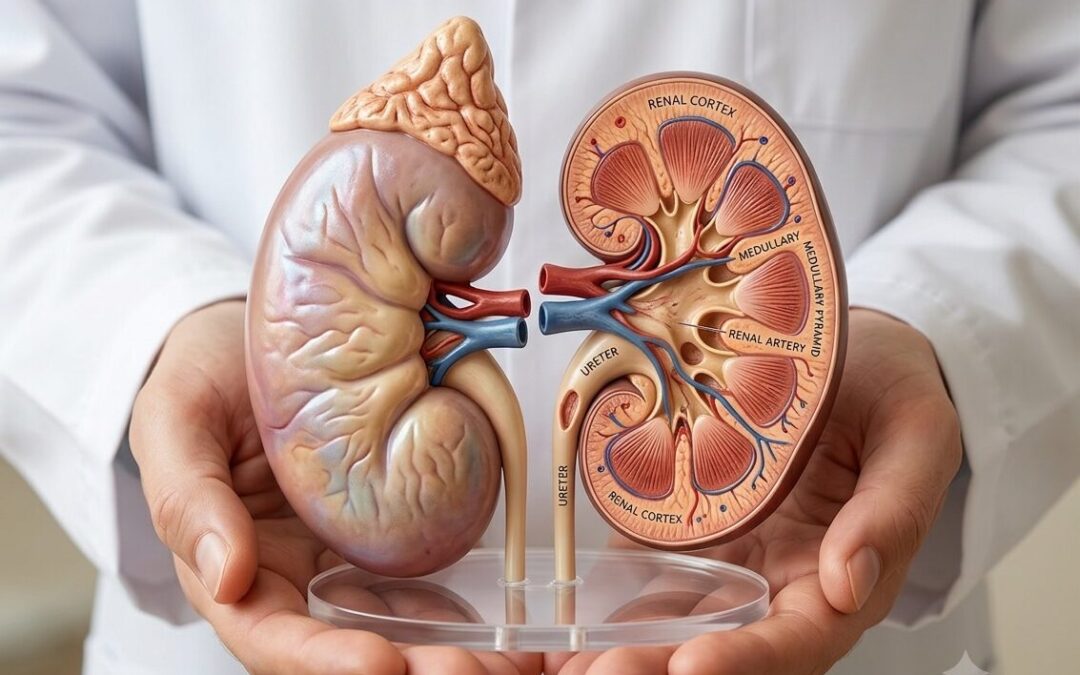
Nobody wants to lose a kidney. But when a tumour is found, that’s usually the first fear that the whole organ has to go. It makes sense. That’s what people have heard, what older treatment looked like, and sometimes what an early conversation with a doctor implies.But it’s not always how it works anymore.In many cases, surgeons remove just the tumour and the kidney stays. It’s called a partial nephrectomy, or nephron-sparing surgery. The tumour comes out with a thin margin of healthy tissue around it, and the rest of the kidney carries on doing exactly what it always did. Filtering blood, balancing fluids, normal function. The kidney remains. Life continues.
Dr. Sandeep Nayak, Best Cancer Treatment in Bangalore, puts it plainly: “The shift toward nephron-sparing surgery over the last two decades has been significant. For tumours under 7 centimetres, particularly those in a favourable location within the kidney, partial nephrectomy gives the same cancer control as removing the entire kidney but with far better long-term kidney function. Keeping that tissue matters, especially as patients age and other health conditions develop.”
Been told you need your kidney removed? It’s worth getting a full assessment first.
When Is Partial Nephrectomy an Option?
Not every tumour can be treated this way. Size matters. So does where exactly the tumour is sitting inside the kidney, and how well the kidneys are functioning overall. But the honest answer is more patients qualify for this than are told they do.
Tumour Size: Partial nephrectomy works best for tumours 4 centimetres or smaller — these are almost always candidates. Tumours between 4 and 7 centimetres can also qualify depending on where they sit in the kidney. Beyond 7 centimetres, removing the whole kidney becomes more likely, though not automatic. Our blog on early signs of kidney cancer covers how tumours at different sizes are typically found and what investigation follows.
Tumour Location: A tumour sitting on the outer edge of the kidney is far easier to remove partially than one buried deep near the central blood vessels or collecting system. Location matters as much as size when the surgeon is planning the approach.
Single Kidney Situations: If a patient has only one functioning kidney, nephron-sparing surgery isn’t just preferred, it becomes essential. Removing the only kidney means dialysis. Every effort is made to preserve what’s there.
Both Kidneys Affected: When tumours are present in both kidneys, which is rare but does happen, partial nephrectomy on at least one side is almost always attempted to preserve total kidney function.
Overall Kidney Health: If kidney function is already reduced due to diabetes, high blood pressure, or age-related decline, keeping as much tissue as possible becomes even more important. This is where precision oncology and full pre-operative assessment help the team understand exactly how much functional reserve the patient has going into surgery.
What Does the Procedure Actually Involve?
Most people going into this have no idea what actually happens and that uncertainty makes it scarier than it needs to be.The tumour is removed using robotic and laparoscopic techniques. Not open surgery. That distinction matters more than it sounds smaller cuts, less blood loss, significantly less pain. Most patients go home within three to four days. Open surgery used to mean weeks just to get back on your feet.
During the procedure, the blood supply to the kidney is temporarily clamped while the tumour is removed, then the kidney is repaired and the clamp released. How long that clamp stays on what surgeons call “warm ischaemia time” directly affects how much kidney function is preserved. The shorter, the better. Robotic precision helps keep it short in a way older techniques simply couldn’t.
You can read more about this approach on the Kidney Cancer Treatment page.
Why Choose MACS Clinic for Kidney Tumour Surgery?
Dr. Sandeep Nayak’s team at MACS Clinic evaluates every kidney tumour case with nephron-sparing surgery as the starting point — not a last resort. The decision between partial and radical nephrectomy is made after reviewing tumour size, location, the patient’s kidney function, and overall health, with surgical oncology, medical oncology, and urology all part of that conversation.
Keeping a kidney isn’t just about avoiding dialysis. It’s about long-term cardiovascular health, blood pressure control, and quality of life in the years after treatment. That’s a clinical decision that deserves more than a single specialist’s opinion. Those who want to discuss whether nephron-sparing surgery is possible in their case can reach the team at +91 9482202240. For patients also navigating hereditary risk, genetic counselling is available as part of the clinic’s broader oncology services.
FAQs
Is partial nephrectomy as effective as removing the whole kidney for cancer?
For tumours under 7 centimetres, yes the cancer control outcomes are equivalent. Long-term survival rates are comparable to radical nephrectomy for appropriately selected tumours. The difference is that patients keep their kidney function, which has real consequences for long-term health.
What size kidney tumour can be treated with partial nephrectomy?
Tumours 4 centimetres or smaller are almost always candidates. Tumours up to 7 centimetres can qualify depending on location. Beyond that, full removal is more likely but each case is assessed individually, not by size alone.
What is the recovery like after partial nephrectomy?
With robotic or laparoscopic surgery, most patients are discharged within three to four days. Full recovery takes a few weeks. It’s considerably faster and less painful than open surgery, which used to be the only option for this procedure.
What if my tumour isn't suitable for partial nephrectomy?
Full removal of the kidney radical nephrectomy is still the right treatment for certain tumours, and one healthy kidney is entirely sufficient for a normal life. The goal is always to give the best cancer outcome while preserving as much function as possible.
Disclaimer: This content is published for educational and informational purposes only.