

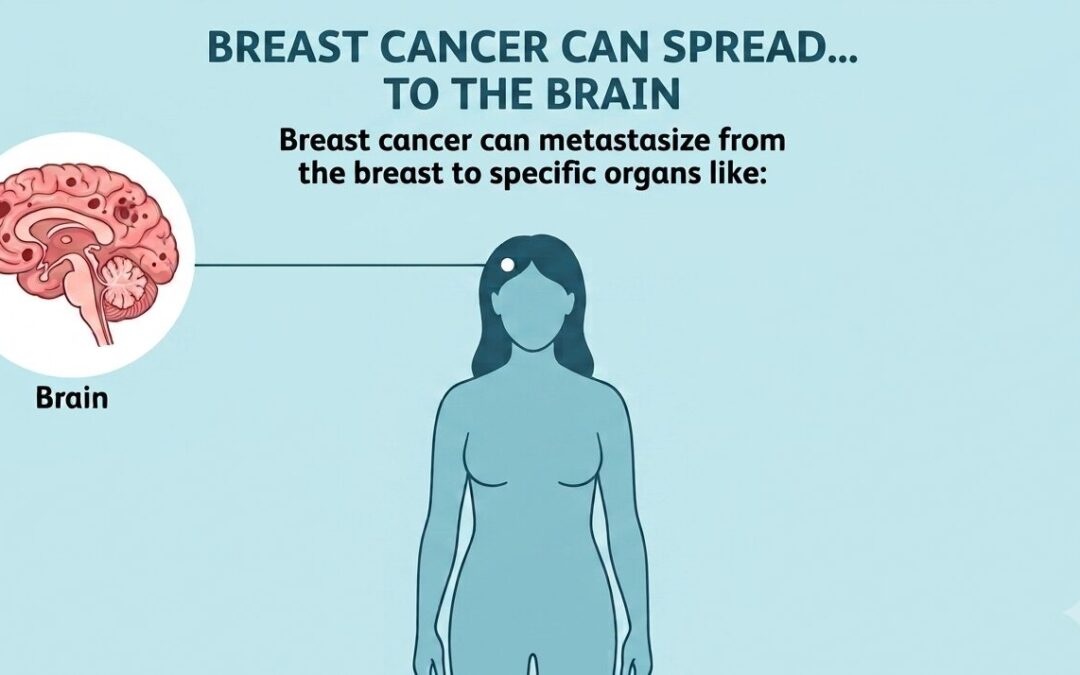
Yes, breast cancer can spread to the brain. Cancer cells break away from the original tumour, travel through the bloodstream, and set up in brain tissue. Bones, lungs, and liver are more common first sites, but the brain is a well-recognised destination particularly in HER2-positive and triple-negative subtypes. It happens in roughly 10% to 16% of metastatic breast cancer patients overall, and more frequently in those two subtypes specifically.
According to Dr. Sandeep Nayak,who provides Best cancer treatment in Bangalore, “Brain metastasis from breast cancer is a clinical reality, particularly in HER2-positive and triple-negative cases. The blood-brain barrier makes drug delivery harder, which is why some systemic treatments that work well outside the brain don’t reach it effectively. That’s what makes the choice of treatment for brain-specific disease a separate clinical decision from what’s controlling disease in the rest of the body.”
Noticing headaches, vision changes, or balance problems after a breast cancer diagnosis? These need investigation, not watchful waiting
Which Breast Cancer Subtypes Are Most Likely to Spread to the Brain?
Not all breast cancers carry the same brain metastasis risk. The subtype matters a lot here.
- HER2-Positive Breast Cancer:
Brain metastasis occurs in 25% to 50% of HER2-positive metastatic cases. The paradox is that trastuzumab controls disease everywhere else brilliantly but doesn’t cross the blood-brain barrier well. So better systemic disease control has actually increased the proportion of patients who survive long enough to develop brain involvement. - Triple-Negative Breast Cancer:
TNBC has the highest brain metastasis rate of all subtypes. Around 30% to 46% of metastatic TNBC patients develop brain involvement. Median survival after brain metastasis in TNBC is under six months without treatment. That’s the most aggressive presentation of this complication. - Hormone Receptor-Positive Breast Cancer:
Brain metastasis is less common in this subtype but it does happen. When it does, it tends to appear later in the disease course, sometimes years after the primary diagnosis, and often alongside well-controlled disease elsewhere. - Symptoms That Need Investigation:
Persistent headaches especially worse in the morning, vision changes, balance problems, new seizures, or unexplained cognitive changes in a patient with breast cancer history need brain MRI urgently. These aren’t subtle findings that can wait for a routine appointment.
Precision Oncology molecular profiling at diagnosis identifies which patients carry the highest brain metastasis risk so surveillance can be adjusted before symptoms develop.
How Is Brain Metastasis From Breast Cancer Treated?
Treatment depends on how many lesions are present, which subtype the patient has, and how much disease exists outside the brain.
- Stereotactic Radiosurgery for Limited Disease:
One to three brain metastases are treated with stereotactic radiosurgery, which delivers high-dose targeted radiation to each lesion without affecting the surrounding brain. Local control rates above 80% at one year. Much better cognitive outcomes than whole brain radiation, which used to be the only option. - Whole Brain Radiation for Widespread Disease:
Multiple brain metastases or leptomeningeal involvement need whole brain radiation. Cognitive side effects are real and cumulative with repeated treatments. It’s used when SRS isn’t logistically feasible given the number and distribution of lesions. - Systemic Drugs That Cross the Blood-Brain Barrier:
Tucatinib combined with trastuzumab and capecitabine crosses into the brain and has shown meaningful activity in HER2-positive brain metastases. Trastuzumab deruxtecan also shows CNS activity. For TNBC brain metastases, sacituzumab govitecan is being evaluated. - Surgery for Single Accessible Lesions:
A single large symptomatic brain metastasis in a surgically accessible location can be resected. It relieves mass effect quickly when steroids alone aren’t controlling symptoms and provides tissue for confirming the diagnosis when there’s any doubt.
Our previous blog on HER2 Positive Breast Cancer is worth a read for understanding why HER2-positive disease carries higher brain metastasis risk and which drugs now specifically address that complication.
Why Choose MACS Clinic for Breast Cancer Brain Metastasis?
Dr. Sandeep Nayak’s team at MACS Clinic manages breast cancer brain metastasis through a multidisciplinary approach that involves surgical oncology, radiation oncology, and medical oncology reviewing each case together. For HER2-positive patients, systemic regimens are chosen based on CNS penetration alongside disease control outside the brain, not just overall response rates.
Brain metastasis doesn’t end treatment options. It changes which ones apply. Getting that assessment right requires the full clinical picture, not a single specialist looking at one part of the problem. Those who want to discuss their situation can reach the team at +91 8035740000.
FAQs
Can breast cancer spread to the brain?
It can, yes. Not everyone with breast cancer develops brain metastasis, but it’s a known complication, especially in HER2-positive and triple-negative cases. Around 10% to 16% of patients with metastatic breast cancer will see it reach the brain at some point.
What are the symptoms of breast cancer spreading to the brain?
Headaches that are the worst first thing in the morning, blurry or double vision, feeling off-balance, new seizures, or just not thinking clearly the way you normally would. Any of these in someone with a breast cancer history needs a brain MRI, not a wait-and-see approach.
How is breast cancer brain metastasis treated?
Depends on how many lesions there are. A few isolated spots usually get stereotactic radiosurgery, which targets each one precisely. More widespread disease needs whole brain radiation. For HER2-positive patients specifically, tucatinib combined with trastuzumab and capecitabine can reach the brain where older drugs couldn’t.
Is breast cancer brain metastasis curable?
In most cases, no. But that doesn’t mean there’s nothing to be done. Treatment today keeps it under control significantly longer than it used to, and quality of life during that time is far better than it was even ten years back. Especially for HER2-positive brain metastasis, the options have genuinely improved.
Disclaimer: This content is published for educational and informational purposes only.