
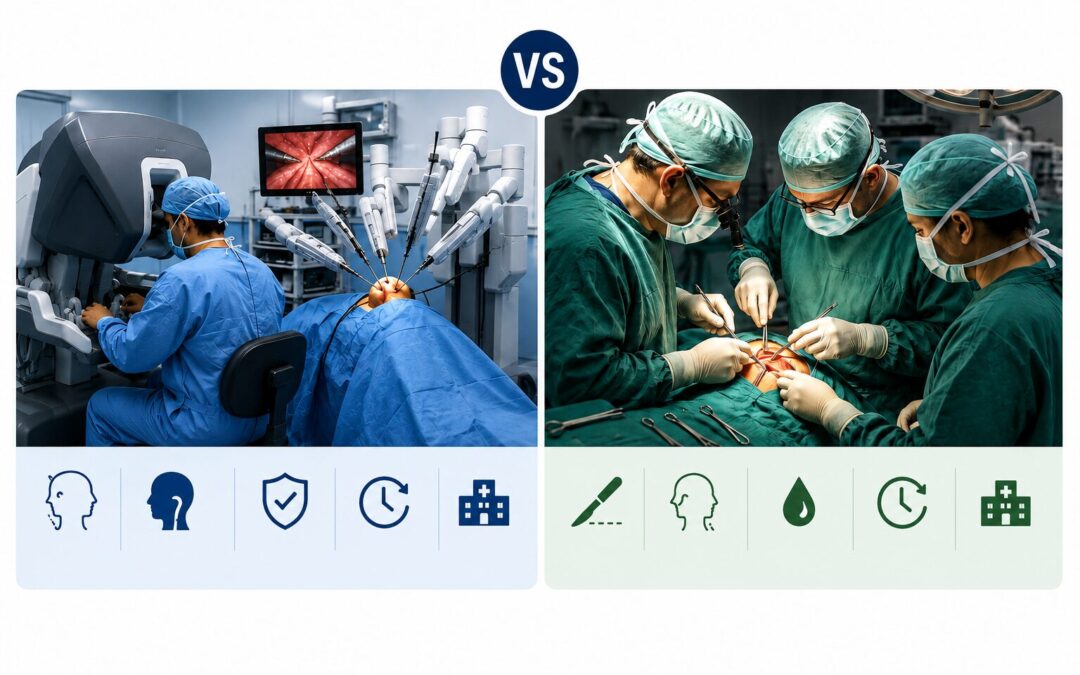
Which one applies depends almost entirely on where the tumour sits and how big it’s gotten. Transoral Robotic Surgery, TORS for short, reaches mouth and throat tumours through the mouth itself, no external incision at all, using robotic arms that manoeuvre through a natural opening. Open surgery works differently. It requires cutting through skin, sometimes splitting the jaw or lip apart just to reach the tumour properly. TORS shortens recovery considerably and leaves nothing visible on the outside. Open surgery still has its place though, reserved mostly for tumours too large or too complicated for a transoral approach to handle safely.
Dr. Sandeep Nayak, who provides Best Cancer Treatment in Bangalore, explains what actually decides between the two: “TORS works beautifully for tumours in accessible locations, the tonsil, the base of tongue, certain throat sites. But if a tumour has grown into the jawbone or wrapped around major blood vessels, no robotic arm reaching through the mouth is going to manage that safely. Open surgery exists for exactly those situations. It’s not outdated, it’s just reserved for cases that genuinely need it.”
Facing oral or throat cancer surgery and unsure which approach fits?
TORS vs Open Surgery: What's the Difference?
|
TORS |
Open Surgery |
|
|
Access Point |
Through the mouth, no external cut |
External incision, sometimes splitting jaw or lip |
|
Visible Scarring |
None |
Yes, often significant |
|
Best For |
Smaller, accessible tumours |
Large, complex, or deeply invasive tumours |
|
Recovery Time |
Shorter, often days to a couple weeks |
Longer, several weeks to months |
|
Swallowing Function |
Better preserved in most cases |
Higher risk of long-term difficulty |
|
Speech Function |
Generally preserved |
Can be significantly affected |
|
Hospital Stay |
Shorter |
Longer |
|
Availability |
Fewer centres, specialized equipment needed |
Widely available |
The table shows the mechanics, but the actual decision comes down to imaging and exactly where the tumour has spread before anyone commits to an approach. More on how oral and throat cancers are treated at MACS Clinic is on the oral cancer treatment page.
Who Actually Qualifies for TORS?
Not every tumour in the mouth or throat can be reached this way, even with the robotic platform’s flexibility.
Tumour Location: Tonsil, base of tongue, and certain pharyngeal sites tend to be well suited for transoral access. Tumours tucked into harder-to-reach corners of the throat may not be candidates regardless of size.
Tumour Size and Depth: Smaller tumours confined to soft tissue generally work well with TORS. Once a tumour invades bone or spreads deep into surrounding structures, the robotic approach loses its advantage and open surgery becomes necessary to achieve complete removal.
No Major Vascular Involvement: If a tumour has grown close to or wrapped around major blood vessels in the neck, that level of complexity typically requires the direct access open surgery provides. Our blog on neck dissection with oral cancer covers how lymph node involvement factors into the broader treatment plan alongside the primary tumour approach.
Patient Anatomy: Mouth opening and jaw flexibility matter here. Some patients simply can’t accommodate the robotic instruments through the mouth comfortably, which rules TORS out regardless of tumour characteristics.
Why Choose MACS Clinic for Oral and Throat Cancer Surgery?
Dr. Sandeep Nayak’s team at MACS Clinic evaluates every oral and throat cancer case on tumour location, size, and depth before recommending TORS or open surgery. Patients aren’t offered a transoral approach where it wouldn’t achieve complete removal, and aren’t pushed toward open surgery where TORS would work just as effectively with far less impact on speech, swallowing, and appearance afterward.
For patients where TORS is appropriate, the goal is always removing the cancer completely while preserving as much normal function as possible. Those who want their specific case reviewed can reach the team at +91 9482202240.
FAQs
Does TORS leave any scarring at all?
No external scarring, since the entire procedure happens through the mouth. Some patients notice minor changes inside the mouth or throat as it heals, but nothing visible from outside.
Why isn't TORS used for every oral or throat cancer?
Because not every tumour is accessible or small enough for a transoral approach to safely remove completely. Deep invasion into bone or major vessels needs the direct exposure open surgery provides.
Is recovery from TORS really that much faster?
Generally yes. Many patients go home within a few days and return to normal eating and speaking sooner than with open surgery, which often involves a longer hospital stay and more extensive healing time.
Can someone need both TORS and additional treatment afterward?
Sometimes, yes. Depending on final pathology results, radiation or other treatment may still be needed after surgery regardless of which surgical approach was used, based on what the tumour actually shows once removed.
Disclaimer: This content is published for educational and informational purposes only.