

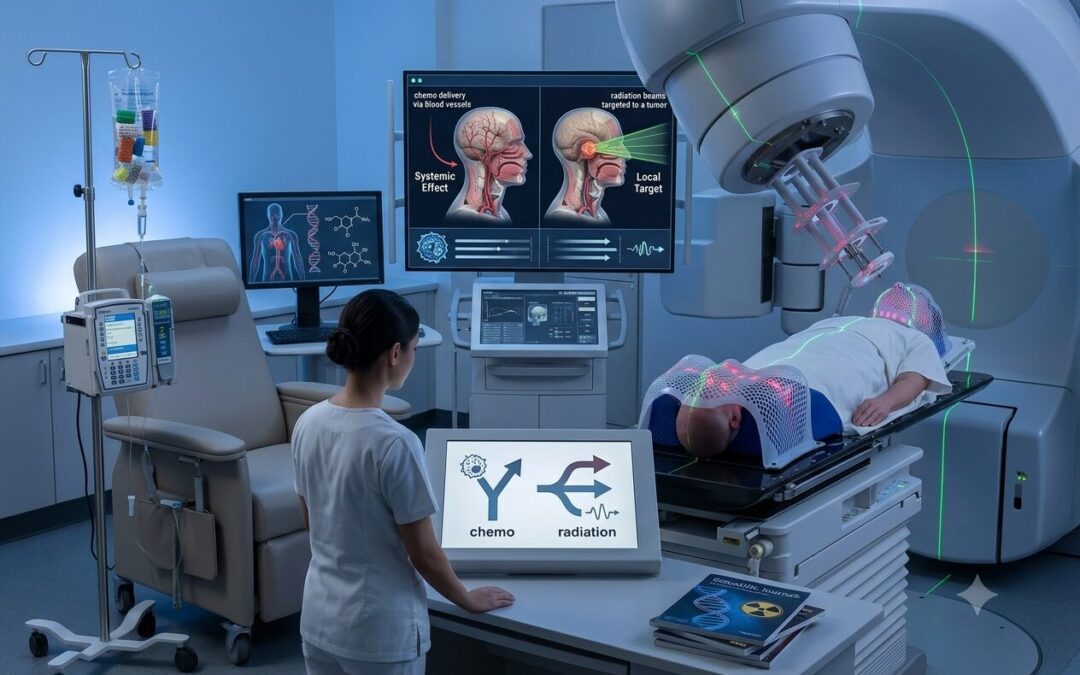
Different tools, different reach. Chemotherapy sends drugs through the bloodstream to hit cancer cells anywhere in the body, while radiation aims targeted energy beams strictly at the tumour site and nothing beyond it. For head and neck cancer the two often aren’t rivals at all. Doctors frequently run them together as chemoradiation, using the drugs to make the cancer more sensitive to radiation while the beams do the local heavy lifting. The goal is to shrink advanced tumours and, just as importantly, protect the delicate structures packed into that region, the voice box, the swallowing muscles, the nerves you’d really rather keep working. So the real question usually isn’t one or the other. It’s how much of each, and in what order.
Dr. Sandeep Nayak, who provides Best Cancer Treatment in Bangalore, cuts through the confusion: “Patients ask which one’s stronger, like it’s a contest. It isn’t. Radiation is the local weapon for head and neck cancer, and chemo is what makes it hit harder. Used alone, chemo rarely cures these tumours. Paired with radiation, it can mean saving a voice box that surgery would’ve taken. That’s the whole point.”
Facing a head and neck diagnosis and unsure which treatment comes first?
Chemotherapy vs Radiation: What's the Difference?
They attack cancer in fundamentally different ways, which is exactly why they pair so well.
|
Chemotherapy |
Radiation Therapy |
|
|
How it works |
Drugs travel through the bloodstream |
Energy beams focused on the tumour |
|
Reach |
Whole body, systemic |
Local, one specific area |
|
Main role here |
Makes cancer more radiation-sensitive |
Does the local tumour-killing |
|
Typical side effects |
Nausea, fatigue, low blood counts |
Sore throat, skin changes, dry mouth |
|
Used alone? |
Rarely curative on its own |
Can cure early tumours by itself |
|
Often combined as |
Chemoradiation |
Chemoradiation |
The columns look like opponents, but in practice they’re teammates. Most advanced head and neck cases lean on radiation therapy as the backbone, with chemo added to sharpen its effect rather than replace it.
When Is Each Treatment Used?
The choice hinges on the tumour’s stage, location, and what needs protecting. A few patterns hold.
Early tumours: Small, contained cancers often need just one weapon. Radiation alone can clear an early larynx tumour while keeping the voice intact, no chemo required, no surgery either in a lot of cases.
Advanced tumours: Once the cancer’s bigger or has reached the lymph nodes, chemoradiation usually takes over. The drugs make those stubborn cells easier for radiation to finish off, and that combination often beats either treatment run solo.
Organ preservation: This is the quiet reason chemoradiation exists. When a tumour sits on the voice box, treating it with the combo can wipe out the cancer while leaving you able to speak, something removing the larynx surgically just can’t offer. It matters just as much for oral cancer treatment where speech and swallowing are on the line.
After surgery: Sometimes surgery goes first and chemo or radiation follows, cleaning up any cancer left behind or lowering the odds it comes back. Depends entirely on what the pathology shows once the tumour’s out.
So there’s no default script. Catching things early keeps the gentler options open, which is why knowing the early signs of oral cancer can genuinely change which treatments end up on the table.
Why Choose Dr. Sandeep Nayak's Team at MACS Clinic?
Dr. Sandeep Nayak’s team at MACS Clinic doesn’t reach for the most aggressive combination just because a tumour looks serious. Every head and neck case gets mapped against stage, location, and what structures are worth fighting to keep before anyone commits to chemo, radiation, or both together. Two decades in surgical oncology and organ preservation back that judgment.
Patients get a real shot at keeping their voice and swallowing when the cancer allows it, and honest reasoning when it doesn’t. No stacking treatments a tumour doesn’t need. No removing a voice box that chemoradiation could have spared.
Call +91 8104310753 to book your consultation.
FAQs
Is chemoradiation better than chemo or radiation alone?
For advanced head and neck cancer, usually yes. The two together often control the tumour better than either one used on its own.
Can radiation alone cure head and neck cancer?
For early tumours, it often can, especially small larynx cancers where it clears the disease while preserving the voice.
Why is chemo added to radiation?
The drugs make cancer cells more sensitive to radiation, so the beams work harder without needing a higher dose.
Does chemoradiation help avoid surgery?
Often, yes. For many advanced cases it can clear the tumour while sparing organs that surgery would otherwise remove.
Disclaimer: This content is published for educational and informational purposes only.