

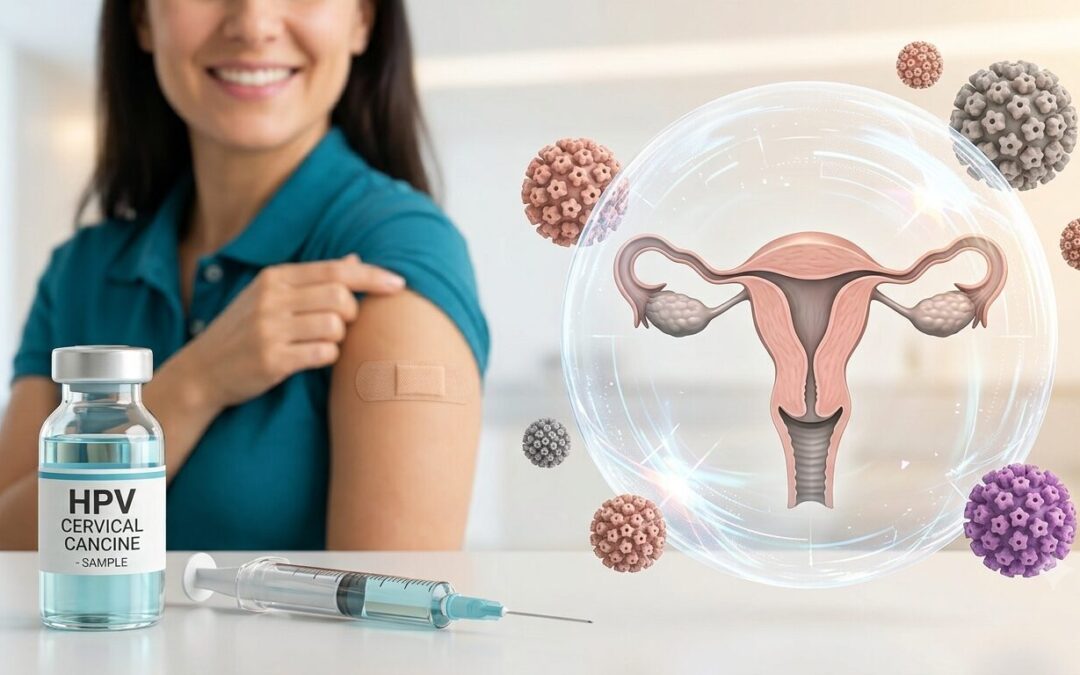
Most parents don’t think about cancer when their daughter is 12. They’re thinking about school, maybe a growth spurt, the usual things. But this is precisely the age when one simple vaccine can block a cancer from ever happening decades down the line. The HPV vaccine works by stopping an infection before it starts. Human papillomavirus spreads through skin-to-skin contact and is almost universal among sexually active people at some point in their lives. The body usually clears it without a problem but in some women, certain high-risk strains linger in cervical cells for years, quietly damaging DNA, until pre-cancerous changes appear. If those go undetected, cancer follows. Vaccinate before the virus gets in, and that entire chain never begins.
According to Dr. Sandeep Nayak,who provides Best Cancer Treatment in Bangalore, “Cervical cancer is one of the cancers we can genuinely prevent. The HPV vaccine, combined with regular screening, has the potential to make this disease rare. But both steps matter the vaccine doesn’t replace screening, and screening doesn’t replace the vaccine.”
The vaccine prevents. Screening catches what the vaccine misses. Neither alone is enough.
Why HPV Is the Root of Most Cervical Cancers?
In more than 99% of cases, cervical cancer starts with a persistent HPV infection specifically high-risk types, most commonly HPV 16 and HPV 18. These two strains alone account for about 70% of all cervical cancers worldwide. The virus has no symptoms. A woman can carry a high-risk strain for years without knowing it’s there.
It alters cells slowly, not suddenly
HPV doesn’t cause cancer overnight. It quietly changes how cervical cells behave moving through stages of abnormality over years, from minor changes to high-grade pre-cancer, and eventually to invasive cancer if nothing catches it first.
The timeline is actually useful
This process takes 10 to 20 years. That sounds frightening until you realise it means there are multiple points where it can be stopped.
Three windows to intervene
- Before first exposure — vaccination closes this window permanently
- During the pre-cancer years — screening catches abnormal cells before they progress
- When an abnormality is already present — treatment at this stage is still highly effective
The vaccine works at the very first point
That’s what makes it so valuable it prevents the infection that starts the entire chain. No infection means no cell changes, and no cell changes means no cervical cancer.
What the HPV Vaccine Does — and Doesn't Do?
The nine-valent vaccine, the one most widely used today, covers HPV types 16, 18, 31, 33, 45, 52, 58, and others, accounting for around 90% of HPV-related cervical cancers. It works by introducing proteins that mimic the HPV surface. The immune system builds antibodies, and when the real virus appears later, the body shuts it down before it can infect cells.
What it does
- Blocks infection from the highest-risk HPV strains before first exposure
- Protects against around 90% of HPV-related cervical cancers
- Reduces HPV circulation in the population when boys are vaccinated too HPV causes throat, anal, and penile cancers in men as well
What it doesn’t do
- It cannot treat an existing HPV infection if someone already carries a covered strain, the injection won’t clear it
- It doesn’t cover every strain around 10% of cervical cancers come from types not included in current vaccines
- It does not replace Pap smear screening this is exactly why screening remains necessary even after full vaccination
Timing matters more than most people realise
- Ages 9 to 14 — two doses six months apart are enough
- Ages 15 to 26 — three doses required
- Above 26 — decision made based on likely prior exposure, case by case
Why Choose MACS Clinic for Cervical Cancer Prevention and Treatment?
Dr. Sandeep Nayak’s team at MACS Clinic doesn’t wait for an abnormal Pap result to start the conversation. Women who are overdue for screening, unsure about their vaccination status, or simply want to know if they’re doing enough get a clear answer at the first visit — not a referral somewhere else.
For women already diagnosed with cervical cancer, surgical options are reviewed through a tumour board before any plan is confirmed. Early-stage disease is treated laparoscopically with the same oncological outcome, significantly less recovery time. Cervical cancer is highly curable when it’s caught and acted on quickly. Those who want to discuss their situation can reach the team at +91 8035740000.
FAQs
At what age should the HPV vaccine be given?
Between 9 and 14 is the ideal window two doses six months apart are enough at this age. From 15 to 26, three doses are needed. Above 26, a doctor advises based on the individual’s history.
Can the HPV vaccine clear an existing infection?
No. The vaccine is preventive only. It cannot remove a virus already in the body or reverse cell changes already underway.
Do vaccinated women still need Pap smears?
Yes. The vaccine doesn’t cover every HPV strain, and Pap smears detect abnormalities from any cause. Both are needed.
Is early-stage cervical cancer treatable?
Very much so. Stage 1 and early Stage 2 cervical cancer treated with minimally invasive surgery carries excellent long-term outcomes. Earlier detection means less intervention required.
Disclaimer: This content is published for educational and informational purposes only.