

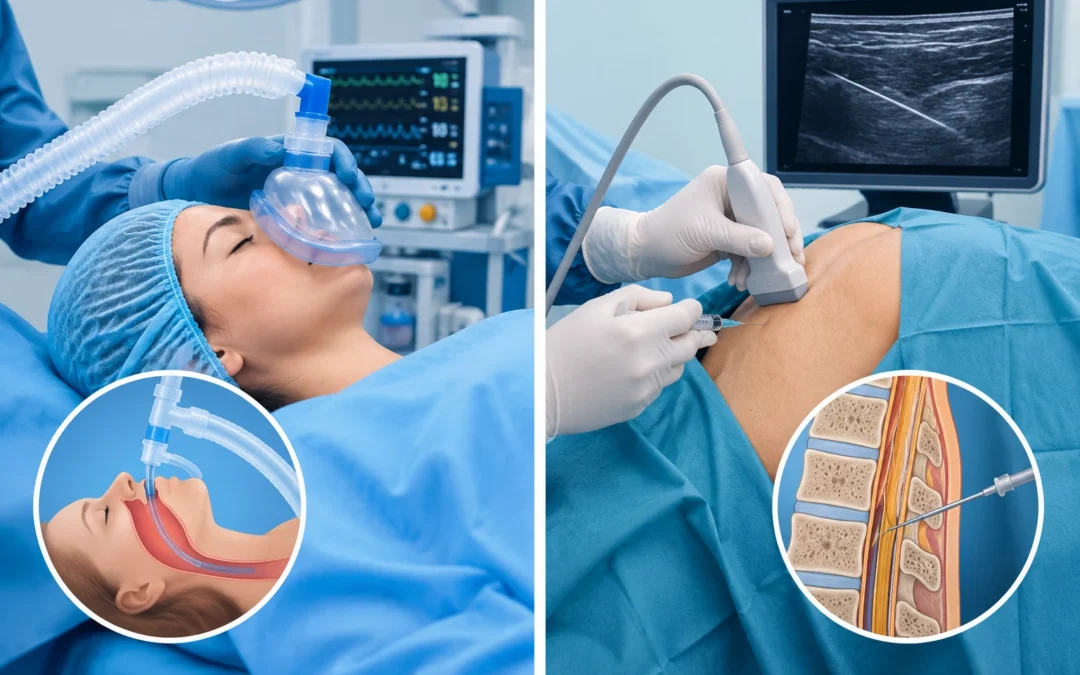
General anesthesia makes you completely unconscious for the operation, no awareness, no memory of it happening. Regional anesthesia numbs a specific part of the body while you stay awake or lightly sedated, aware in some form but not feeling the surgery itself. Which one gets used isn’t really a preference question most of the time, it comes down to the type of surgery, how long it’ll take, and your own health going into it.
Dr. Sandeep Nayak, known for the Best Cancer Treatment in Bangalore, works closely with the anesthesia team on this decision for every case, not just the complicated ones. “Patients sometimes ask if they can just choose to be awake for something, or ask to be fully under for a smaller procedure that doesn’t need it. It’s not really about preference in isolation. It’s about what the surgery actually requires and what’s safest for that particular patient’s body.”
Curious which approach fits your own upcoming surgery?
What Actually Decides Which One Gets Used?
The decision comes down to a handful of practical factors more than personal choice:
| Factor | General Anesthesia | Regional Anesthesia |
| Consciousness | Fully unconscious throughout | Awake or lightly sedated, area numbed |
| Typical use | Major abdominal, chest, or extensive tumor surgeries | Smaller, localized procedures like some skin cancer excisions or limb surgeries |
| Surgery scale | Covers procedures of any size or duration | Best suited to procedures within a manageable time and area |
| Heart or lung conditions | Puts somewhat more overall strain on the body | Often preferred where possible, see how this factors into surgery on higher-risk patients |
| Surgery length | No practical time limit tied to the anesthesia itself | Has practical limits on how long it can reasonably be maintained |
| Coverage for larger procedures | Required, regional numbing alone can’t cover this scale | Not sufficient on its own |
None of this is decided in isolation. The surgical team and anesthesiologist weigh these factors together well before the day of surgery, not as a last-minute call.
What This Actually Means for Recovery?
The choice of anesthesia shapes more than just the time in the operating room:
- Recovery from regional anesthesia is often faster in the first few hours, since there’s no lingering grogginess from a full general anesthetic
- General anesthesia carries a slightly higher risk of postoperative nausea and confusion, particularly in older patients, though this varies a lot by individual
- Pain management sometimes starts earlier with regional techniques, since the numbing effect can extend a bit into the immediate recovery period
- Neither option meaningfully affects how well the cancer surgery itself works, this decision is entirely about safety and comfort during and immediately after the procedure
The choice genuinely doesn’t change your cancer outcome. It changes what the day of surgery and the hours right after actually feel like.
Why Choose MACS Clinic for Anesthesia Planning in Cancer Surgery?
Dr. Sandeep Nayak’s team coordinates anesthesia planning as part of the overall surgical workup, not a separate conversation that happens the morning of surgery, so patients with existing health conditions get an approach genuinely suited to their situation. For patients with cardiac, respiratory, or other comorbidities, the anesthesiologist reviews the case well before the surgical date, giving enough time to adjust medications or order additional testing if needed. That coordination continues into the operating room itself, where anesthesia and surgical teams work from the same shared plan rather than making decisions independently.
Have questions about anesthesia for your specific procedure? Reach the team at +91 9482202240.
FAQs
Can I just ask for regional instead of general if going under scares me?
You can bring it up, sure, but honestly the procedure itself usually decides that answer, not how nervous you’re feeling about it.
Is regional the safer pick between the two?
Generally it’s a bit gentler on the body systemically, but that’s not a fixed rule. It really comes down to what surgery you’re having and your own health picture.
Am I going to feel the surgery happening with regional anesthesia?
Not pain, no. You might notice pressure or some movement, depending on the procedure and how sedated you are on top of the numbing.
Does which type I get change how long I'm stuck in the hospital?
It can shift the first stretch of recovery a little, but the actual length of your stay comes down to the surgery itself, not which anesthesia was used.
Reference Links
- NCI — Surgery to Treat Cancer
Good patient-facing source explaining the role of anesthesia during cancer surgery and the basic difference between regional and other anesthesia approaches.
NCI: Surgery to Treat Cancer - PubMed — Regional vs General Anesthesia and Cancer Recurrence
A systematic review/meta-analysis found no significant difference in cancer recurrence, overall survival, or cancer-related mortality between regional and general anesthesia, although evidence quality was low.
PubMed: Regional vs General Anesthesia and Cancer Recurrence
Disclaimer:This content is published for educational and informational purposes only.