

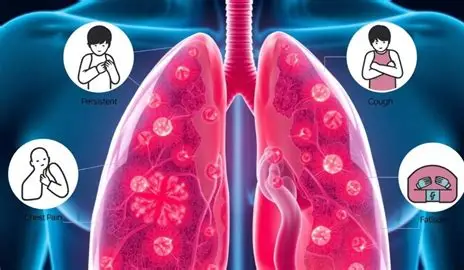
Persistent cough lasting beyond three weeks, unexplained chest pain, progressive breathlessness, and blood-streaked sputum are the earliest signs of lung cancer in non-smokers. Non-smokers account for 15-20% of all lung cancer cases globally with adenocarcinoma being the most common subtype in this group. Women, younger adults, and individuals with prolonged exposure to cooking fumes, passive smoke, or radon gas face the highest non-smoker lung cancer risk.
According to Dr. Sandeep Nayak, Best cancer treatment in Bangalore, “Non-smokers don’t expect lung cancer so neither they nor their doctors look for it early. Cough gets treated as allergy or asthma for months while the tumor crosses from operable to borderline on a scan nobody thought to order.”
Cough that outlasts every antibiotic deserves a chest scan not another prescription.
What Symptoms Should Non-Smokers Watch For?
Lung cancer in non-smokers presents identically to smoker lung cancer. Difference is nobody suspects it so investigation starts later and staging at diagnosis tends to be worse.
- Persistent cough: Dry cough or change in existing pattern lasting beyond three weeks. Doesn’t respond to antibiotics, syrups, or allergy medication. Gets blamed on weather change or dust for months before anyone orders a chest X-ray that shows a shadow nobody expected.
- Blood in sputum: Even a single episode of coughing up blood-streaked mucus in a non-smoker needs CT chest within the week. Most causes turn out benign but the ones that don’t need catching at the smallest possible size.
- Chest pain: Dull ache on one side worsening with deep breathing or coughing. Not the sharp muscular pain that shifts when you move. Tumor pressing against chest wall or pleura produces pain that stays in one spot and gets harder to ignore over weeks.
- Breathlessness: Gradual onset over weeks in someone who wasn’t breathless before. Climbing stairs that were easy six months ago suddenly feels heavier. Fluid around the lung or a mass blocking an airway both present this way.
Your oncologist determines investigation pathway through lung cancer screening including low-dose CT and bronchoscopy.
Why Does Lung Cancer Develop in Non-Smokers?
Absence of smoking doesn’t mean absence of carcinogen exposure. Non-smoker lung cancer has distinct biological drivers that differ from tobacco-related disease.
- Genetic mutations: EGFR, ALK, and ROS1 mutations drive significant proportion of non-smoker lung cancers especially in Asian women. These respond to targeted therapy drugs that don’t work on smoker-type cancers making molecular profiling critical before treatment starts.
- Passive smoke: Living with a smoker for decades increases lung cancer risk by 20-30%. Kitchen where someone smokes daily while you cook exposes your lungs to the same carcinogens just at lower concentration over longer duration.
- Cooking fumes: Prolonged exposure to oil fumes from high-temperature frying in poorly ventilated kitchens is a documented risk factor in Indian and East Asian women. Mustard oil heated past its smoke point releases compounds classified as probable carcinogens by IARC.
- Radon gas: Naturally occurring radioactive gas seeping through soil into homes. Second leading cause of lung cancer globally after smoking. Odourless, invisible, and most Indian households have never tested for it.
Understanding how rectal bleeding evaluation follows the same urgency logic helps explain why persistent symptoms in any organ need investigation not delay.
Why Choose MACS Clinic?
Dr. Sandeep Nayak performs lung cancer surgeries using VATS and robotic approaches that avoid large thoracotomy incisions and get patients breathing comfortably weeks earlier than open chest surgery. MACS Clinic coordinates low-dose CT screening, PET-CT staging, molecular profiling, and surgical planning under one team.
Non-smoker walks in with a persistent cough here and workup starts that week. Lung cancer caught as a nodule on a scan is a completely different disease from the one found after it already reached the lymph nodes.
Call +91 8035740000 to book your consultation.
FAQs
Can non-smokers get lung cancer?
Yes, 15-20% of all lung cancers occur in people who never smoked.
What type of lung cancer is most common in non-smokers?
Adenocarcinoma, often driven by EGFR, ALK, or ROS1 genetic mutations.
Should non-smokers get lung cancer screening?
Those with risk factors like passive smoke or family history should discuss screening.
Is lung cancer in non-smokers treatable?
Yes, early-stage non-smoker lung cancer has strong survival rates with targeted therapy.
References
- Lung cancer in non-smokers — National Cancer Institute
- Indoor air pollution and cancer risk — World Health Organization
Disclaimer: Reference links are for informational purposes only and not a substitute for professional medical advice or treatment.