

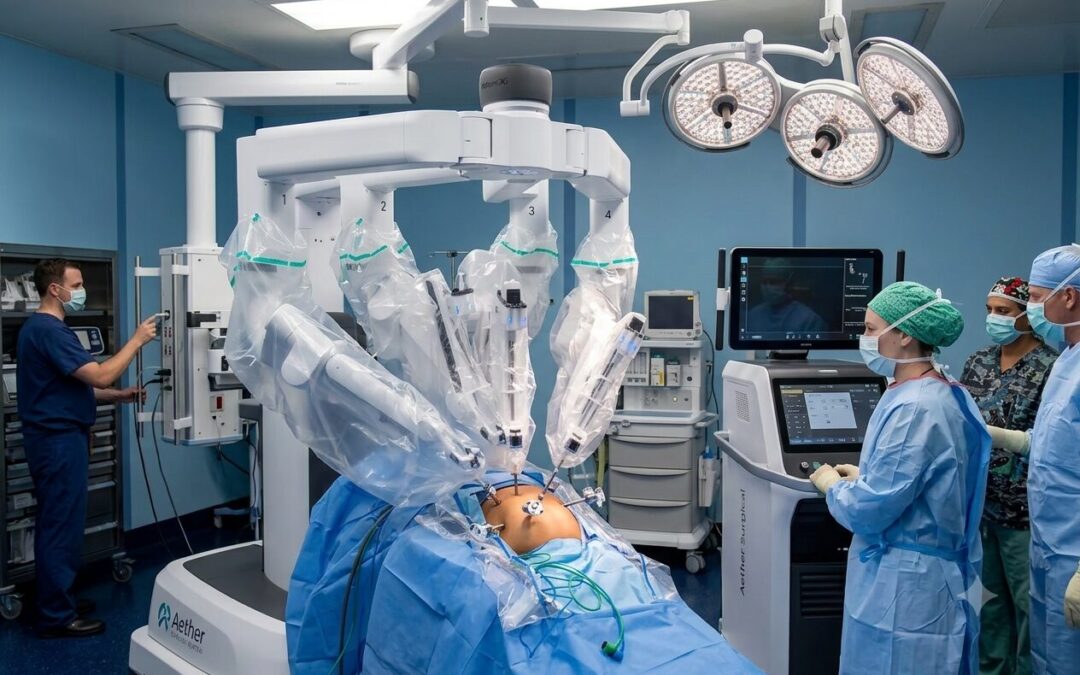
Neither, if you’re measuring by the things that matter most. Safety profile, hospital stay, recovery time, cancer clearance robotic and laparoscopic hysterectomy come out essentially identical on all of them. Both are minimally invasive. Both put the patient home within a day or two. Both offer the same cure rates as open surgery without the large abdominal incision and the six-week recovery that comes with it. The question isn’t which approach is superior it’s which one is right for the specific patient, the specific tumour, and the surgeon actually performing it.
Dr. Sandeep Nayak at MACS Clinic sees this question regularly: “Patients come in asking for robotic surgery because they’ve read it’s more precise, or they ask for laparoscopic surgery because it’s less expensive. Both instincts are reasonable. But the honest answer is that the approach matters less than whether the surgeon performing it does enough of them. A laparoscopic hysterectomy in experienced hands outperforms a robotic one in inexperienced hands every time.”
Want to know whether a Robotic vs Laparoscopic Hysterectomy is relevant to your diagnosis?
Robotic vs Laparoscopic Hysterectomy — Side by Side?
| Laparoscopic | Robotic | |
|---|---|---|
| Incisions | 3 to 4 small ports | 3 to 4 ports + robotic arm entry |
| Instrument control | Direct hand control | Robotic arms, filters tremor |
| Hospital stay | 1 to 2 days | 1 to 2 days |
| Recovery | 2 to 4 weeks | 2 to 4 weeks |
| Cancer clearance | Equivalent | Equivalent |
| Cost | Lower | Higher |
| Best for | Standard cases, experienced surgeon | Complex anatomy, narrow pelvis, prior surgery |
Both approaches are far less traumatic than open surgery and deliver the same oncological outcomes for gynaecological cancers.
Where the Real Differences Lie and How the Decision Gets Made?
Robotic surgery adds precision where anatomy makes laparoscopy harder
In a straightforward case, an experienced laparoscopic surgeon and an experienced robotic surgeon will get the same result. The robotic system earns its place when the operating field is difficult a narrow pelvis, significant obesity, previous abdominal surgeries that have created adhesions, or a tumour close to the bladder or ureter where the margin for error is small. The robotic arms filter out hand tremor and articulate in ways human wrists can’t that extra range of motion matters in a confined space.
Laparoscopic is not the lesser option
The instinct to assume robotic means better is understandable but inaccurate. Laparoscopic radical hysterectomy has decades of evidence behind it for early-stage cervical and uterine cancers. The ROBOGYN-1004 randomised trial, the only phase III trial comparing the two directly, found no superiority for robotic surgery over conventional laparoscopy on complication rates. Same outcomes, lower cost, shorter setup time.
The surgeon’s volume matters more than the platform
Both approaches have learning curves. A robotic system doesn’t make a low-volume surgeon into a high-volume one it gives a skilled surgeon better tools. When evaluating where to have a hysterectomy done, the surgeon’s annual case volume for that specific procedure is the number worth asking about. For more on how laparoscopic and robotic surgery are used in cervical cancer specifically, the previous blog on Cervical Cancer: Causes, Screening and Surgical Treatment covers the surgical decision in detail.
Why Choose MACS Clinic for Hysterectomy and Gynaecological Cancer Surgery?
Dr. Sandeep Nayak’s team at MACS Clinic performs both laparoscopic and robotic hysterectomies and the approach is chosen based on the patient’s anatomy and tumour characteristics, not on availability or habit. Cases go through tumour board review before surgery is planned. Where robotic precision adds genuine value complex pelvic dissection, proximity to critical structures it’s used. Where laparoscopic achieves the same result with less setup time and lower cost, that’s the approach taken.
The goal is complete cancer clearance with the least possible disruption to the patient’s recovery. Both tools are available. The right one gets used. Reach the team at +91 8035740000
FAQs
Is robotic hysterectomy safer than laparoscopic?
On clinical evidence, no not across the board. Both carry the same complication profile in experienced hands. The robotic approach adds precision in anatomically complex cases, but the phase III ROBOGYN-1004 trial found no overall superiority for robotic over laparoscopic on complication rates.
Which one has a faster recovery?
Both are equivalent typically two to four weeks back to normal activity. Neither minimally invasive approach comes close to the six-week recovery that follows open abdominal surgery.
Why is robotic surgery more expensive?
The da Vinci robotic system carries significant capital and maintenance costs that get passed through to the procedure. The instruments are also single-use. In cases where robotic precision genuinely changes the surgical outcome, the cost is justified. In straightforward cases, laparoscopic achieves the same result for less.
When is open hysterectomy still used?
When minimally invasive surgery isn’t safe very large uterus, extensive adhesions from prior surgeries, or advanced disease where the operating field can’t be adequately managed laparoscopically. Open surgery is still the right answer in specific situations.
Disclaimer: This content is published for educational and informational purposes only.