

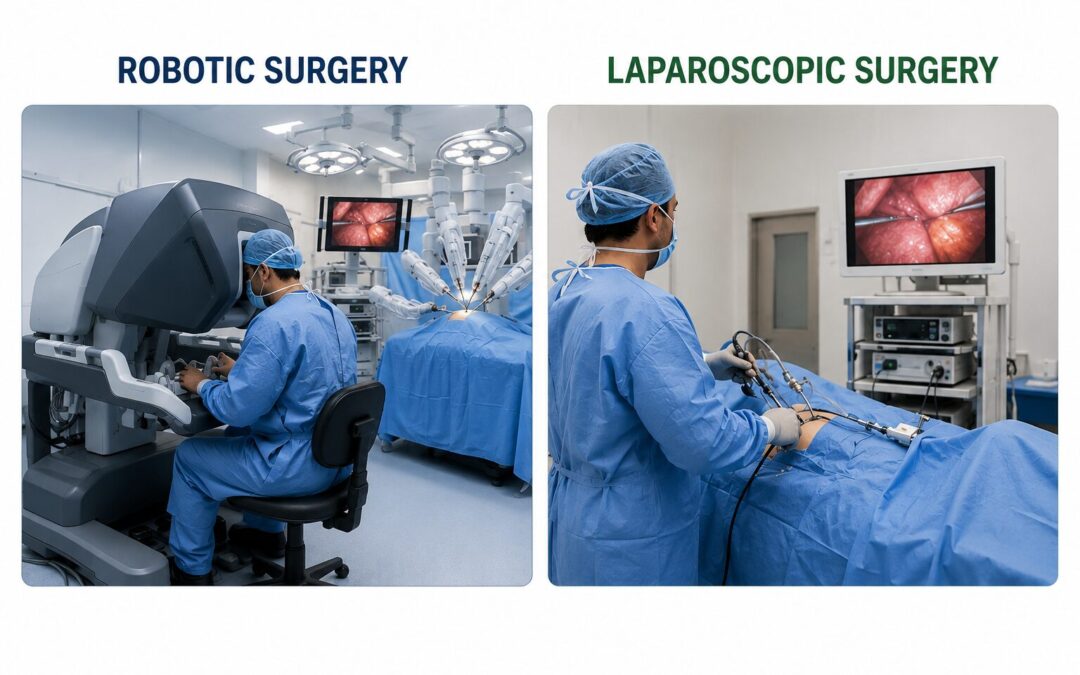
Robotic surgery costs more, consistently. Across most procedures and most hospitals, the gap runs somewhere between roughly 1.6 lakh to 3.3 lakh rupees higher for robotic compared to laparoscopic, depending on how complex the case is and which facility is doing it. That’s the equipment itself, mostly. The robotic platform, the disposable instruments that get replaced after each surgery, the maintenance contracts hospitals carry just to keep the system running. None of that exists with a standard laparoscopic setup.
Dr. Sandeep Nayak, who provides Best Cancer Treatment in Bangalore, puts the cost question in perspective: “Patients see the higher number and assume they’re being upsold on technology. Usually that’s not what’s happening. The robotic platform costs the hospital significantly more to run, and that gets reflected in the bill. Whether it’s worth paying that difference depends entirely on the specific surgery and what the robotic approach actually adds for that particular case, not a blanket answer either way.”
Trying to weigh robotic versus laparoscopic for your surgery?
Robotic vs Laparoscopic Surgery Cost: What's the Difference?
|
Laparoscopic Surgery |
Robotic Surgery |
|
|
Equipment Cost to Hospital |
Lower, standard instruments |
Higher, platform and disposables |
|
Typical Cost Difference |
Baseline |
1.6 to 3.3 lakhs higher |
|
Surgeon Control |
Direct hand movement |
3D magnified view, wristed instruments |
|
Blood Loss |
Low |
Often slightly lower still |
|
Hospital Stay |
Short |
Similar or marginally shorter |
|
Best Suited For |
Most standard procedures |
Complex reconstructions, tight anatomical spaces |
|
Availability |
Widely available |
Fewer centres, dedicated setup needed |
The numbers explain part of the picture, but they don’t answer whether the extra cost buys something meaningful for a specific patient’s surgery. That depends heavily on what’s actually being operated on. More on how MACS Clinic decides between the two approaches is on the robotic surgery page.
What Actually Drives the Price Gap?
The cost difference isn’t arbitrary, and it’s worth knowing where it comes from before deciding if it’s worth paying.
The Robotic Platform Itself: Hospitals pay a substantial amount to purchase and maintain a robotic surgical system, often running into crores. That cost gets distributed across the procedures performed on it, which shows up directly in what each surgery costs.
Disposable Instrument Costs: Robotic instruments are typically single-use or limited-use, replaced after a set number of procedures regardless of condition. Laparoscopic instruments, by comparison, get sterilized and reused many times over, keeping per-procedure costs lower.
Operating Time and Setup: Robotic cases often take slightly longer to set up initially, docking the robot, positioning instruments, though experienced teams narrow this gap considerably. Operating room time itself factors into overall cost regardless of which approach is used.
Facility and Maintenance Overhead: Beyond the surgery itself, hospitals carry ongoing service contracts and technical support costs for robotic systems that don’t apply to standard laparoscopic setups.
Why Choose MACS Clinic for Robotic and Laparoscopic Surgery?
Dr. Sandeep Nayak’s team at MACS Clinic doesn’t default to robotic surgery simply because the technology exists. Each case gets evaluated for whether the robotic approach genuinely improves precision or outcomes for that specific tumour and location, or whether laparoscopic surgery achieves the same result at lower cost without compromising anything.
For complex cancer surgeries where robotic precision meaningfully changes what’s achievable, that recommendation comes with a clear explanation of why. Those who want a straightforward cost comparison for their specific procedure can reach the team at +91 9482202240.
FAQs
Is robotic surgery always better than laparoscopic?
Not necessarily. For many standard procedures, laparoscopic surgery achieves equivalent outcomes at lower cost. Robotic surgery tends to show its real advantage in complex cases involving tight spaces or delicate reconstruction, not across the board.
Does insurance cover the extra cost of robotic surgery?
It depends on the specific policy. Some plans cover robotic surgery fully, others apply sub-limits or require the patient to cover the cost difference out of pocket. Checking directly with the insurer before surgery avoids surprises.
Does paying more for robotic surgery mean a shorter hospital stay?
Sometimes, though the difference is often marginal rather than dramatic. For certain complex procedures, robotic precision can reduce blood loss and complications enough to shorten recovery slightly, but this varies by procedure and isn’t guaranteed.
How do I know if my specific surgery benefits from the robotic approach?
That comes down to a proper consultation where the surgeon reviews the tumour’s location, complexity, and what each approach would actually involve for that particular case, rather than assuming one option is universally superior
Disclaimer: This content is published for educational and informational purposes only.