
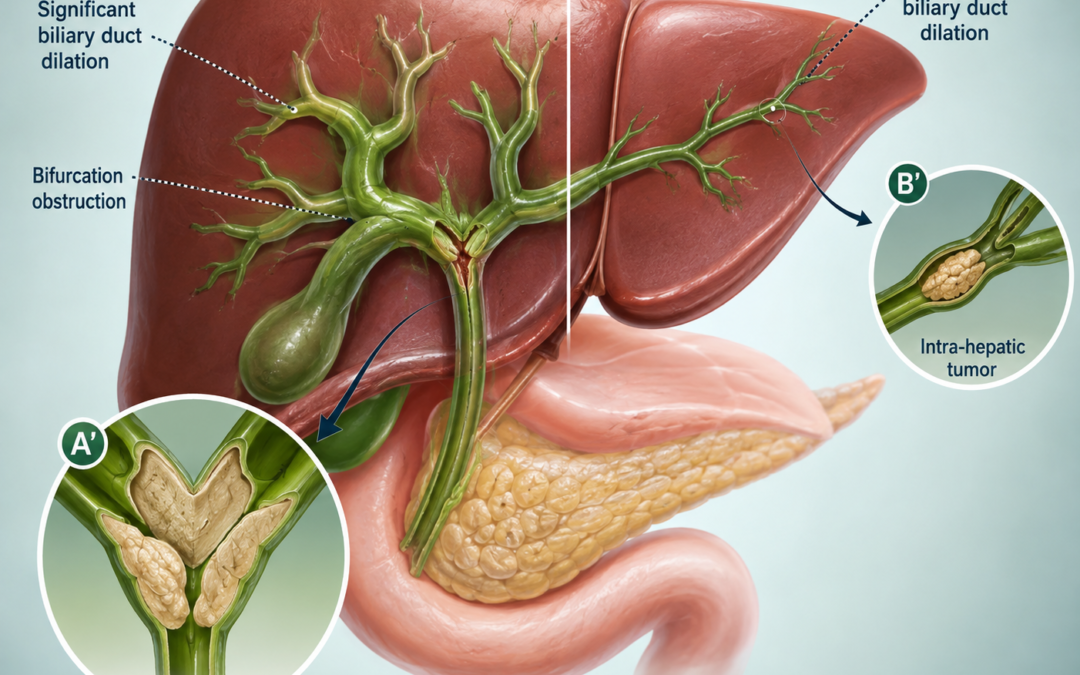
Cholangiocarcinoma, more commonly called bile duct cancer, forms in the thin tubes that carry digestive fluid from the liver down to the small intestine. It’s rare, and it tends to be aggressive, which is part of why it’s not exactly a household name the way breast or lung cancer is, despite how serious it can be. Because the bile ducts are small and sit deep within the abdomen, symptoms often don’t show up until the cancer has already started interfering with bile flow, which is usually when jaundice finally brings patients in for evaluation.
Dr. Sandeep Nayak, who provides Best Cancer Treatment in Bangalore, explains why this cancer catches so many people off guard. “Most patients have never heard of cholangiocarcinoma before their diagnosis, and that’s genuinely understandable, it’s uncommon compared to other cancers. What makes it tricky is location. The bile ducts are narrow structures tucked deep in the body, so even a relatively small tumour can block bile flow and cause jaundice long before it’s grown large enough to be easily removed. Early detection here really does change what treatment options remain available.”
Diagnosed with cholangiocarcinoma or investigating unexplained jaundice?
What Are the Different Types of Cholangiocarcinoma?
Where exactly the cancer develops within the bile duct system actually changes both the symptoms and the treatment approach considerably.
Intrahepatic cholangiocarcinoma. Develops within the smaller bile ducts inside the liver itself. Often diagnosed later since symptoms can be vague, sometimes discovered incidentally during imaging done for another reason entirely.
Perihilar cholangiocarcinoma. Forms where the bile ducts from the left and right sides of the liver join together, just outside the liver. This is actually the most common location for this cancer to develop, and its position often causes jaundice relatively early, which sometimes leads to earlier detection.
Distal cholangiocarcinoma. Develops in the bile duct closer to where it joins the small intestine, often near the pancreas. Its location means it frequently gets investigated alongside pancreatic conditions, since the symptoms and imaging findings can overlap.
How Is Cholangiocarcinoma Actually Treated?
Treatment depends heavily on where the tumour is, how far it’s spread, and whether it can be surgically removed at all.
Surgical resection, when possible. For tumours caught early enough and located in a surgically accessible position, removing the affected section of bile duct, sometimes along with part of the liver, offers the best chance at long term control. Our blog on what is hepatocellular carcinoma and its causes covers a related liver cancer where surgical approach depends similarly on tumour location and liver function.
Liver transplant in select cases. For certain perihilar tumours meeting specific criteria, liver transplant combined with other treatment can be an option at specialised centres, though this applies to a narrower group of patients.
Chemotherapy. Used either before surgery to shrink a tumour, after surgery to reduce recurrence risk, or as the primary treatment when surgery isn’t possible due to how far the cancer has spread.
Biliary drainage procedures. When a tumour is blocking bile flow, placing a stent or performing a drainage procedure can relieve jaundice and improve quality of life, sometimes alongside other treatment, sometimes as the primary approach when surgery isn’t an option.
Targeted therapy. For tumours with specific genetic mutations, targeted drugs are increasingly available and can offer meaningful benefit for patients whose cancer carries those particular molecular markers.
Why Choose MACS Clinic for Cholangiocarcinoma Treatment?
Dr. Sandeep Nayak’s team at MACS Clinic approaches cholangiocarcinoma with the full diagnostic picture in mind before recommending a treatment path, given how much the specific tumour location changes what’s actually possible. Imaging, staging, and where relevant, molecular testing all inform whether surgery, systemic treatment, or a combined approach makes the most sense.
For patients where surgery is appropriate, minimally invasive techniques are used wherever the tumour’s location and complexity allow. Investigating unexplained jaundice or already diagnosed with bile duct cancer? Reach the team at +91 9482202240.
FAQs
Is cholangiocarcinoma always caused by jaundice appearing?
Not always, but jaundice is often the symptom that leads to diagnosis, particularly for tumours located where the bile ducts join near the liver. Some tumours, especially those inside the liver itself, can grow without causing jaundice until later.
Can cholangiocarcinoma be cured?
For tumours caught early and surgically removable, long term remission is genuinely possible. For more advanced cases, treatment focuses on controlling the disease and managing symptoms, though outcomes vary considerably by individual case.
What causes cholangiocarcinoma?
Certain risk factors are known, including chronic bile duct inflammation, some liver diseases, and certain parasitic infections more common in specific regions, though many patients have no clearly identifiable risk factor at all.
How is cholangiocarcinoma actually diagnosed?
Usually through a combination of imaging, blood tests checking liver and bile duct function, and a biopsy to confirm the diagnosis directly, since imaging alone often can’t distinguish this cancer from other bile duct conditions with certainty.
Disclaimer:This content is published for educational and informational purposes only.