
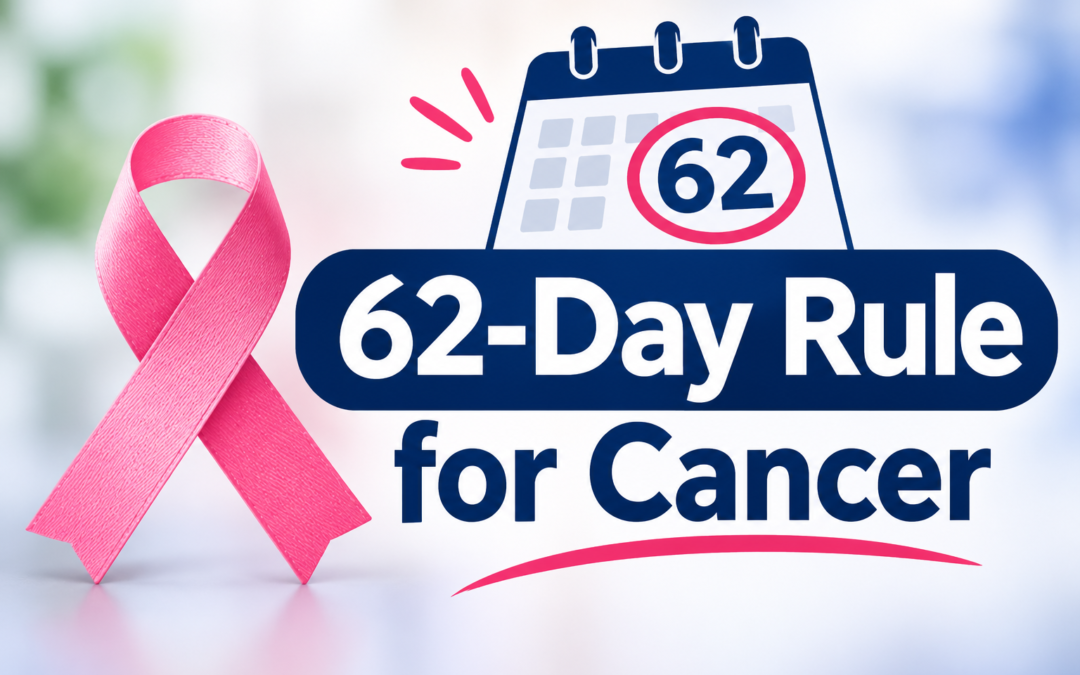
The 62-day rule is an NHS England target. It says a patient should start their first cancer treatment within 62 days, about two months, of the hospital receiving an urgent referral for suspected cancer. The clock starts when that referral arrives, usually from your GP. It stops on the day treatment begins, whether that’s surgery, radiotherapy or chemotherapy. In between come the tests, the scans, the biopsy and the team discussion. It’s a target for the NHS as a whole, not a personal guarantee. The standard is that 85 out of 100 patients are treated in time, and that hasn’t been met since December 2015. Recent figures sit at around 72 out of 100.
Dr. Sandeep Nayak, who provides cancer treatment in Bangalore, says the standard reflects something every cancer team cares about. “The time between suspicion and treatment matters. For many cancers, a longer gap gives the disease more chance to grow or spread. But a number on a chart can’t tell you how fast your own case should move. That depends on the cancer, how many tests are needed and how quickly the results come back. If you’re waiting, ask what the next step is and when it will happen, keep every report, and don’t be afraid to ask for help understanding your scans.”
If you’re waiting for tests or a treatment date, anywhere in the world, it can help to have your reports looked at by a specialist who can explain what’s going on. Share them with our team, and they’ll tell you what the reports show and what to ask next.
The 62-Day Cancer Treatment Rule Explained: When the Clock Starts and Stops?
- The clock starts when the hospital receives an urgent suspected cancer referral, usually from a GP. Urgent screening referrals and consultant upgrades count too.
- It stops on the day your first definitive treatment begins. That might be an operation, a course of chemotherapy or radiation therapy.
- Everything in between has to fit into the 62 days: scans, a biopsy, sometimes a keyhole look to check how far the disease has spread (see diagnostic staging laparoscopy), and a team meeting to agree the plan.
- It’s measured across the whole system. The standard is for 85 out of 100 patients to start treatment within 62 days, so your own wait can be shorter or longer.
Urgent Cancer Referral: What Else to Know While You Wait?
- There are two other standards. The 28-day Faster Diagnosis Standard says you should be told whether you have cancer, or that it has been ruled out, within 28 days of an urgent referral. The target was raised to 80% in March 2026, and performance was 78.6% in August 2026. The 31-day standard says treatment should start within 31 days of the decision to treat, with a target of 96%.
- Ask what’s happening next and when. A date for each step, a named contact, and a copy of each result make a long wait easier to manage.
- You can also ask for help understanding your results while you wait. Our blog on how an online cancer second opinion works explains what’s involved, and it doesn’t replace your NHS pathway.
- Once treatment starts, it helps to know what’s normal. If chemotherapy is planned, read about the common chemotherapy side effects.
What Affects Cancer Referral Waiting Times?
There’s no single cause, and several things come into play.
- The type of cancer, and how many tests it needs. Some pathways take more scans, biopsies and specialist input than others.
- Capacity at the hospital. Scanners, pathology labs and surgical lists all have limits, and nationally the standard isn’t being met.
- Whether you need to be referred on to another hospital, for example a specialist centre.
- How complete your referral and records are. Missing information is a common cause of delay.
- Your own availability. If a test date doesn’t work for you, it can add days.
- How urgent the cancer is. Some are fast-growing and are prioritised.
FAQs
What is the 62-day rule for cancer?
It’s an NHS England target that patients should start their first cancer treatment within 62 days of an urgent suspected cancer referral. The aim is for 85 out of 100 patients to be treated in that time.
When does the 62-day clock start and stop?
It starts when the hospital receives an urgent referral for suspected cancer, including urgent screening referrals and consultant upgrades. It stops when your first definitive treatment begins.
Is the 62-day target being met?
No. The 85% standard hasn’t been met since December 2015. In August 2026, about 72 in 100 patients started treatment within 62 days, and the interim goal of 75% for March 2026 was also missed.le.
What’s the difference between the 28-day, 31-day and 62-day standards?
The 28-day standard is about diagnosis: being told whether you have cancer within 28 days of an urgent referral. The 31-day standard is about starting treatment within 31 days of the decision to treat. The 62-day standard covers the whole journey, from urgent referral to first treatment.
Reference Links:
- National Cancer Waiting Times Monitoring Dataset Guidance, NHS England
- Cancer Waiting Times Statistical Release, March 2026, NHS England
- Cancer Waiting Times: Latest Updates and Analysis, Cancer Research UK
Disclaimer
This content is published for educational and informational purposes only and is not a substitute for medical advice. Survival statistics describe groups of people and cannot predict any one person’s outcome. Please talk to your oncologist about your own situation.