

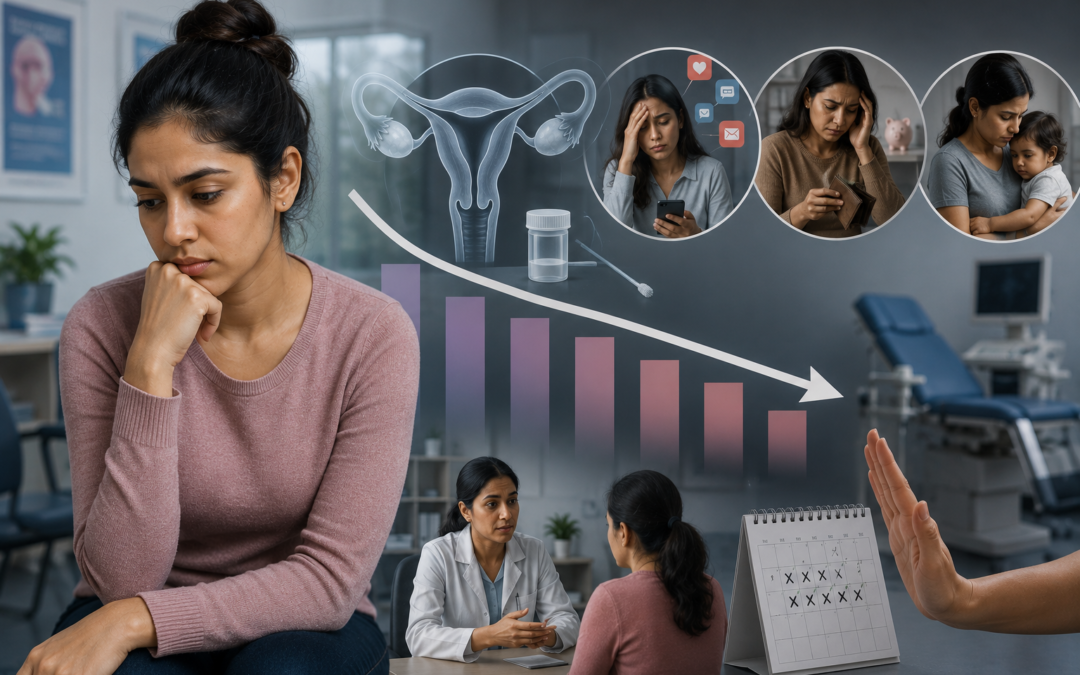
If you ask five different doctors why fewer women are getting screened, you’ll probably get five overlapping but slightly different answers. Mine, after talking to Dr. Nayak about it, comes down to this: the pandemic broke a habit a lot of women hadn’t built strongly to begin with, and nothing since then has really pulled them back in.
Dr. Sandeep Nayak, known for the Best Cancer Treatment in Bangalore, told me something that stuck with me. He said the test itself isn’t the problem, hasn’t been for years. The problem is a woman who had one normal Pap smear in 2019 and just assumed that covered her indefinitely. Or one who was never told, by anyone, that this was supposed to be routine. “Nobody skips a screening on purpose,” he said. “They just don’t think about it until something else forces the conversation, usually a symptom, and by then we’re not talking about prevention anymore.”
Worried about your own screening schedule?
What's Actually Going On Here?
AI shows up at a few specific points in the operation, not as one single feature. Here’s where it actually helps:
- Sharpens contrast between tumor and healthy tissue in real time
- Flags where nerves or major vessels are likely sitting before the surgeon gets there
- Overlays the pre-op scan on the live view to help protect the margin
- Reviews recorded procedures afterward to improve training and consistency
This works alongside robotic and laparoscopic surgery, not instead of it. None of these tools operate independently, they layer onto the surgeon’s own skill rather than working around it. The surgeon is still the one making every call in real time.
Why the Timing Actually Matters?
Here’s the part that doesn’t get said enough. Cervical cancer is slow. It gives years, sometimes a decade or more, of warning through changes that are catchable and treatable before anything becomes cancer:
- Pre-cancerous changes can sit around for years before turning into anything serious
- That long runway is exactly what makes routine screening so effective when people keep up with it
- Skip it for a decade and the same slowness that made it preventable just lets it progress quietly
- Cases that show up late are usually the ones where screening stopped somewhere along the way, not where it failed
But that long runway cuts both ways. Dr. Nayak mentioned seeing this pattern often enough lately that his team has started folding it into broader conversations about cancer prevention, not treating it as a cervical-cancer-only issue.
Why Choose MACS Clinic for Cervical Cancer Screening and Care?
Dr. Sandeep Nayak’s team doesn’t treat screening as a box to check once and forget. Risk gets assessed first, and the testing schedule gets built around that, rather than handing every patient the same generic interval and assuming they’ll remember it on their own.
Haven’t been screened in a while? Reach the team at +91 9482202240.
FAQs
How often should I actually be getting screened?
Somewhere between three and five years for most women, depending on age and which test you’re getting. Honestly, just ask your doctor directly, it varies more than people expect.
Does the HPV vaccine mean I don't need screening anymore?
No. It lowers your risk a lot, but it doesn’t cover every HPV strain, and it can’t undo exposure that happened before the vaccine. Keep screening either way.
It's been years since my last one. Is that a problem?
Not in the sense that it’s too late, but there’s genuinely no reason to keep waiting either. Just book one.
Is the exam actually as bad as people say?
Not really. It’s quick and a little uncomfortable, most of the dread people carry into it is worse than the exam itself turns out to be.