

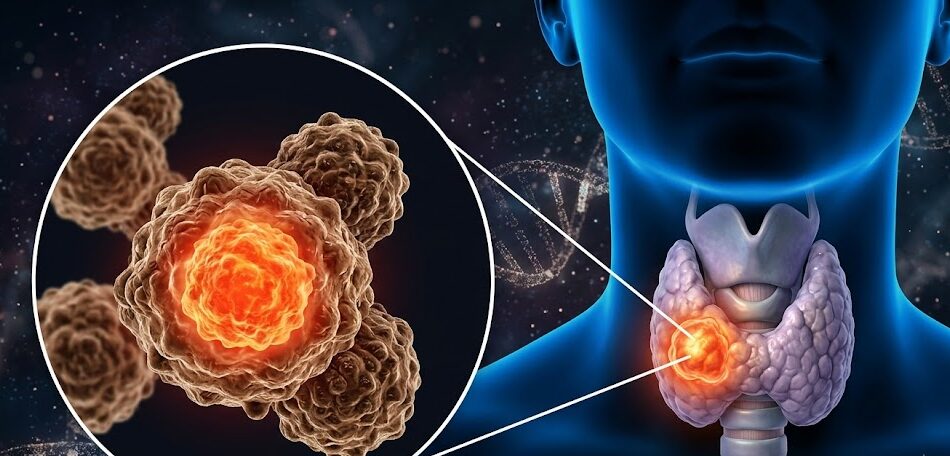
Papillary and follicular thyroid cancers are both differentiated thyroid cancers, meaning they originate from the same follicular cells that produce thyroid hormones. Papillary is the most common, accounting for around 80% of all thyroid cancers. Follicular makes up another 10% to 15%. Both have excellent outcomes when caught early, with 10-year survival rates above 90% for most patients. But they spread through different routes, behave differently under certain circumstances, and require slightly different post-operative management.
According to Dr. Sandeep Nayak,who provides Best cancer treatment in Bangalore, “Papillary and follicular thyroid cancer are grouped together as differentiated thyroid cancer because they both respond to radioactive iodine and share a strong prognosis. The distinction that matters clinically is how they spread. Papillary goes to lymph nodes early. Follicular tends to go to blood vessels first, which means lung and bone involvement is more common in follicular disease. That difference shapes how aggressively we stage each one.”
Got a thyroid cancer diagnosis and wondering whether papillary or follicular changes anything for your treatment? It changes how you’re staged and followed up, more than how you’re treated.
How Are Papillary and Follicular Thyroid Cancer Different?
Same origin, different behaviour. Understanding the distinction helps explain why surveillance differs even when treatment looks similar.
- How They Spread:
Papillary thyroid cancer spreads early to regional lymph nodes in the neck. Lymph node involvement is common but doesn’t dramatically worsen prognosis in most cases. Follicular cancer rarely goes to lymph nodes early. Instead it spreads through blood vessels, which is why distant metastasis to lungs and bones is more characteristic of follicular disease. - How They’re Diagnosed on Biopsy:
Papillary thyroid cancer has distinctive nuclear features visible on FNAC. Pathologists can often diagnose it from a fine needle biopsy. Follicular cancer can’t be diagnosed by FNAC alone because the distinction between a benign follicular adenoma and follicular carcinoma requires looking for capsular or vascular invasion, which needs the whole tumour. That’s why follicular lesions on FNAC often go to surgery for diagnostic excision. - Age and Demographics:
Papillary cancer peaks in the 30s and 40s and is far more common in women. Follicular cancer tends to present in slightly older patients, typically the 40s and 50s, and is associated with iodine-deficient areas where the thyroid is chronically stimulated. But neither is limited to those groups. - Risk Stratification Differs:
Low-risk papillary thyroid cancer under 1 cm without extrathyroidal extension or nodal disease is now often managed with active surveillance or lobectomy alone. Low-risk follicular cancer is managed similarly. But high-risk follicular disease with vascular invasion needs total thyroidectomy and radioactive iodine regardless of tumour size, because the distant spread risk is higher.
Thyroid Cancer Surgery options including robotic scarless thyroidectomy are available for both papillary and follicular cancers in eligible patients at MACS Clinic.
How Are Papillary and Follicular Thyroid Cancer Treated?
The treatment framework is shared. But the post-operative monitoring differs in meaningful ways.
- Surgery First for Both:
Total thyroidectomy or lobectomy depending on tumour size, staging, and risk category. For low-risk disease under 1 cm, lobectomy is increasingly accepted for both types. For larger tumours or high-risk features, total thyroidectomy ensures complete removal and allows radioactive iodine treatment afterward. - Radioactive Iodine:
Both papillary and follicular cancer cells retain the ability to take up iodine, which is what makes radioactive iodine ablation possible. High-risk cases of both types get RAI after total thyroidectomy. Follicular cancer with extensive vascular invasion often gets RAI even at earlier stages because distant micrometastases that aren’t visible on imaging may still be present. - Thyroglobulin Surveillance:
After total thyroidectomy and RAI ablation, thyroglobulin is the surveillance tumour marker for both types. It should be undetectable. Rising thyroglobulin prompts imaging and investigation. But follicular cancer can produce less thyroglobulin at recurrence than papillary, which is one reason imaging remains part of follow-up even when thyroglobulin is normal. - Follicular Cancer Needs Bone and Lung Imaging:
Because follicular cancer spreads through blood vessels, chest X-ray and bone scan play a bigger role in staging and surveillance for follicular disease than for low-risk papillary. And in older patients with follicular cancer presenting late, metastatic disease to bone is sometimes the first presentation, not the primary thyroid mass.
Our previous blog on Robotic Thyroid Surgery is worth a read for understanding how the surgical approach for thyroid cancer has evolved and when scarless robotic thyroidectomy is the right option for both papillary and follicular disease.
Why Choose MACS Clinic for Papillary and Follicular Thyroid Cancer?
Dr. Sandeep Nayak’s team at MACS Clinic evaluates every thyroid cancer case with risk stratification before the surgical approach is decided. Papillary microcarcinomas that qualify for active surveillance aren’t automatically operated on. Follicular cancers with high vascular invasion get total thyroidectomy and RAI regardless of tumour size. The treatment matches the risk, not the diagnosis category alone.
Dr. Sandeep Nayak pioneered the RABIT technique for scarless robotic thyroidectomy in India, which is available for eligible patients with both papillary and follicular disease who want to avoid a neck scar without compromising cancer control. Those who want to discuss their specific case can reach the team at +91 8035740000.
FAQs
What is the difference between papillary and follicular thyroid cancer?
Papillary spreads to lymph nodes early. Follicular spreads through blood vessels and is more likely to reach the lungs and bones. Both have excellent survival rates when caught early.
Which is more serious, papillary or follicular thyroid cancer?
Most papillary thyroid cancer is very low risk. High-grade follicular cancer with extensive vascular invasion carries higher risk of distant spread. But both are highly treatable when diagnosed before distant metastasis.
Can follicular thyroid cancer be diagnosed by needle biopsy?
Not definitively. FNAC can identify a follicular lesion but the diagnosis of cancer requires seeing capsular or vascular invasion, which means the whole tumour needs surgical removal and pathological examination.
Do both types need radioactive iodine after surgery?
Not always. Low-risk, small tumours managed with lobectomy often don’t need RAI. High-risk cases of both types do. Follicular cancer with vascular invasion gets RAI even at earlier stages than equivalent papillary disease.
Disclaimer: This content is published for educational and informational purposes only.