
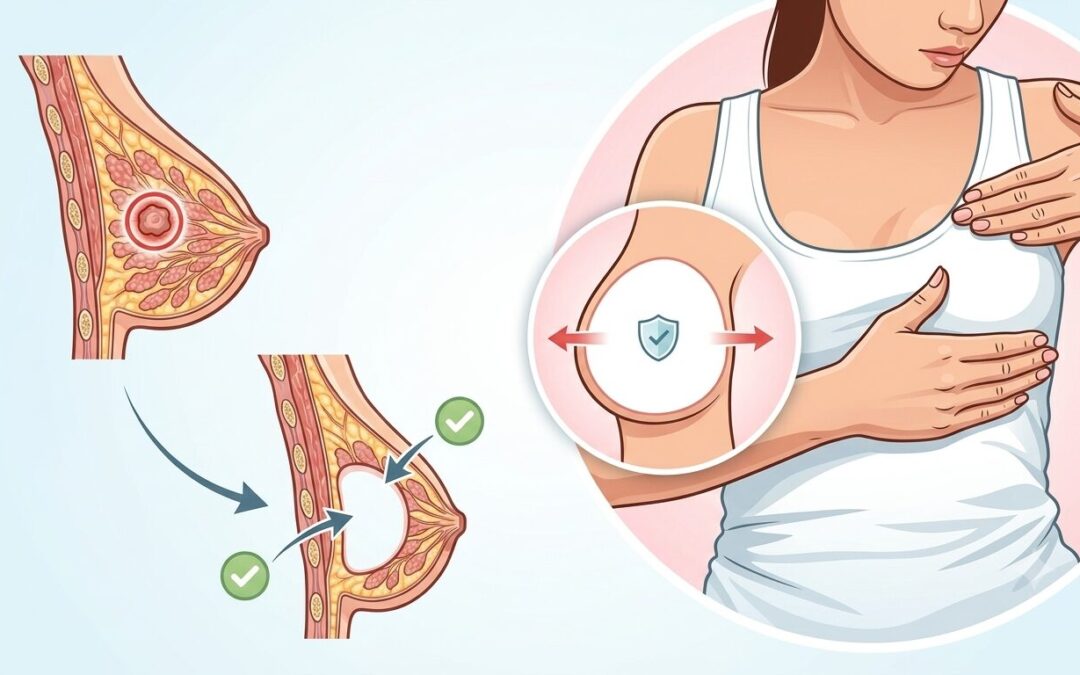
Yes, there is a choice and for most women with early-stage breast cancer, both options are on the table. A lumpectomy removes only the tumour and a small margin of healthy tissue around it, leaving the breast largely intact. A mastectomy removes the entire breast. What often surprises people is that for early-stage disease, the long-term survival rates are the same. This isn’t a situation where one surgery is safer than the other. It’s a decision about what comes after, what the breast looks like, how recovery goes, and what the individual patient’s circumstances actually call for.
Dr. Sandeep Nayak, Best Cancer Treatment in Bangalore, explains what drives the conversation: “The data on survival is very clear: lumpectomy followed by radiation gives the same long-term outcomes as mastectomy for appropriately selected patients. The decision isn’t about which surgery keeps you alive longer. It’s about tumour characteristics, breast size, what follow-up treatment is realistic for that patient, and what matters to her personally. There’s no single right answer. There’s the right answer for each woman.”
Facing this decision and want a proper assessment?
What Makes Someone a Candidate for Lumpectomy?
Not every tumour and not every patient qualifies. A few things determine whether it’s actually on the table.
Tumour Size vs Breast Size: It’s not just about how big the tumour is. It’s about how much of the breast it takes up. A small tumour in a larger breast can come out cleanly with good margins and a normal appearance. That same tumour in a much smaller breast might need so much tissue removed that the result looks nothing like a lumpectomy. The ratio is what matters.
One Spot, Not Several: When cancer is sitting in one area, removing it with clean edges is straightforward. Multiple tumour sites scattered across the same breast make that nearly impossible without taking so much tissue that it stops being a lumpectomy in any meaningful sense.
Clean Margins After Removal: The tissue edges around the removed tumour need to come back clear. If they don’t, another surgery follows. Experienced surgical teams plan for this from the start, but it’s part of the conversation before the first cut.
Radiation Has to Be Possible: Lumpectomy and radiation go together. One without the other isn’t the standard approach. If a patient can’t complete radiation for medical reasons, or the logistics simply aren’t workable, mastectomy becomes the more practical single-step option. More on what breast cancer surgeries involve is on the service page.
When Is Mastectomy the Better Choice?
For some patients, mastectomy is either medically necessary or genuinely the better personal decision.
BRCA1 or BRCA2 Mutations: Women who carry these mutations face a significantly elevated lifetime risk of breast cancer in both breasts. Many choose bilateral mastectomy not just to treat the current cancer but to substantially reduce the risk of a second primary cancer developing later. This is where genetic counselling becomes an important part of the decision, particularly for younger patients.
Large Tumour or Unfavourable Location: When the tumour is large relative to the breast, or sits in a location that makes clear-margin removal difficult, mastectomy may simply be more surgically appropriate.
Multiple Tumours in the Same Breast: Several separate tumour sites across the breast make lumpectomy impractical. Mastectomy removes the problem entirely rather than attempting multiple partial removals.
Strong Personal Preference: Some women, after understanding that survival outcomes are equivalent, simply prefer mastectomy. The peace of mind from knowing the entire breast tissue has been removed is a legitimate reason. It’s a personal decision and it should be respected as one.
Recurrence After Previous Lumpectomy: If breast cancer comes back in a breast that’s already had lumpectomy and radiation, mastectomy is typically the next step because the breast has already received its lifetime radiation dose.
Why Choose MACS Clinic for Breast Cancer Surgery?
Dr. Sandeep Nayak’s team at MACS Clinic approaches the lumpectomy vs mastectomy decision as a conversation, not a protocol. Tumour biology, staging, genetic risk, personal circumstances, and what matters to the patient all go into the discussion before any recommendation is made. For patients considering lumpectomy, oncoplastic techniques are used where appropriate to preserve both tumour clearance and cosmetic outcome. For those choosing mastectomy, reconstruction options are discussed at the same time rather than as an afterthought.
For eligible patients, IORT offers the possibility of completing radiation in a single session at the time of surgery, which changes what lumpectomy recovery looks like practically. Those who want to talk through their options can reach the team at +91 9482202240.
FAQs
Is lumpectomy safer than mastectomy?
Neither is safer than the other for early-stage breast cancer. Long-term survival rates are equivalent. The differences are in recovery time, appearance, and what follow-up treatment is needed, not in how long patients live.
Does lumpectomy always need radiation after?
Almost always, yes. Radiation after lumpectomy significantly reduces the chance of local recurrence. It’s considered part of the same treatment, not an optional add-on. The exception is certain very low-risk cases in older patients where the benefit is small enough that it may be omitted.
Can I choose mastectomy even if lumpectomy is possible?
Yes. If both are medically appropriate and a patient prefers mastectomy for personal reasons, that’s a completely valid choice. The decision belongs to the patient, made with full information about what each option involves.
What is oncoplastic surgery?
It combines cancer surgery with plastic surgery techniques to remove the tumour while reshaping the remaining breast tissue for the best possible cosmetic outcome. It’s particularly useful for lumpectomy in cases where a significant amount of tissue needs to come out.
Disclaimer: This content is published for educational and informational purposes only.