

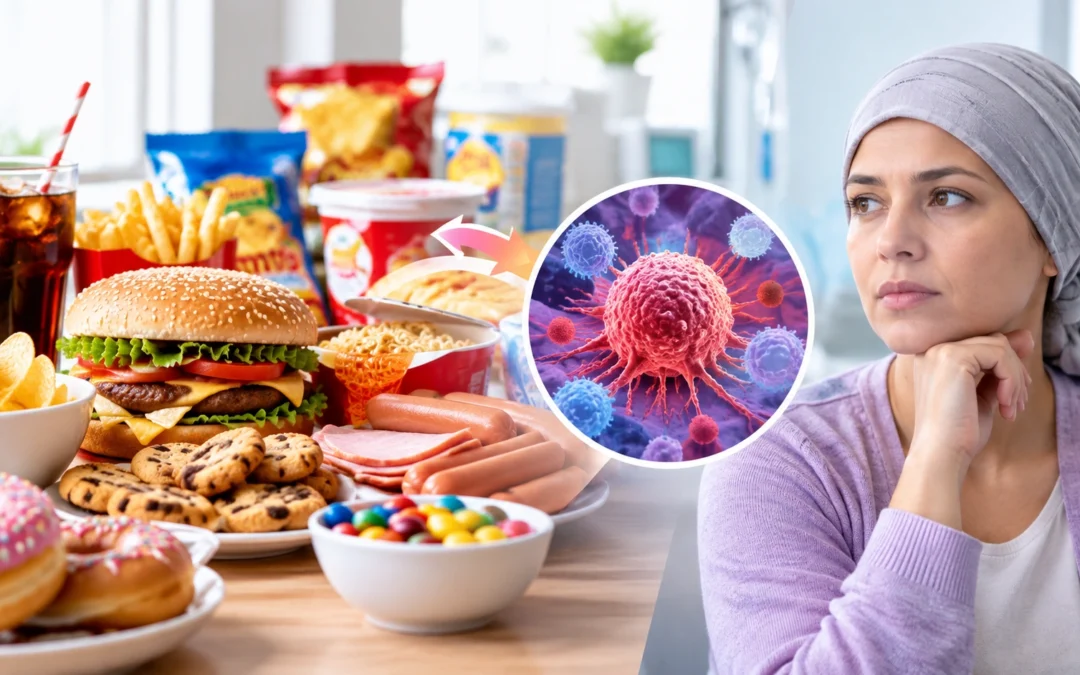
Not quite, and that word cause matters more than people realize. Ultra-processed foods are consistently linked to higher cancer risk, that part’s settled science at this point. The International Agency for Research on Cancer has looked at this closely, and the association with colorectal, breast, ovarian, and pancreatic cancers specifically is strong. But linked isn’t the same as causes directly. It’s a mix of things working together, indirect health effects, specific chemical compounds in how these foods get made, not one clean line from packet to tumour.
Dr. Sandeep Nayak, Best Cancer Treatment in Bangalore, gets asked about this constantly. “Patients want a simple answer, does this food cause my cancer or not. Real science rarely gives you that. What we know is people who eat a lot of ultra-processed food, packaged snacks, sugary drinks, reconstituted meats, show up with higher cancer rates across several types. Whether that’s the food itself, what it displaces in the diet, or the chemicals involved in processing, probably all three, playing different roles.”
Concerned about diet and cancer risk?
Why Isn't the Link Simpler Than That?

Diet quality: UPFs can replace fiber, fruits, vegetables, and other whole foods.
Additives and processing: Preservatives, emulsifiers, and high-heat processing may also play a role.
Weight and metabolism: UPFs can contribute to weight gain, obesity and metabolic problems, which may raise cancer risk.
Research limits: Studies show an association, but they cannot prove UPFs directly cause cancer.
What Actually Counts as Ultra-Processed?

Why Choose MACS Clinic for Diet and Cancer Risk Guidance?
Dr. Sandeep Nayak’s team at MACS Clinic treats dietary risk factors as part of the broader cancer conversation, not a separate lifestyle topic disconnected from actual treatment and prevention. Diet counselling addresses realistic changes based on current evidence, without overstating what any single food choice can guarantee.
For patients wanting to understand their own risk profile, that conversation includes diet alongside family history, genetics, and other factors that actually matter together. Concerned about your own diet and cancer risk? Reach the team at +91 9482202240.
FAQs
Should I cut out all ultra-processed food to lower cancer risk?
Complete elimination isn’t really the point. Swapping some of it out for whole foods consistently is where the evidence shows benefit. Nobody eats perfectly, and the research doesn’t require that — it just shows that less is generally better.
Which cancer types have the strongest link to ultra-processed food?
Colorectal and breast cancers show up most consistently in the data. Ovarian and pancreatic also appear in multiple studies. Research is still active across other types, so the list isn’t closed.
Is sugar the main problem in ultra-processed foods?
It’s part of it, but not the whole story. The additives, emulsifiers, the way these foods are processed, and how they affect weight and metabolism — all of that matters alongside the sugar. Cutting sugar alone while keeping the rest doesn’t really address the concern.
Can changing diet now make a difference if I've eaten badly for years?
Yes, though it won’t undo everything. The body responds to dietary change at any point, and research consistently shows benefit from improving eating habits regardless of what came before. It’s worth doing even if the timing isn’t ideal.
References
- Fiolet T, et al. (2018). Consumption of ultra-processed foods and
PubMed – Fiolet et al. 2018 - Isaksen IM, et al. (2023). Ultra-processed food consumption and cancer risk: A systematic review and meta-analysis. Clinical
PubMed – Systematic review and meta-analysis
Disclaimer:This content is published for educational and informational purposes only.