
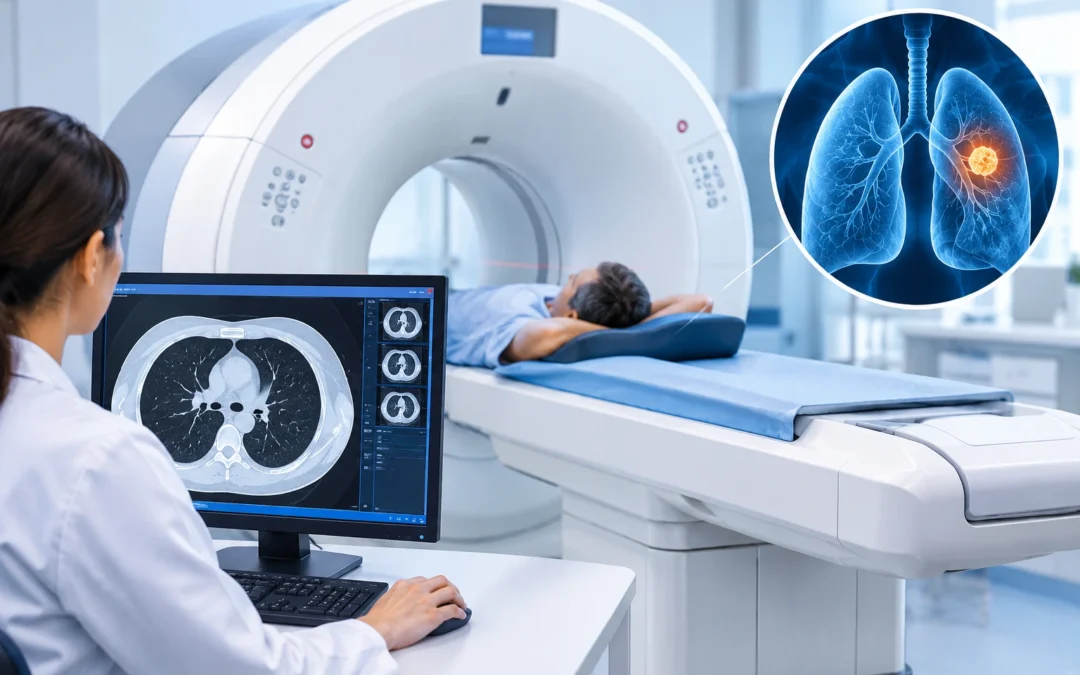
Yes, for the people it’s actually meant for. Low-dose CT screening, LDCT for short, finds lung cancer early in high-risk individuals, and that early detection lowers lung cancer death rates by roughly 15 to 20 percent in the groups studied. That’s not a marginal number in cancer screening terms, it’s one of the more solid, trial-backed benefits screening offers for any cancer type, which is exactly why it’s become the recommended standard for people who fit the risk profile.
Dr. Sandeep Nayak, known for the Best Cancer Treatment in Bangalore, sees the gap between who should get screened and who actually does far too often. “Lung cancer usually doesn’t announce itself early, that’s the whole problem. By the time someone has a persistent cough or trouble breathing that brings them in, the disease has often already spread. LDCT catches it while it’s still small enough to actually treat well. The frustrating part is how few eligible people actually get scanned every year.”
Wondering if you fall into the group that should be getting screened?
Who Actually Benefits From This Screening?
The 15 to 20 percent mortality reduction isn’t a blanket number for everyone, it applies specifically to a defined high-risk group:
- Adults roughly between 50 and 80 years old with a significant smoking history, generally 20 pack-years or more, fall squarely into the group where this benefit has actually been proven
- Current smokers and those who quit within the past 15 years both qualify, since risk doesn’t disappear the moment someone stops smoking
- People with a heavy smoking history combined with additional exposures like air pollution carry compounded risk that makes screening even more worthwhile
- Screening outside this defined risk group hasn’t shown the same clear benefit, and can actually lead to more false positives and unnecessary follow-up procedures than it prevents
None of this means someone outside the standard risk profile has nothing to worry about. It means the proven benefit of annual LDCT screening specifically applies to this group, not everyone equally.
Why the Screening Numbers Don't Automatically Translate to Uptake?
Why Choose MACS Clinic for Lung Cancer Screening and Risk Assessment?
Dr. Sandeep Nayak’s team at MACS Clinic actively brings up LDCT eligibility with patients who fit the risk profile rather than waiting for someone to ask about it themselves, since so much of the gap in screening uptake comes down to the conversation simply never happening. Risk assessment also looks beyond smoking history alone, factoring in occupational and environmental exposures that can meaningfully raise lung cancer risk even in people who’ve never smoked. For patients who do get screened and something needs a closer look, the path from detection to treatment moves quickly rather than sitting in a queue while a small, treatable finding has time to grow.
Think you or a family member might be eligible for screening? Reach the team at +91 9482202240
FAQs
Do I need to currently be a smoker to qualify for LDCT screening?
No. People who quit within the past 15 years still qualify if they meet the age and smoking history criteria, since risk remains elevated for years after quitting.
Is LDCT screening covered by insurance?
Many insurance plans do cover it for people who meet the standard risk criteria, though it’s worth confirming the specifics with your own provider beforehand.
.
Does a positive LDCT screening result always mean cancer?
No. Screening can flag nodules or spots that need further imaging or monitoring, and most of these turn out not to be cancer, though they still require appropriate follow-up.
Should someone who has never smoked get screened too?
Standard screening guidelines are built around smoking history specifically, but other significant risk factors like heavy occupational exposure are worth discussing directly with a doctor.
References
-
National Cancer Institute (NCI) — Lung Cancer Screening
Reviews randomized trials showing that low-dose CT (LDCT) screening reduces lung-cancer mortality in people at high risk. Cancer.gov
NCI — Lung Cancer Screening -
NCI — National Lung Screening Trial (NLST)
The major U.S. trial found about a 15–20% lower risk of dying from lung cancer with low-dose CT compared with chest X-ray in high-risk participants. Cancer.gov
NCI — National Lung Screening Trial
Disclaimer:This content is published for educational and informational purposes only.