

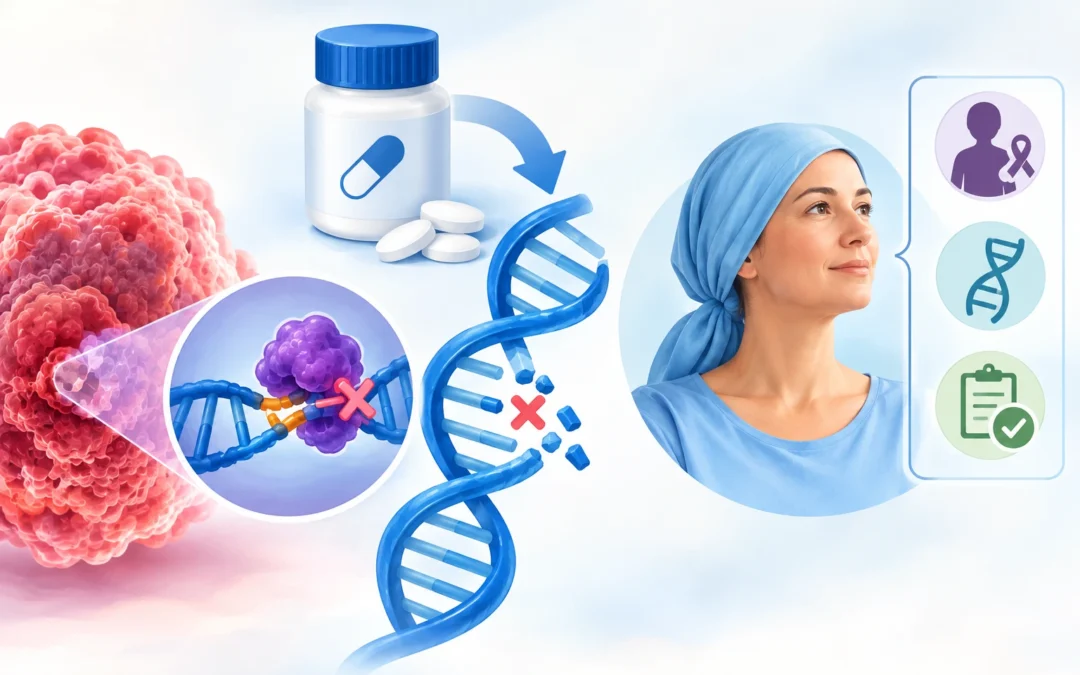
PARP inhibitor therapy blocks a protein called PARP, poly ADP-ribose polymerase, that cells normally use to repair everyday damage to their DNA. Disable that repair protein and cancer cells can no longer fix their own genetic mistakes, so they build up enough damage to essentially destroy themselves. So why doesn’t this work on every cancer, if DNA repair is something every cell relies on? Because the trick only works cleanly in cancers that already have a second broken repair system, most commonly a BRCA mutation, which leaves the cell with no backup once PARP gets shut down too
Dr. Sandeep Nayak, known for the Best Cancer Treatment in Bangalore, explains the logic behind this using an analogy patients tend to remember. “Think of DNA repair as having two separate systems, a main one and a backup. In BRCA-mutated cancers, the main system’s already broken. PARP inhibitors take out the backup too. Healthy cells still have both systems working, so they’re fine. Cancer cells with only one system left just can’t survive losing the second one. That’s the whole mechanism, and it’s why testing for BRCA and related mutations matters so much before anyone considers this treatment.”
Wondering whether PARP inhibitor therapy applies to your own diagnosis?
Who Actually Qualifies for This Treatment?
Eligibility comes down almost entirely to specific genetic testing results, not general cancer type or stage alone:
- BRCA1 or BRCA2 mutation carriers see the clearest benefit, and this applies across several cancers, BRCA-mutated ovarian cancer qualifies for PARP inhibitor maintenance therapy after first-line treatment
- BRCA-mutated triple-negative breast cancer responds to PARP inhibitors in ways non-carriers simply don’t, which is why testing every TNBC patient at diagnosis matters, not just those with a family history
- Certain BRCA-mutated pancreatic and prostate cancers also qualify, though the benefit and approved uses vary by cancer type and treatment line
- Beyond BRCA specifically, some tumors carry a broader pattern called homologous recombination deficiency, or HRD, that can respond to PARP inhibitors even without a confirmed BRCA mutation, though this is a more recently understood and still expanding category
None of this makes PARP inhibitors a universal option. Genetic testing has to confirm the underlying mutation or deficiency before treatment even becomes a real consideration, not just a hopeful try.
What Treatment Actually Looks Like for Someone Who Qualifies?
Why Choose MACS Clinic for Genetically Guided Cancer Treatment?
Dr. Sandeep Nayak’s team builds BRCA and broader genetic testing into the diagnostic workup for eligible cancers as standard practice, not something offered only after a patient specifically requests it. That testing happens early enough to actually shape the treatment plan from the start, rather than being revisited only once standard treatment has already run its course. For patients who test positive, the conversation includes what that result means for family members too, since a confirmed mutation carries implications well beyond the current diagnosis.
Want to know if PARP inhibitor therapy applies to your own case? Reach the team at +91 9482202240.
Want to know if a bispecific antibody applies to your own diagnosis? Reach the team at +91 9482202240.
FAQs
Do I need genetic testing before starting a PARP inhibitor?
Yes, confirming a BRCA mutation or homologous recombination deficiency is required before this treatment becomes a real option, it’s not something started on a trial basis without testing.
Are PARP inhibitors a cure for BRCA-mutated cancers?
No, they’re a genuinely effective targeted treatment, often used for maintenance after initial therapy, but they’re not curative on their own for most advanced cancers.
If I don't have a BRCA mutation, could I still qualify?
Possibly, some tumors show homologous recombination deficiency without a confirmed BRCA mutation, which is a newer and still expanding category for potential eligibility.
Are the side effects of PARP inhibitors similar to chemotherapy?
Generally milder, fatigue and lowered blood counts are common, but the overall toxicity profile tends to be more tolerable than classic IV chemotherapy for most patients.
References
- PMC: PARP Inhibitors, A Major Therapeutic Option in Endocrine-Receptor Positive Breast Cancers
- PMC: PARP Inhibitors in Pancreatic Cancer with Homologous Recombination Repair Gene Mutations
- PMC: Candidate Biomarkers of PARP Inhibitor Sensitivity in Ovarian Cancer Beyond the BRCA Genes
Disclaimer:This content is published for educational and informational purposes only.