

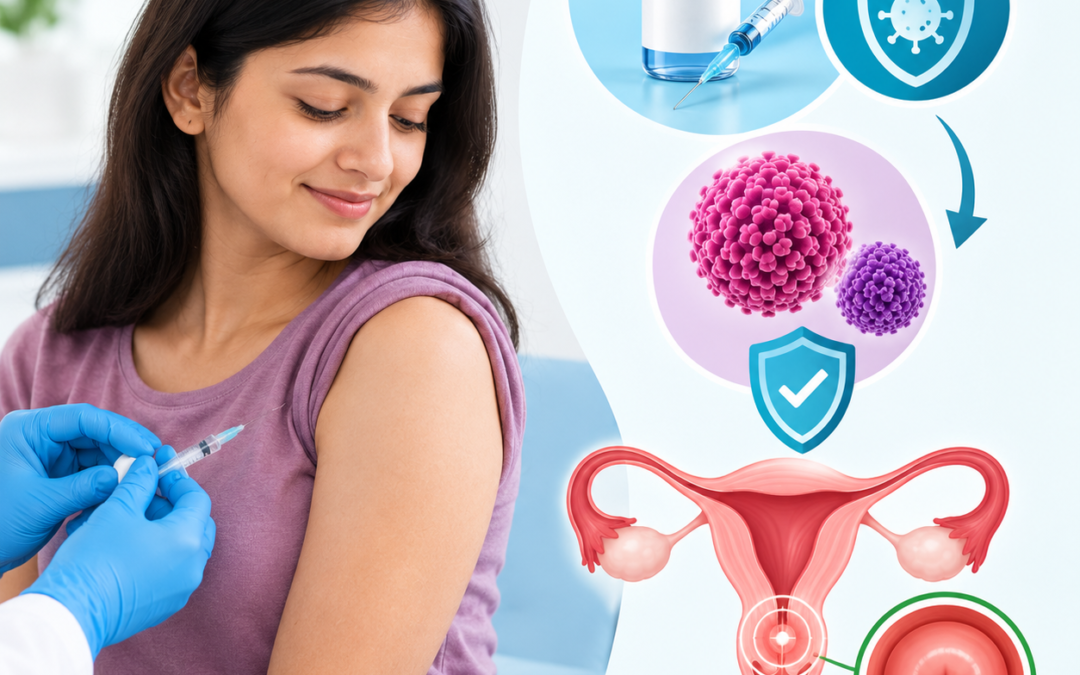
Yes, the HPV vaccine can prevent cervical cancer. It blocks the high-risk HPV infections that, left alone for years, turn normal cervical cells into cancer. In a large Swedish study, girls vaccinated before 17 had an 88% lower risk of cervical cancer. It isn’t a complete shield, though, and that’s the part most people miss.
Dr. Sandeep Nayak, who provides the best cancer treatment in Bangalore, sees the other side of this every week. “When a woman comes to me with cervical cancer, it started with a virus years ago, usually with no symptoms at all. The vaccine is for the daughters, ideally at 9 to 14. But the mother, the aunt, and the neighbor still need a Pap or HPV test. People hear ‘vaccine’ and think it’s finished. It isn’t. You need both.”
Wondering whether you or your daughter needs the vaccine, a screening test, or both?
How the HPV Vaccine and Cervical Cancer Prevention Fit Together?
It helps to know what the shot actually does, and what it leaves alone:
- Cervical cancer almost always starts with an infection that doesn’t go away. Most HPV infections clear on their own within a year or two. The ones that linger can quietly damage cervical cells for 10 to 20 years. The vaccine teaches the body to block the main cancer-causing types before that starts.
- The evidence is strongest for the young. The Swedish study followed about 1.7 million girls and women. Risk fell by 88% if the vaccine came before 17, and by about half if it came between 17 and 30. Younger girls are less likely to have been exposed, and the vaccine can’t treat an infection that’s already there.
- It covers the biggest culprits, not all of them. HPV types 16 and 18 are behind roughly 70 to 80% of cervical cancers in India. The rest come from other types, which is why screening can’t be skipped.
- India now offers it free, but only to a set group. Since Feb 28, 2026, government facilities give a single dose to girls aged 14. Girls outside that age, or already vaccinated, aren’t part of the drive, so parents of a 10-year-old or a 17-year-old will usually need the private route. Our cervical cancer treatment in Bangalore page explains what happens if cervical cancer is found.
Why Cervical Cancer Prevention Doesn’t End With the HPV Vaccine?
Why Choose MACS Clinic for Cervical Cancer Care?
An abnormal Pap or HPV result is frightening, mostly because nobody explains what it means. At MACS Clinic, Dr. Sandeep Nayak does. He founded the clinic, trained as a surgical oncologist (MBBS, DNB Surgical Oncology, MRCS UK), and is Executive Director of Surgical Oncology and Robotic Surgery at KIMS Hospital. He was among the pioneers of laparoscopic and robotic cancer surgery in India, and cervical cancer is part of his regular work. Want a second opinion first? The Expert Opinion consultation gives you a written plan.
Not sure what your test result means? Call +91 9482202240.
FAQs
Can the HPV vaccine prevent cervical cancer completely?
Not completely. It lowers the risk sharply, but it doesn’t cover every cancer-causing type, and it can’t clear an infection you already have. That’s why screening stays important even after vaccination.
Do I still need a Pap smear or HPV test if I’ve had the vaccine?
Yes. Vaccinated women still need regular screening, usually starting around 30. Your gynecologist can tell you which test and how often.
Can I take the HPV vaccine if I’m already sexually active or over 26?
You may still benefit, though less than if you’d had it before any exposure. It won’t treat an existing infection. A gynecologist can help you decide whether it’s worth it for you.
Is the HPV vaccine safe?
Large safety reviews, including by the WHO, have found it safe. The usual effects are a sore arm, mild fever or dizziness, and serious reactions are rare.
Reference
- CDK4/6 Inhibitors vs Chemotherapy and Endocrine Therapy in HR-Positive, HER2-Negative Metastatic Breast Cancer, PubMed Central
- First-Line Chemotherapy Versus CDK4/6 Inhibitors in HR-Positive, HER2-Negative Breast Cancer With Liver Metastases, PubMed Central
- Dr. Yardley on the Utility of CDK4/6 Inhibitors in Metastatic HR+ Breast Cancer, OncLive
- Breast Cancer Treatment in Bangalore, MACS Clinic
Disclaimer:
This content is published for educational and informational purposes only and is not a substitute for medical advice. Please consult your doctor before changing any treatment.