

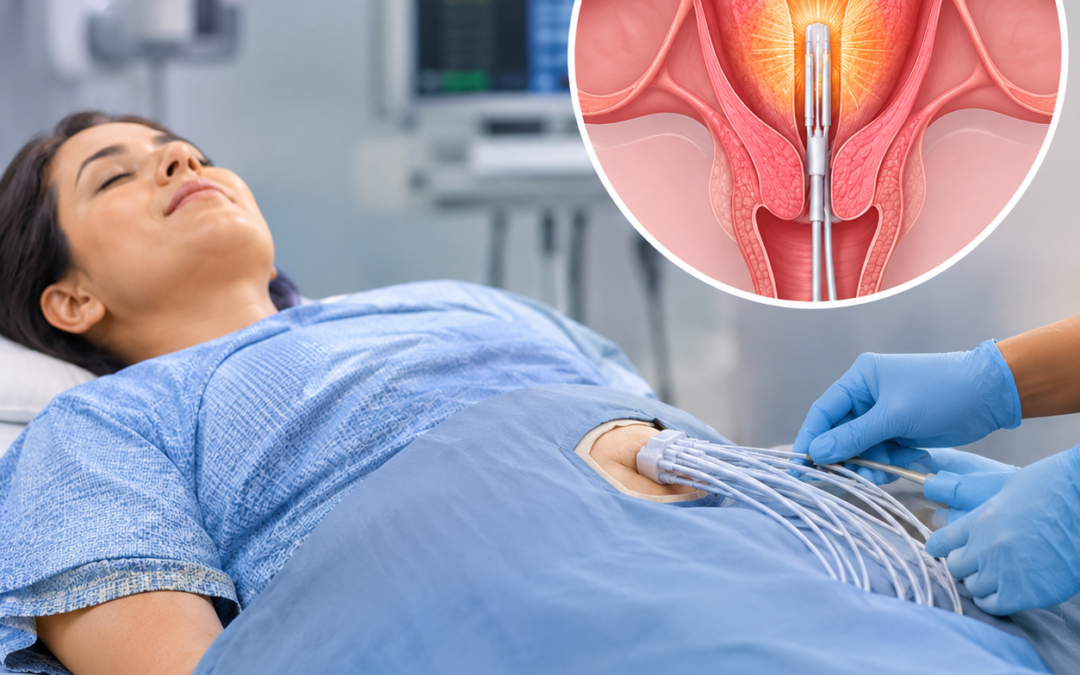
It is radiation delivered from the inside. Instead of beaming it through the skin from a machine, a radiation oncologist places a small radioactive source directly in or right beside the tumour. Because the source sits so close, the tumour gets a high dose while healthy tissue a short distance away gets much less. Brachytherapy has been used for decades, and it is still one of the more precise ways of giving radiation.
Dr. Sandeep Nayak, who provides cancer treatment in Bangalore, , says patients often confuse it with the machine-based kind. “People hear radiation and picture lying under a big machine for weeks. Brachytherapy is a different idea. We put the source where the tumour is, so the dose is concentrated there and falls away quickly. For the right cancer, that is a real advantage.”
Told you may need radiation and want to understand the options?
How Does Brachytherapy Work Step by Step?
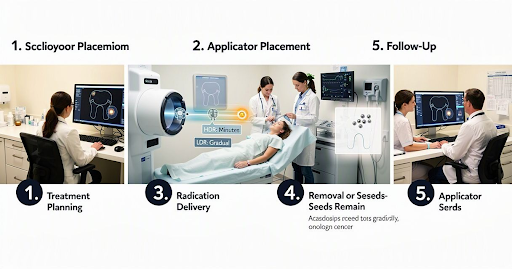
Brachytherapy for cancer is used where the tumour can be reached from close by.
Cervical and uterine cancer. It is a standard part of treatment for cervical cancer, often after external radiation.
Prostate cancer. Seeds or temporary sources can treat selected cases. Our blog on hormone therapy vs surgery for prostate cancer covers the other options.
Breast cancer. Used after lumpectomy in some patients, as a shorter course than whole-breast radiation.
Other sites. Skin, oesophagus, lung airways and some head and neck tumours can also be treated this way.
Not every tumour suits it. Large or widespread disease usually needs other treatment.
Which Cancers Is Brachytherapy for Cancer Used In?

An FGFR gene mutation cannot be seen on a scan. It has to be looked for in the tumour.
Molecular testing finds it. NGS testing reads the tumour’s genes and shows which FGFR change is present, and whether it is a mutation, amplification or fusion.
Targeted drugs exist. FGFR inhibitors are approved for some cancers, such as certain bladder and bile duct tumours. They are used for specific patients, not everyone with a mutation.
Side effects are particular to this class. High phosphate levels, eye and nail problems and dry mouth are examples, so monitoring matters.
Which FGFR change you have matters. A fusion, a mutation and an amplification do not all respond the same way. Our blog on immunotherapy vs targeted therapy explains how that choice gets made.
What Determines the Right Treatment Approach?
Brachytherapy treatment is one option among several, and the choice depends on the individual case.
Cancer type and stage. A small, contained tumour may suit brachytherapy alone. A larger one may need it combined with other treatment.
Tumour size and position. The tumour has to be reachable from close range.
The patient’s overall health. Fitness for sedation and general health shape what is safe.
Other treatments planned. Surgery, chemotherapy or external radiation may come before or after. Our blog on cancer staging explains how stage guides these decisions.
Team review. Precision oncology and a joint review by surgical, medical and radiation oncology help settle the plan.
Key Takeaways
- Brachytherapy places radiation right at the tumour, which makes it precise.
- For the right cancers, it can be very effective.
- It isn’t suitable for everyone, and it’s often one part of a wider treatment plan.
- If you’ve been told radiation may be needed, ask whether brachytherapy is an option for your cancer type and stage.
- To discuss your case, you can contact the team at +91 9482202240.
FAQs
Is brachytherapy painful?
Placement is done under sedation or anaesthesia, so it is not felt. Some soreness afterwards is common and can be managed.
Does brachytherapy make you radioactive?
With temporary treatment, no. With permanent seeds, a sm
How long does brachytherapy treatment take?
It varies. Some courses are a few sessions over days or weeks. Permanent seeds are placed in a single procedure.
Is brachytherapy better than external radiation?
Not always. It suits certain cancers well, and others are better treated with external radiation or both together.
Reference
Brachytherapy to Treat Cancer Explains what brachytherapy is, how radioactive sources are placed inside or near a tumour, the different types, and the cancers it can treat. Link: https://www.cancer.gov/about-cancer/treatment/types/radiation-therapy/brachytherapy-fact-sheet
Brachytherapy Covers how brachytherapy works, its applications in cancer treatment, the treatment procedure, and possible side effects. Link: https://www.cancer.org/cancer/managing-cancer/treatment-types/radiation/brachytherapy.html
Disclaimer:This content is published for educational and informational purposes only.