


Not on your own, no. While you’re on chemotherapy or radiation, supplements should only come from your oncologist. Some, like high-dose antioxidants or herbal products such as St John’s wort, can interfere with how treatment works, and for many others the evidence just isn’t there. Tell your care team about everything you take. Something they prescribe for a proven deficiency, like vitamin D, is a different matter.
Dr. Sandeep Nayak, who provides cancer treatment in Bangalore, puts it this way. “Radiation and several chemotherapy drugs kill cancer cells partly by producing free radicals. Antioxidants in large doses mop those up, so there’s a worry they dull the treatment. Herbs are a separate issue. Some change how fast the liver clears a drug, which means the dose in your blood isn’t the one we planned. Nobody can sort that out unless they know exactly what you’re taking.”
A supplement that’s fine with one treatment plan can be a problem with another. If you’re about to start treatment, or already on it, and aren’t sure what’s safe to take, our team can go through your plan with you.
Why Supplements and Cancer Treatment Don't Always Mix?
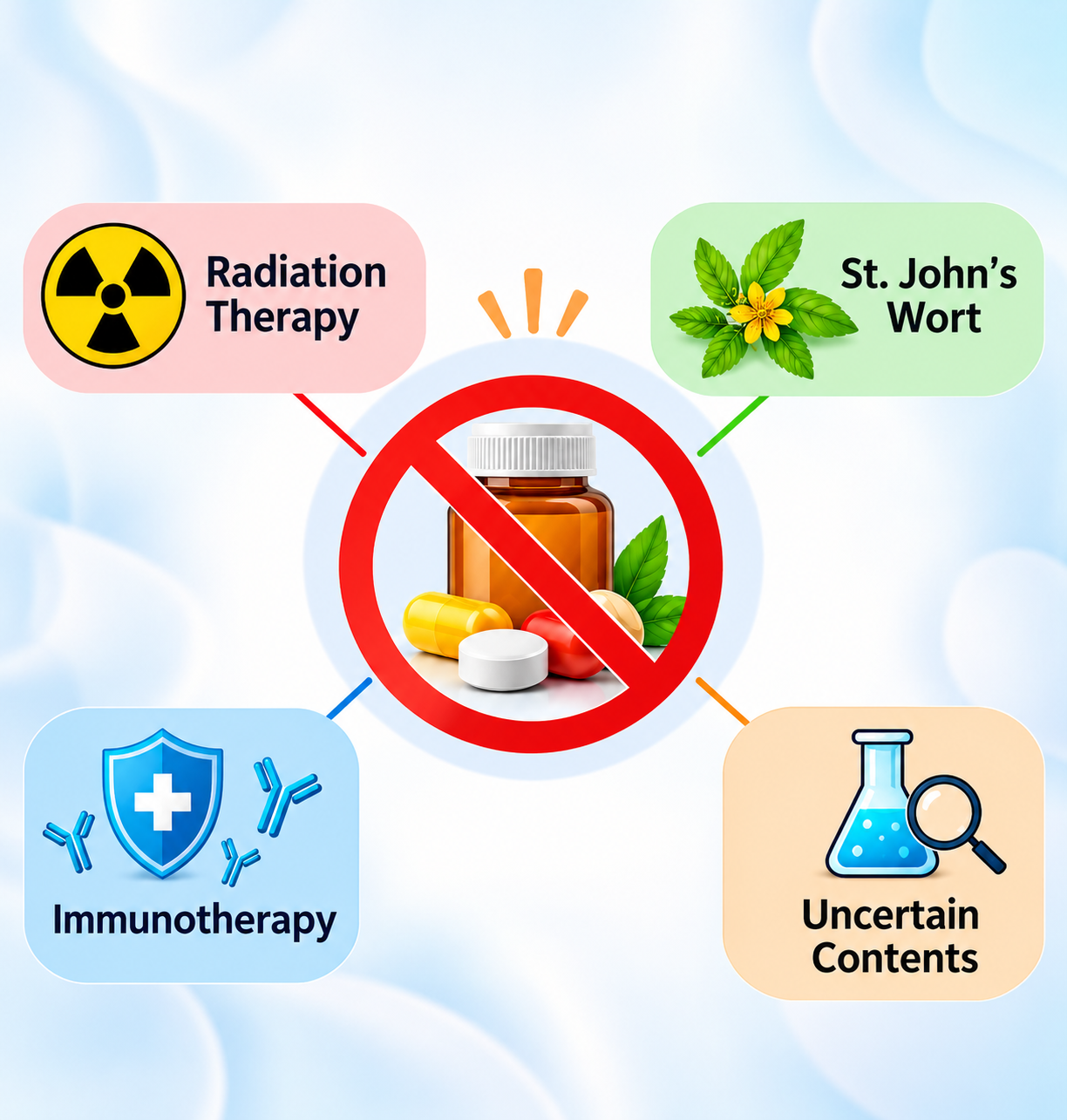
- Radiation works partly through free radicals, and big doses of vitamins A, C or E may cancel some of that out. It’s the main reason doctors get careful during radiation therapy.
- St. John’s wort is the textbook herb problem. In studies it lowered the blood levels of some cancer drugs, which matters if you’re on the kind of tablets used in precision oncology.
- “Boosts immunity” on a label proves nothing. Immunotherapy already works through your immune system, so you don’t want to push on it blindly.
- What’s actually in the capsule can differ from brand to brand, because supplements aren’t tested like medicines. Getting nutrients from food, with a dietitian’s help (diet counselling here), is usually the safer plan.
Why Vitamins During Cancer Treatment Tempt So Many People?

- Side effects are the usual trigger. Nausea at 2 a.m., a sore mouth, no energy. Most of it has a safer, proven fix, and our blog on chemotherapy side effects covers them.
- Foggy thinking is another. Losing words, forgetting why you walked into a room: that’s often chemo brain, and it tends to ease with time. Read up before you buy a memory tonic.
- Tablets raise a different question. If you take a targeted drug at home, as in EGFR-positive lung cancer, your liver is processing it every day, so ask before adding anything.
- After a transplant, every product should be cleared by the team first. Immunity takes months to rebuild, as our piece on bone marrow transplant recovery explains.
What Decides Whether a Supplement Is Right for You?
There’s no single yes or no. The team looks at a handful of things together.
- The treatment itself. Chemo, radiation, tablets, immunotherapy and surgery don’t carry the same risks.
- Your blood work. Low vitamin D, B12 or iron is a good reason to supplement, and the doctor will set the dose.
- How much, and in what form. A standard multivitamin is one thing. Dietary supplements for cancer patients in mega-doses, strong herbal extracts and daily kadhas are a different category.
- What else you take, like blood thinners, anti-nausea tablets or painkillers.
- The calendar. Garlic and ginger in large amounts can affect bleeding, so some products have to stop before surgery.
FAQs
Can cancer patients take a multivitamin during treatment?
Often a plain multivitamin at the normal dose is acceptable, but not every oncologist agrees. Show yours the label and let them decide.
Are herbal products safe during chemotherapy?
Not automatically. Natural isn’t the same as harmless. St. John’s wort, for instance, has been shown to lower levels of certain cancer drugs.
Should I stop the supplements I took before I was diagnosed?
Don’t just stop, and don’t just carry on. Take everything to your oncologist and sort it out together. A few may need pausing before treatment begins.
Do I have to avoid fruits and vegetables because of antioxidants?
No. The worry is about high-dose pills, not a plate of food. Eat your fruit and vegetables, and ask a dietitian if you need help with meals.
References
- St. John’s Wort: Questions and Answers, Michigan Medicine
- Herb–Drug Interactions in Cancer Patients, PubMed Central
Disclaimer
This content is published for educational and informational purposes only and is not a substitute for medical advice. Please speak to your oncologist before changing or stopping any treatment.