

Yes. Patients from the Gulf and other countries can have HIPEC with cytoreductive surgery (CRS) at MACS Clinic in Bangalore. The surgeon removes every tumour deposit visible inside the abdomen, then heated chemotherapy is circulated through the abdominal cavity to deal with what’s too small to see. Whether it suits you depends on your scans, not your passport. So the first step isn’t a flight. It’s sending your reports and finding out if you’re a candidate.
Dr. Sandeep Nayak, who provides cancer treatment in Bangalore, says planning from abroad works best in stages. “HIPEC with cytoreductive surgery is meant for cancer that has spread to the lining of the abdomen but can still be removed completely. How far it has spread is scored from scans, and sometimes from a keyhole look inside. So we first need your CT or MRI reports, the pathology report and details of any earlier treatment. If the disease is too widespread to operate on, there are other options, like PIPAC.”
If you’re in the Gulf and a doctor has mentioned HIPEC, you don’t have to travel just to find out whether it fits. Send your reports through our team, and they can explain the next steps, from remote review to visa paperwork.
How HIPEC Treatment in Bangalore Works for Gulf Patients?
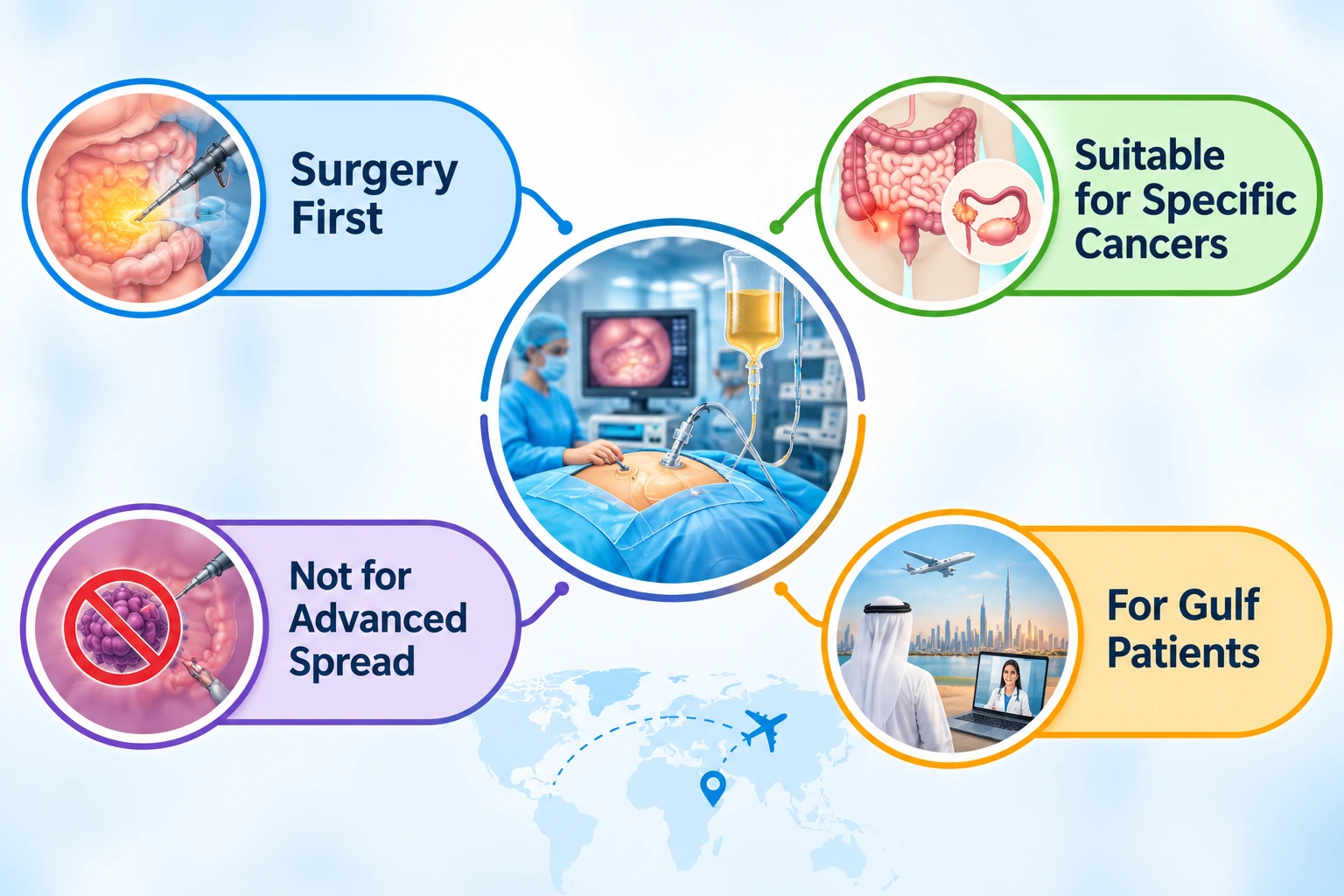
- Surgery comes first, and it’s the bigger half. The team removes the visible tumour, then warmed chemotherapy circulates inside the abdomen while you’re still under anaesthesia. Our HIPEC page walks through it.
- It’s mostly used for cancers that have spread to the abdominal lining from the appendix, colon, rectum or ovary, and for pseudomyxoma and mesothelioma.
- When the disease is too spread out to remove, HIPEC usually isn’t the answer. PIPAC is a lighter keyhole option that aims to hold the disease back, not cure it.
- The clinic regularly sees patients from the Middle East and other regions, so remote reviews and online consultations are a normal first step. Our medical tourism page explains how to begin.
Planning HIPEC Surgery in India: What to Read and Ask First?
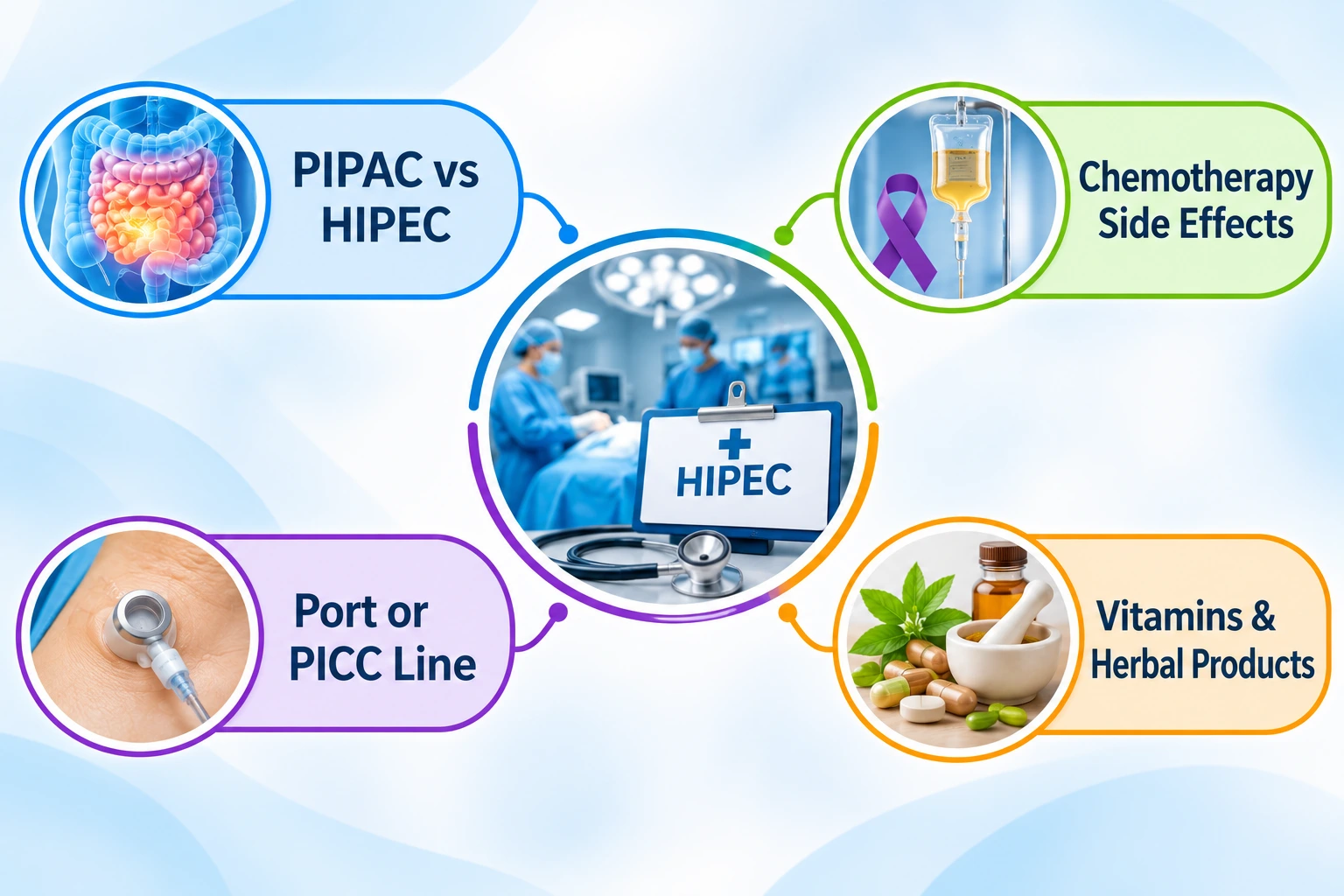
- Not sure HIPEC is the right route? Start with PIPAC vs HIPEC. It explains who gets which.
- Many patients also have chemotherapy before or after surgery. It helps to know what to expect from the common chemotherapy side effects.
- If repeated chemo is planned, ask the team whether a port or PICC line makes sense for you.
- Taking vitamins or herbal products from home? Check with the team before you pack them, since some can interfere with treatment.
What Gulf Patients Should Sort Out Before Travelling?
Here’s what usually needs settling, roughly in this order.
- Medical suitability. Your scans, pathology and past treatment decide whether HIPEC fits. Doctors score the spread with something called the Peritoneal Cancer Index.
- Your records. CT, MRI or PET reports and images, the biopsy report, any operation notes, and your chemotherapy history. If they’re in Arabic, get English copies.
- The visa. International patients generally travel on a medical visa, and many nationalities can apply for an e-Medical Visa online. Use only the official portal, indianvisaonline.gov.in. It usually needs a letter from the hospital, and the clinic team can help with documentation. Eligibility and rules change, so check before booking tickets.
- A family member. Up to two relatives can usually apply for an attendant visa, but only after the patient’s visa is approved.
- How long you’ll stay. CRS with HIPEC is major surgery, and recovery takes weeks. Ask the team how long they want you in Bangalore before flying home, and check that your visa period allows for it.
- The cost. Ask for a written estimate before you travel, and ask what it doesn’t cover.
FAQs
Can Gulf patients get HIPEC surgery in Bangalore?
Yes. Patients from the Gulf and other countries are treated at MACS Clinic. Whether HIPEC is right depends on the cancer type, how far it has spread and your general health, which the team checks from your reports first.
Can I get an opinion before travelling?
Yes. You can share your reports and scans and have an online consultation first. It tells you whether the trip makes sense.
Which visa do I need for treatment in India?
A medical visa. Many nationalities can apply online for an e-Medical Visa, but eligibility and rules change, so confirm on indianvisaonline.gov.in. A family member can apply as an attendant.
How long will I need to stay in India?
It depends on how you recover. CRS with HIPEC is major surgery, so expect to stay a while after the operation. Your surgeon will tell you when it’s safe to fly home, so plan your visa and accommodation around that.
References
https://pmc.ncbi.nlm.nih.gov/articles/PMC7339855/
https://pmc.ncbi.nlm.nih.gov/articles/PMC9954579/
Disclaimer
This content is published for educational and informational purposes only and is not a substitute for medical advice. Please speak to your oncologist before changing or stopping any treatment.